



Is the Monarch Hotel gone yet? And what comes next?
Published at
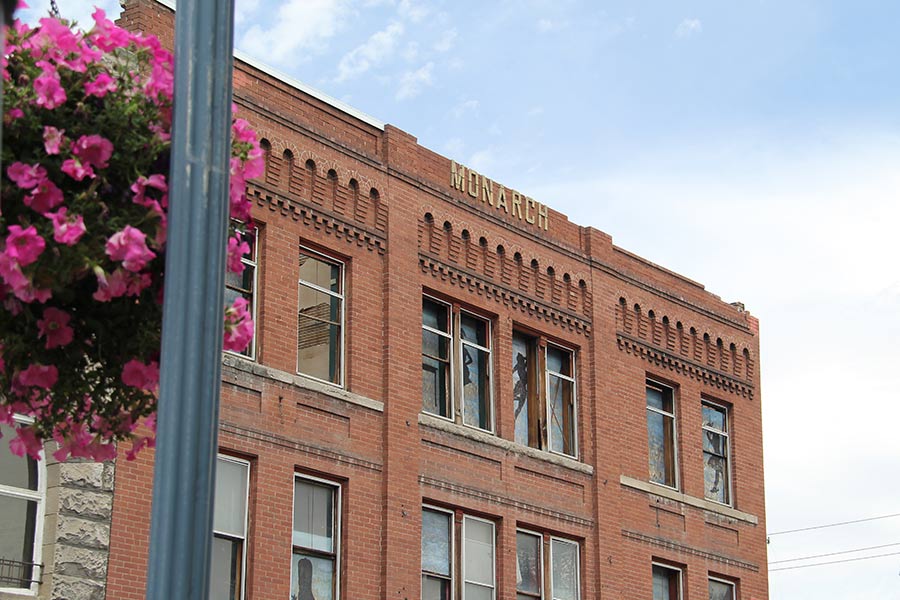
POCATELLO – The facade of a historic building is in the process of being torn down, and what will eventually take its place remains an open question.
On July 1, demolition crews began a brick-by-brick removal of the exterior structure of an iconic landmark in downtown Pocatello – the old Monarch Hotel. The structure will be removed slowly over about a month to preserve the adjoining historic buildings.
Some time after the structure is completely removed, the Pocatello Development Authority (PDA), which owns the property, will put out a call for proposals from developers with ideas for what could be built in the old hotel’s place.
“We want to build something back that is in line with the fabric of downtown, that feels like it belongs there, that is going to be economically viable, but also add to what downtown is,” said Brent McLane, Pocatello’s Planning and Development director and the executive director of the PDA.
The Monarch, located on Center Street in downtown Pocatello, was gutted by a fire twelve years ago. While firefighters were able to save most of the building’s exterior and everyone inside was safely evacuated, the interior was rendered uninhabitable.
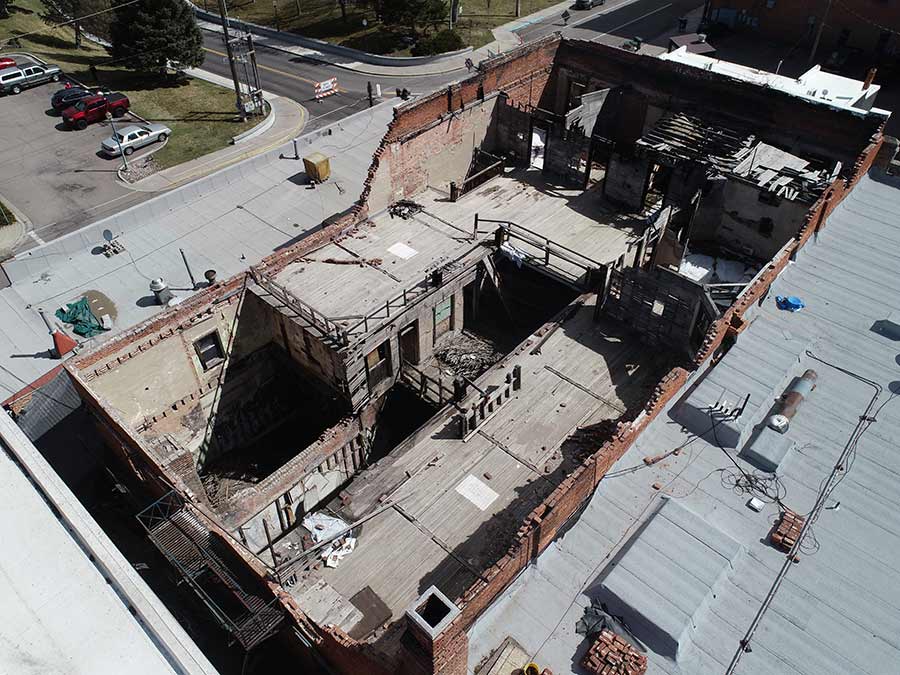
And over the years, the building became an increasing hazard, with a covered walkway installed directly below it in 2019 to protect pedestrians from falling debris.
Stephanie Palagi, president and CEO of Historic Downtown Pocatello Inc., said there were significant efforts over the years to save the building before the decision to demolish it was made.
“There was an extraordinary amount of effort put forward to save that building for over ten years, and so it’s time for the building to come down, (but) it’s sad,” Palagi said.
As for actually demolishing the structure, bringing it down with a wrecking ball isn’t an option.
“It’s a tricky process to remove that building,” McLane said.
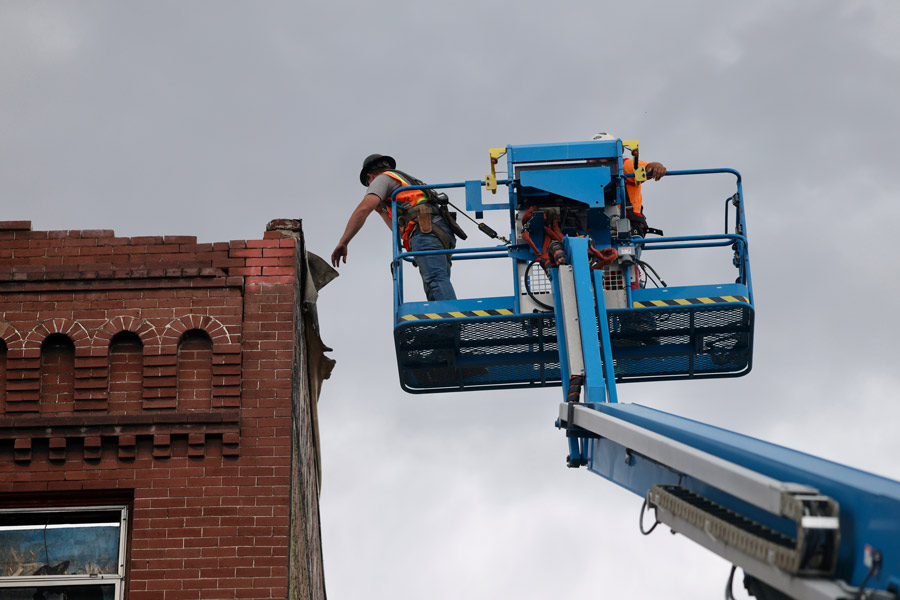
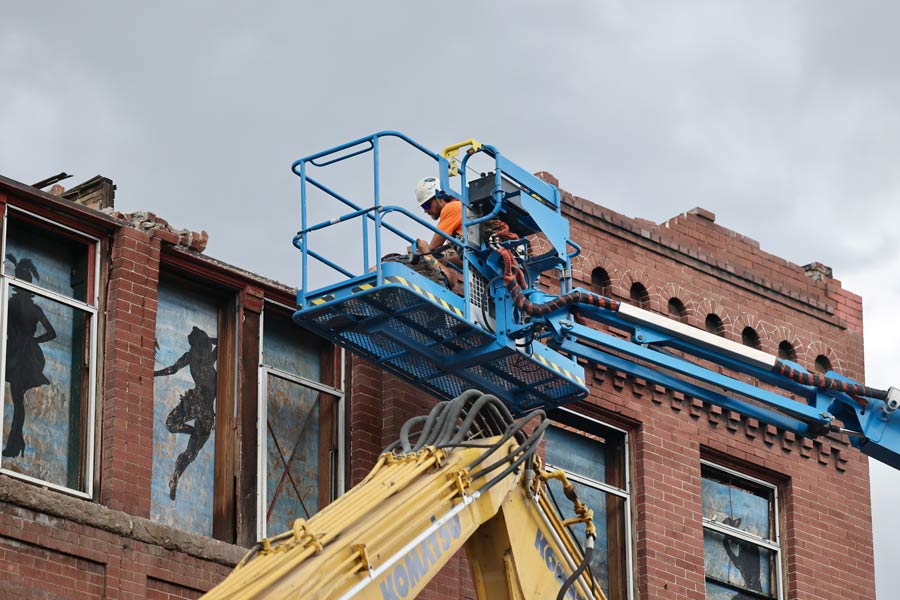
This is because the two neighboring buildings aren’t just close to the Monarch – the three buildings’ walls directly touch each other. In order not to damage these structures, the demolition crew has to remove the building in pieces.
“They’re being very delicate about it,” McLane said. “They’re using machinery when possible, but there’s a lot of it that just has to be done by hand.”
As of Friday morning, the entire third story of the old Monarch building has been removed, along with much of the second floor.
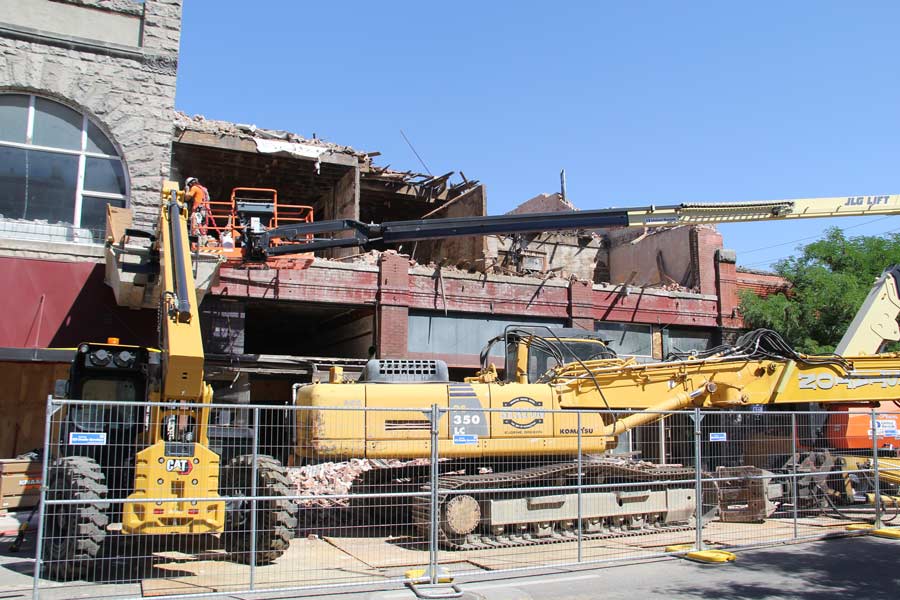
To find a contractor, the PDA issued a call for demolition proposals for the Monarch, which it officially awarded to Staton Companies at its April meeting. This is a demolition contractor based in Lane County, Oregon, and out of the four that responded, McLane said Staton was “the most qualified firm to do this.”
But this wasn’t the first round of proposals the agency called for. In June 2025, the PDA released a request for proposals to redevelop the Monarch. Under this request, developers could either repair and preserve the structure or demolish it and build something new.
The deadline for these proposal submissions was in September 2025. When that deadline came, no developers had responded.
McLane believes that the main reason for this was the unknown details of the property, which the developer would have purchased before even taking on the potential liabilities of demolishing the structure.
And, “you can’t get those details until you really get into the building and start tearing into it,” McLane said.
“I think based on that, a lot of people just were shy to pull the trigger on it, because (there were) lots of questions without answers,” McLane said.
Jim Young, who redeveloped and owns Dude’s Public Market in downtown, said that he viewed the request as not “economically feasible” for developers.
“It wasn’t economically feasible to spend hundreds and hundreds of thousands on top to pay for demolition, because of the status of (the building), the risks of working with the city, the city having a say,” Young said.
Dakota Worrell, president of DW Investors, who has purchased and redeveloped apartment buildings in the past, also viewed the prospect of working with the city on the property as too risky, even before taking on the realities of a demolition.
“(That was) before we ever even touched the issues of bracing the buildings on both sides, or the fact that there’s not really any foot traffic, there’s no way to do a drive-through. (And) there’s no parking, but you’ve got to walk to it,” Worrell said.
Based on the results of a downtown economic feasibility study, McLane said the PDA has identified three gaps in services offered downtown.
“Maybe this would be an opportunity to fill those gaps,” McLane said.
The three major gaps McLane identified are:
- Housing
- Hotels
- Government offices
“There’s definitely a demand for housing of all types, whether it’s rental assistance or full market rate housing,” McLane said. “We need all the housing we can get in any form in Pocatello right now.”
“We don’t have any hotels that are downtown. (We have) Airbnb, and that’s about it. That’s a major gap in our analysis of businesses in the downtown,” McLane said.
“And then the other big gap we have is government offices. So there’s not a lot in terms of government offices that provide some stability to the economics of a downtown,” McLane said.
A developer who eventually submits a proposal and purchases the lot, which is around 5,000 square feet, would be allowed to construct a building up to 120 feet tall, which would come out to about 10 floors, McLane said. According to the city code, a conditional-use permit could allow a building up to 150 feet if approved.
This is because the downtown area is zoned as Central Commercial, which the code states is meant to “accommodate a highly dense, highly walkable area that includes a mix of civic, commercial and residential uses.”
McLane confirmed that a building of this height would be the tallest in the city.
“We don’t have anything that tall downtown at this point,” McLane said.
City code would also allow for whatever building is built there to be mixed-use, containing commercial, office and/or residential uses. If a building had the space for it, it would be allowed to have retail, restaurants, offices, residential units and hotel rooms all in the same building.
“If you could go ten stories, that makes it a little more viable, to make it viable,” McLane said.
But both Young and Worrell feel that a building of that size is unlikely to be built on that lot.
The two developers cited many of the same reasons why, saying that demand isn’t strong enough for a building of that size, that the initial upfront costs of that building could bankrupt the project before it is finished, and that these factors, as well as the site constraints of the property, will cause developers to turn to larger, easier sites to build on.
But they also agreed that, if it could be built, a mixed-use building would be the highest and best use for the property.
“I think what Pocatello needs more than anything is high-paying jobs and things for kids to do during the winter, (but) I don’t know. It’s a hard spot,” Worrell said.
“I hope to be proven wrong, and someone’s willing to develop on it, but I think it’s going to be sitting empty for a while, so the city just gives up and turns it into green space,” Young said.
When asked about potential difficulties in developing on the property, McLane said that the PDA and the city are in the process of establishing a tax-incremental financing (TIF) district in the downtown area, which could help a developer offset their costs.
At this point, McLane estimates that the PDA and the city are about halfway through the process of establishing a TIF district, which is ultimately approved or rejected by the city council. He estimates that the council will have it on its agenda in the fall.
McLane added that a developer who takes on the project is, “going to be someone who has the financial resources to make it happen, and that’s why we need to cast a broad net to look for those individuals or companies that are willing to move forward with a project like this.”
And while Palagi is sad to see the old Monarch building go, she’s excited to see what the future brings for the property.
“There are so many memories and emotional attachments to the building, but we look forward to the future, for redevelopment for something that is going to be a really good, wonderful economic development project for downtown,” Palagi said.