



The surprising story of how Abraham Lincoln helped create Idaho
Published at
EDITOR’S NOTE: The original version of this story was published on March 9, 2025. It’s been updated and republished in conjunction with Independence Day and the America 250 celebration.
IDAHO FALLS – Abraham Lincoln said goodbye to his friend for the last time as they left the meeting.
It was Friday afternoon, April 14, 1865. America’s 16th president was 42 days into his second term and would be assassinated later that night while attending a play with his wife at Ford’s Theatre.
It had been two years since Lincoln had signed the bill that made Idaho a territory. His friend, William Wallace, whom he’d appointed its governor, declined an invitation to accompany him to the theater that night before they parted ways.
Longtime Idaho attorney, historian and former elected official David Leroy told EastIdahoNews.com in 2025 that Lincoln’s fate might have been different had Wallace decided to attend.
“Maybe he would’ve prevented the assassination,” Leroy said.
Although Lincoln never set foot in the Gem State, he is inextricably linked to its creation in numerous ways. In addition to his friendship with Wallace, Lincoln’s vision laid the foundation for its existence and he nearly became its first governor.
Today, as America celebrates its 250th anniversary, here’s a look back at Idaho’s quintessential founding father.

The ideas that laid Idaho’s foundation
Lincoln’s first connection to Idaho dates back to his youth on the American Frontier.
“He was a farmer’s son, a rail splitter, a man of the soil … in Kentucky, Indiana and Illinois,” Leroy told a crowd at the Museum of Idaho in 2025. “He was also a merchant, understanding commerce and its interaction with farming.”
At age 19, Leroy said Lincoln also saw the “abhorrence of slavery.” On a river boat trip to Mississippi and Louisiana, he saw black men and women being auctioned on a city block.
These experiences shaped Lincoln’s world view and resemble values that are important to Idahoans today.
Lincoln’s connection to Idaho became more recognizable in 1848 when he was serving in Congress. The Oregon Territory — which included parts of present-day Idaho, Montana, and Washington — was created that year after months of heated debate.
“The House of Representatives fought for months (over Oregon’s creation),” Leroy said. “It was contentious because the southern senators wanted to allow the possibility that Oregon Territory could have slaves.”
President Zachary Taylor, a fellow Whig Party member who sided with Lincoln on the slavery issue was elected that same year and offered Lincoln a job as the territory’s first governor, which he declined.
“He went home and proudly suggested to Mary (his wife) that he had a singular opportunity to move out West. She said, ‘No way. We’re not going out there,'” Leroy told the crowd. “Think of that! Lincoln could’ve been our governor!”

The debate about slavery in the western territories of the United States continued for years, and came to a head in 1861 when the country was propelled into Civil War. Lincoln publicly expressed his opposition to slavery in a speech printed in the New York Tribune in 1858. Leroy said Lincoln’s views were so well expressed, that it led to his election as president in 1860 and the creation of Idaho three years later.
Although history records that the Civil War ended in 1865, Leroy believes “Lincoln won the war in 1862 … with the idea of Idaho.”
He cites multiple bills he signed that year as an example. Among them was the Territorial Abolition Act, which abolished slavery in all federal territories of the United States. He also signed the Pacific Railroad Act, authorizing the construction of the transcontinental railroad. This law, Leroy said, connected free states across the country and promoted equal opportunity for everyone.
Lincoln signed the bill that created the U.S. Department of Agriculture, which Leroy said “recognized the importance of farming and what farming would be” in Idaho and the western territories.
That same year, Lincoln signed the Homestead Act, which promoted westward settlement and development of the American frontier. It allowed American citizens to claim land to live on and farm. More than 60,000 Idahoans benefitted from this law.
Another bill, the Morrill Land Grant College Act, gave states federal land to build colleges that taught agriculture. This bill resulted in the founding of the University of Idaho in 1889.

The all-night fight that gave birth to Idaho
But Lincoln didn’t just sign bills that aligned with Idaho values. He actively lobbied for its creation.
On March 3, 1863, Leroy says Lincoln stayed up all night urging Congress to vote in favor of Idaho becoming a territory.
“The bill was due to expire at midnight on March 4. Lincoln remained at the capitol in the President’s Room off the floor of the Senate and helped lobby it through the Senate and the House,” Leroy says. “He stayed in the capitol building until it was … on the roll.”
Around 4 a.m., Lincoln likely approached the legislation with a sense of satisfaction as he read these words:
“Providing that slavery is prohibited in said territory by act of Congress…,” the bill said, according to Leroy.
RELATED | The two documents that changed the world — and the men who signed them
With the stroke of a pen, Lincoln then signed the bill into law.

Lincoln’s friendship with Gov. Wallace
Lincoln’s friendship with William Wallace is one of America’s 16th president’s most noteworthy connections to Idaho.
Leroy explained to EastIdahoNews.com in 2025 that the two met around 1840 when Wallace was a young attorney in Indiana. Both men were members of the Whig Party and Wallace introduced Lincoln —- then an Illinois state legislator —- who was speaking at a rally for presidential candidate William Henry Harrison.
“Wallace introduced Lincoln in a friendly, jocular way. Their senses of humor connected and over the years, they stayed in touch,” says Leroy.
Wallace later moved to Iowa, where he served as Speaker of the House in the state legislature. After an unsuccessful bid for U.S. Senator, he moved to Washington Territory and was elected to the U.S. House of Representatives.
Through letters, Lincoln and Wallace often discussed the politics of the day, including when Lincoln entered the presidential race in 1860.
“When Lincoln was elected, Wallace went to Washington, D.C. to lobby for selection to territorial positions appointed by the president. He was successful,” Leroy explains.
Lincoln appointed Wallace governor of Washington Territory in 1861.
At that time, Washington extended from the Pacific Ocean to modern day Montana and Wyoming. The land that makes up Idaho today was under Wallace’s jurisdiction as governor. Realizing the large size of the geographic area, he became an advocate for breaking it up and Idaho was created on March 4, 1863.
Wallace met with Lincoln that day, hours before he was shot, to talk about filling a vacancy on the Idaho Supreme Court and in the U.S. Marshal’s Office.
“They talked for a bit, talked about Idaho, talked about the need for these specific offices — and then Lincoln said, ‘Old Idaho, (Lincoln’s nickname for Wallace) come back on Monday and you shall have the appointments as you wish them,'” Leroy said at a public event last year.
Wallace declined the invitation to attend the play because his wife was sick.
Around 10:20 p.m., a bullet to the back of Lincoln’s head at point-blank range rendered him unconscious. He died the next morning at a boarding house across the street.
“I wonder, at some point during the play, with the Idaho appointments due on Monday being fresh in his mind, whether Lincoln thought just a bit about the idea of Idaho?” Leroy said.

Lincoln’s unfinished plans for Idaho
Idaho history blogger Rick Just reported in 2021 that Lincoln was set to reappoint Wallace as territorial governor of Idaho. That plan was dashed when the president was shot at the theatre.
Wallace served as a pallbearer at Lincoln’s funeral. Wallace’s nephew, Lew Wallace, served as second in command of the court-martial of Lincoln assassination conspirators.
“Lew Wallace did a sketch of those on trial and later did a well-known painting based on the sketch called ‘The Conspirators,'” Just reported.
He went on to write the novel “Ben Hur.”
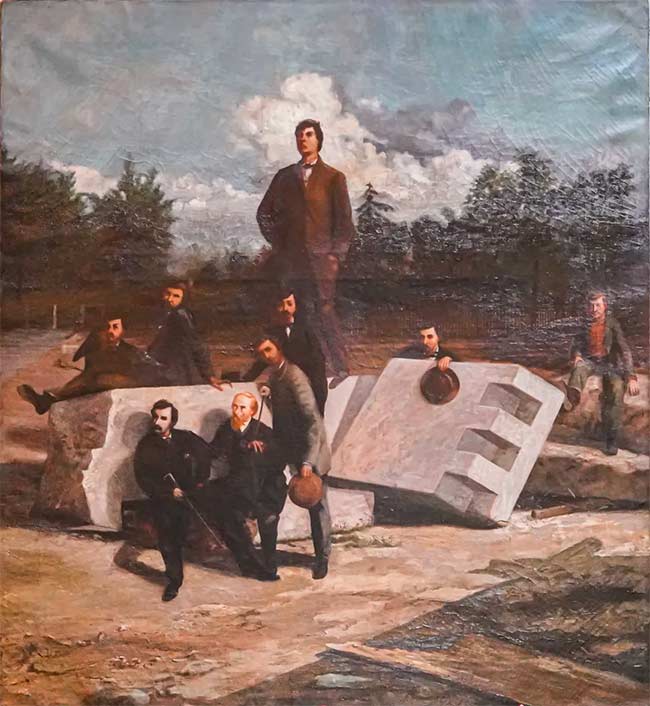
Before his visit with William Wallace, Leroy said Lincoln took a carriage ride along the Potomac River with his wife. The ending of the Civil War days earlier weighed heavily on his mind and the possibility of a peaceful second term delighted him.
“When we finish the term, I’d like to travel,” Lincoln said, according to Leroy.
Walking the streets where Jesus walked in Jerusalem and going to California after the completion of the transcontinental railroad were two places Lincoln mentioned.
“I theorize that had he made it to California, he may well have come to visit (Idaho),” said Leroy.
The White House meeting that gave Idaho its star
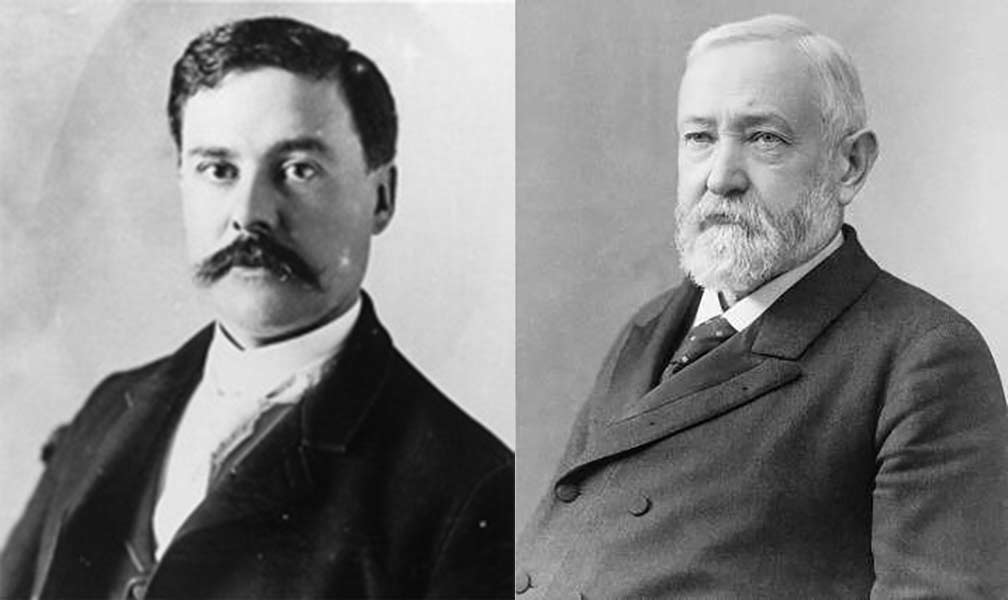
Benjamin Harrison, America’s 23rd president who was also William Henry Harrison’s grandson, signed the act that created the state of Idaho.
George Shoup, for whom Shoup Avenue in downtown Idaho Falls is named, was integral in getting the Constitutional Convention to assemble and begin the process that would lead to statehood.
“As territorial governor, Shoup guided the convention until they produced a constitution,” F. Ross Peterson writes in the book “Idaho’s Governors.”
Between July 4 and August 6, 1889, representatives throughout the Idaho territory met in Boise to debate every important topic covered by the Constitution, according to the Idaho State Historical Society.
Shoup issued a proclamation on Oct. 5, 1889 calling for a November 5 election to ratify the Constitution. Voters ratified it 7 to 1.
“Shoup signed the document and it was forwarded to Washington,” Peterson wrote.
It passed the House of Representatives in April 1890 and the Senate in June.
RELATED | Remembering Idaho’s founding fathers and the controversial debate in the road to statehood
Fred Dubois — a Republican delegate at the convention from whom the eastern Idaho town gets its name — paid a visit to President Harrison at the White House on July 3, 1890. Harrison hadn’t yet signed the statehood bill and Dubois wanted it to be signed on July 4 so Idaho could celebrate its birthday on Independence Day.
Harrison explained stars were added to the flag on July 4 for all states admitted in the previous year. If he signed then, Idaho wouldn’t get its star on the flag until 1891.
Despite overwhelming support for a July 4 signing, Dubois reversed course.
“The responsibility is all mine and I ask you to sign the bill now. I want the star of Idaho on the flag tomorrow,” Dubois responded, according to the Idaho Statesman.
“I think you have chosen well,” Harrison told him.
After signing the bill, Harrison presented the 39-year-old delegate with the gold pen and a holder, saying, “There is no honor which can come to a young man greater than that of bringing your state into the Union.”
President Harrison later visited the Gem State to celebrate. He planted a tree at the Statehouse in Boise.