



Tiny but tough: Idaho Falls baby faces liver transplant, heart surgery
Published at | Updated at
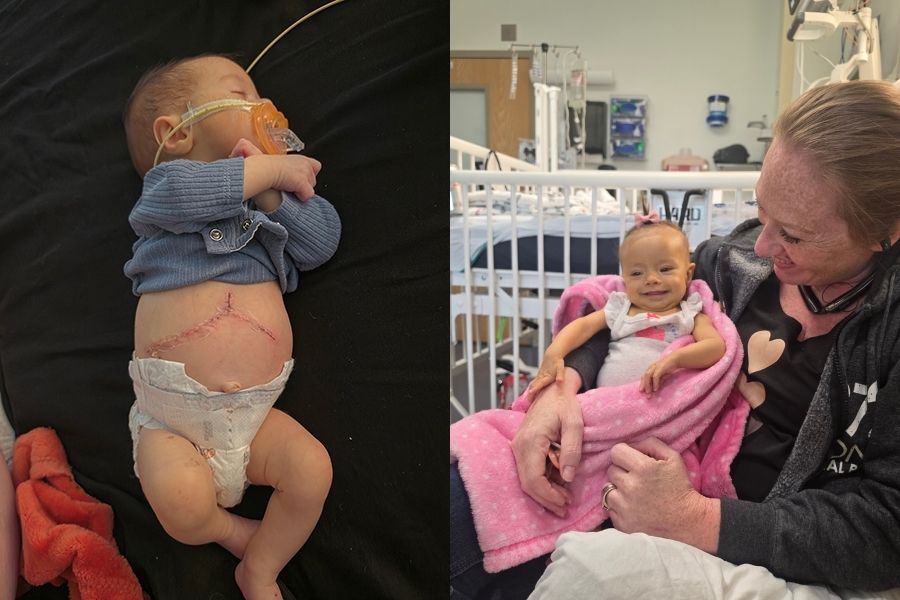
IDAHO FALLS — Xalia Ramirez, a 6-month-old baby who weighs less than 9 pounds, entered this world premature and with an abundance of challenges most people will never experience.
Even before her birth, says Xalia’s mother, Tavia Morgan, the odds were already against her, when Tavia learned at 24 weeks pregnant, that her placenta wasn’t working as it should.
“Halfway through my pregnancy, we learned she was high-risk because the blood flow from my placenta through the umbilical cord wasn’t as strong as it should have been,” says Morgan on a GoFundMe page. “We prayed every day that she would stay strong, and at 35 weeks and 3 days, she made her entrance into the world.”
After Xalia’s birth, her parents and doctors realized she wasn’t breathing well, and she was rushed to the Neonatal Intensive Care Unit (NICU), where she spent the first month of her life.
“She had two chest tubes put in, and she had lots of IV fluids,” says Tavia. “She was also jaundiced, so we did a follow-up appointment after she got out of the NICU, and that’s when (doctors) thought she had biliary atresia.”
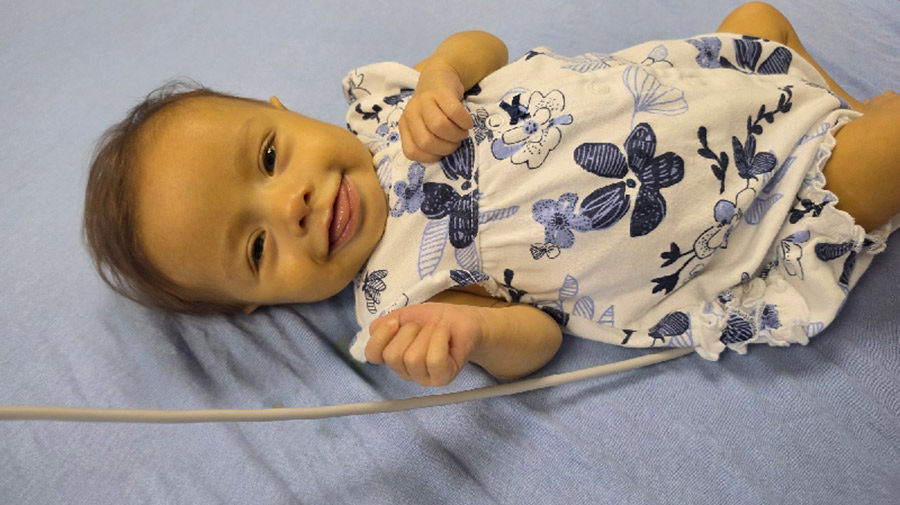
According to the National Institutes of Health, biliary atresia is “a rare, life-threatening liver disorder in newborns where the bile ducts become blocked or scarred, trapping bile inside the liver and causing rapid damage.”
Xalia was rushed to Primary Children’s Hospital in Salt Lake, where doctors continued testing and decided that she needed an operation for what they thought was biliary atresia.
“They started it, opened her up, checked the gallbladder, and ran contrast and everything,” says Tavia. “The gallbladder was extremely small, so they removed it, and that’s when they found out that she had an Abernethy malformation, and one of the portal veins on her liver was missing.”
An Abernethy malformation is a rare deformity of the blood vessels in the abdomen that causes bile and ammonia to build up in Xalia’s liver, according to the Children’s Hospital of Chicago.
This was the true cause of Xalia’s jaundice, and requires her to need a liver transplant.
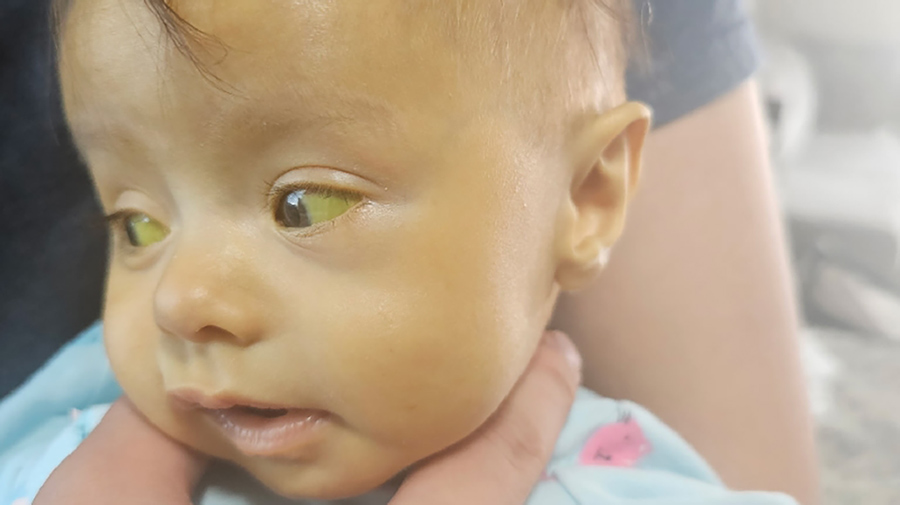
“(The doctors) compared it to somebody who had been drinking their whole life,” says Tavia. “That’s how bad her liver is.”
According to Tavia, this can be a genetic problem, so both Tavia, and Xalia’s father, Richard Martinez, underwent genetic testing – and found that neither of them was a carrier.
“What they found out was that she has a chromosome deletion,” says Tavia. “What that affects is her growth; it can affect learning disabilities, but it also gives her Diamond-Blackfan anemia (DBA).”
On top of everything else, DBA is a rare, inherited bone marrow failure disorder where the body fails to make enough red blood cells, according to the Boston Children’s Hospital.
This requires monthly blood transfusions, of which 6-month-old Xalia has already had nine.
“After a while, they’re going to try and move her to steroids, and see how it goes,” says Tavia. “Otherwise, they’ll have to keep doing transfusions or look into a bone marrow transplant on top of the liver transplant.”
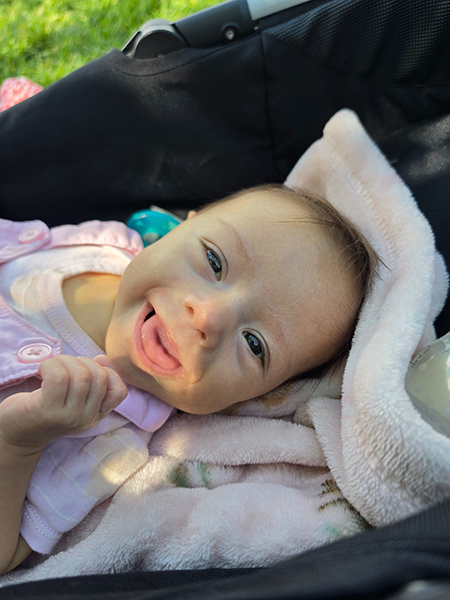
As if they didn’t already have enough to worry about, while testing Xalia to see if she’s viable for a liver transplant, Tavia says doctors found another life-threatening medical issue.
“They also found out that her vein structure isn’t correct, so she will end up needing heart surgery as well,” says Tavia.
Now, Xalia is receiving Peripheral Parenteral Nutrition (PPN), which is a medical method of delivering essential nutrients and calories directly into a peripheral vein through an IV line, according to the National Cancer Institute.
“It’s in her arm, and it goes straight to her heart, and it helps to give her nutrients and everything, like fats and vitamins, because she can’t hold onto vitamins and fats because of her liver,” says Tavia.
With constant trips and sometimes month-long stays in Utah for Xalia’s treatment and appointments, Tavia and Richard say they’ve been experiencing lots of stress and exhaustion throughout the process.
“It’s very stressful. We have a five-year-old too, and she starts kindergarten next week,” says Tavia. “I think it’s been kind of hard on her too, with everyone being gone and switching back and forth between our families right now, just whoever can watch her and whoever is available.”

Tavia says they have been unable to take their five-year-old Kalani with them to Utah because she is often not allowed in the children’s hospital due to her age and fear of her getting sick.
On top of it all, Richard often has to stay in Idaho Falls to work, ensuring he meets the minimum hours required to receive his health insurance benefits for Xalia’s care.
Because of financial hardship, Tavia started a GoFundMe campaign to help cover medical expenses and travel during this difficult time.
Click here to donate to the GoFundMe.
“It’s very hard. It’s kind of to the point where they want to do the transplant, but they also don’t know a lot, like, she could live or die,” says Tavia. “Her Abernethy malformation is so rare that they’ve never worked on it before.”
Our attorneys tell us we need to put this disclaimer in stories involving fundraisers: EastIdahoNews.com does not assure that the money deposited to the account will be applied for the benefit of the persons named as beneficiaries.