



Yellowstone National Park removing invasive fish from creek to preserve native species
Published at
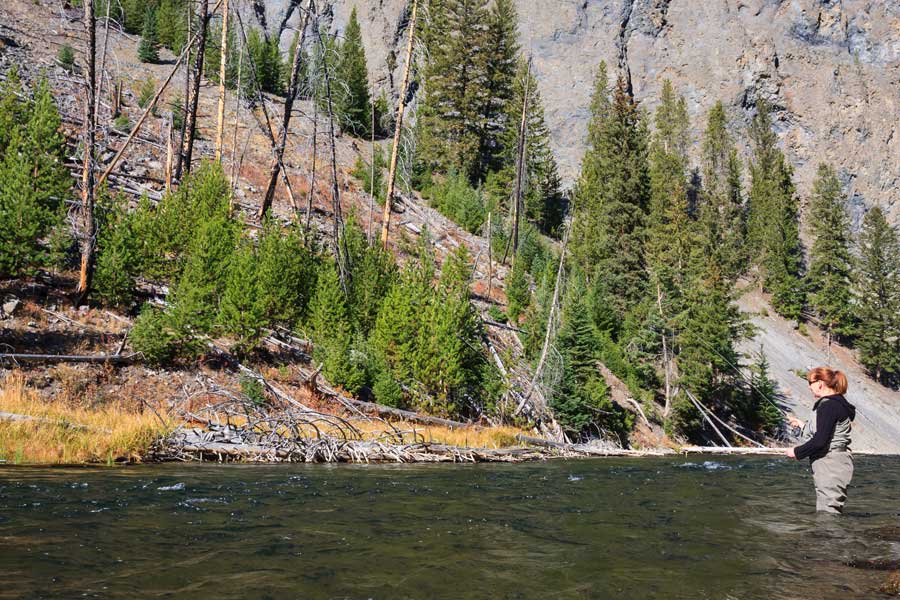
YELLOWSTONE NATIONAL PARK -– Yellowstone National Park has announced it will soon attempt to remove an invasive species to preserve a native species in Buffalo Creek.
According to a news release from Yellowstone National Park. Beginning Aug. 31, park employees will temporarily close Buffalo Creek, a tributary of Slough Creek in the northern part of the park, for treatment to remove invasive fish as part of ongoing conservation efforts to preserve native species.
It will reopen to the public on Sept. 7.
“Buffalo Creek will be closed to the public from the northern park boundary downstream to its confluence with Slough Creek while biologists remove invasive rainbow trout by applying the EPA-approved piscicide rotenone,” says the release. “The treatment will not affect the potability of water at Slough Creek Campground and will be safe to drink. Signs will be posted notifying the public of the closures.”
According to the release, Buffalo Creek is the source of invasive rainbow trout that have been competing and hybridizing with native Yellowstone cutthroat trout in Slough Creek, Soda Butte Creek, and the Lamar River.
Removal of the rainbow trout source population in Buffalo Creek will ensure the long-term persistence of Yellowstone cutthroat trout in the Lamar River watershed.
“Yellowstone cutthroat trout rarely occur in Buffalo Creek, but any captured by electrofishing prior to the project will be moved to waters outside the treatment zone,” says the release.
Yellowstone cutthroat trout are the only trout species native to the park.
“They are the most ecologically important fish of the Greater Yellowstone Ecosystem and are highly regarded by anglers,” says the release. “Genetically pure Yellowstone cutthroat trout populations have declined throughout their natural range in the Intermountain West due to competition with and predation by nonnative fish species, a loss of genetic integrity through hybridization, and habitat degradation.”
Learn more about ongoing preservation efforts at Native Fish Conservation Program.