



Son of Utah woman once believed to have been abducted by serial killer Ted Bundy breaks his silence
Published at
Dave Cawley, KSL
LAYTON, Utah (KSL) — An episode of the KSL podcast series COLD changed Brant Baird’s life.
Three years ago, COLD released a bonus episode focused on the unsolved disappearance of Nancy Perry Baird from the gas station where she worked on July 4, 1975.
The Nancy Baird cold case had long been blamed on Theodore “Ted” Bundy, based solely on the fact that Bundy was living in Utah at the time Baird disappeared. That tenuous connection to one of America’s most notorious serial killers was enough to vault the Nancy Baird case into the fringes of fame, despite the absence of any direct evidence.
“All the Bundy stuff kept coming back up,” Nancy’s son, Brant Baird, said in his first-ever interview about his mom’s case. “It was 51 years ago, and we’re still talking about it.”
Growing up in the shadow of Ted Bundy
Brant was just 4 years old when his mom vanished. His grandparents took him in and raised him. He recalls news reporters showing up on their doorstep all throughout his adolescence. They kept seeking comment as Bundy’s infamy grew following his arrest in Utah, his later escape from custody in Colorado, and the killing spree in Florida that finally landed Bundy on death row.
A detective from Utah asked Bundy about Nancy Baird shortly before Bundy’s execution in 1989. Bundy denied having anything to do with Baird’s disappearance. In the same interview, Bundy confessed to killing two other Utahns: Nancy Wilcox and Debra Kent.
“He was very forthright with all these other cases, so why would he lie about my mom?” Brant said. “There was always talk that maybe if (Bundy) found out she’d had me, that didn’t fit his M.O., so he would deny it.”
Nancy Baird’s parents, her ex-husband, her son, and the rest of her family shied away from the intrusive public attention brought on by the Bundy hype, coping with their grief in quiet anonymity. For decades, Brant avoided talking about it with almost anyone.
“Growing up, it was really painful,” Brant said. “Any kind of question about my parents, I’d always just say my mother died when I was young.”
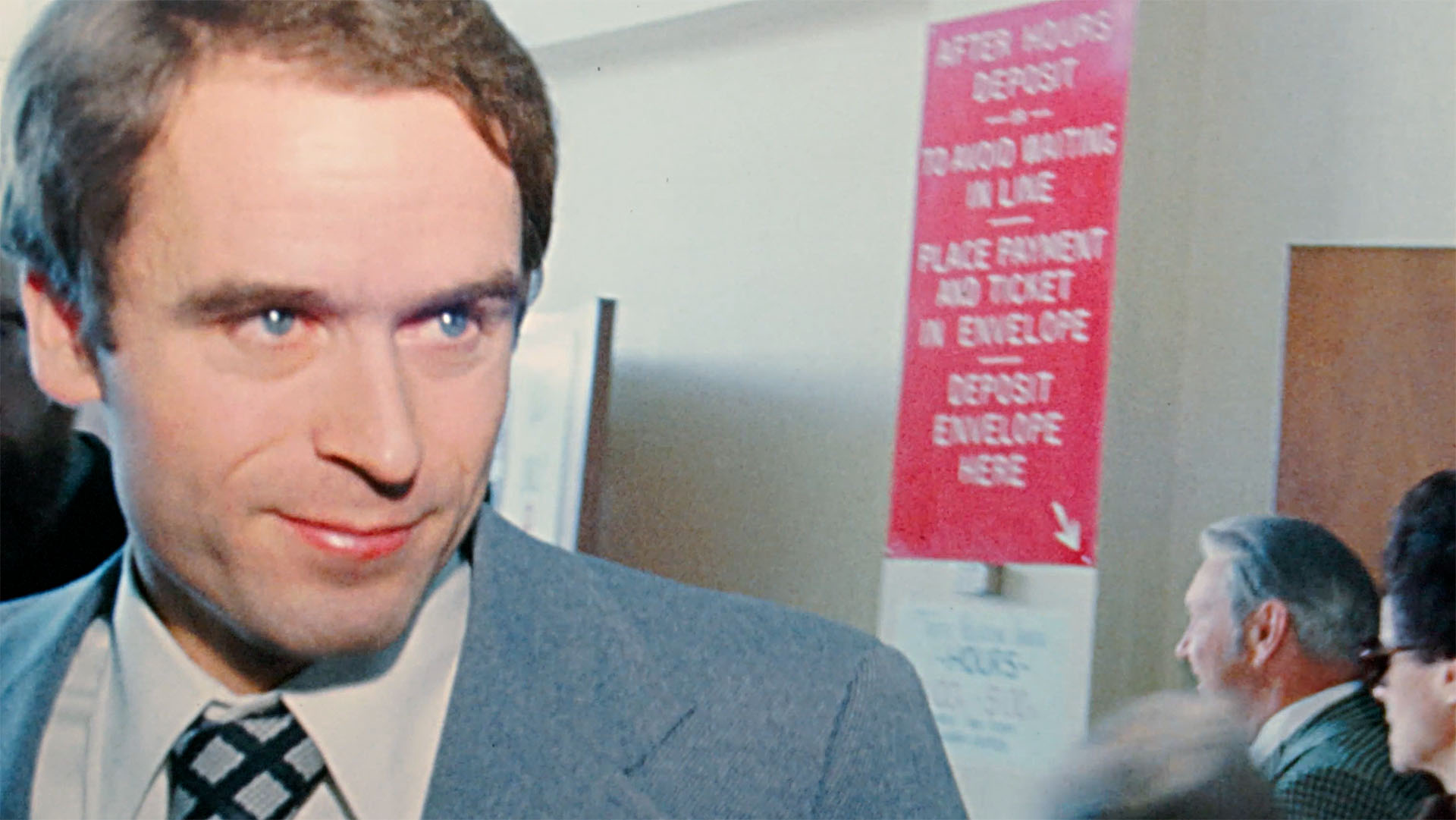
COLD’s first episode on the Nancy Baird case
When COLD dropped the special episode on the Nancy Baird case in May of 2023, it didn’t draw Brant’s attention at first.
“She’s been on multiple podcasts and many articles and blogs,” Brant said. “There’s been a bunch of stuff, but I’ve never really gone down those rabbit holes.”
A relative who had listened to COLD told Brant he ought to make an exception, because COLD had obtained the Nancy Baird case file and uncovered new information. The podcast also revealed, for the first time, that Ted Bundy had an alibi for the day Nancy Baird disappeared.
“My cousin’s wife called me and was like, ‘Hey, you may want to listen to this,'” Baird said. “I listened to it over and over.”
COLD’s reporting also played a role in rejuvenating police interest in the Nancy Baird case. Since 2023, the Davis County Sheriff’s Office has reopened its investigation and identified a former East Layton police officer as a “person of interest.”
A new season of COLD is now exploring Brant Baird’s experience, as well as the background of that former officer and his ties to the Baird case.
The disappearance of Nancy Perry Baird
Nancy Perry Baird was last seen between 5:15 and 5:30 on the afternoon of July 4, 1975. She was the lone attendant working at a self-serve Fina-brand gas station on the west side of U.S. Highway 89, near the intersection with Cherry Lane in East Layton.
An East Layton police officer named David Ray Anderson wrote in an official report that he’d stopped in to buy a drink at the station and spoken with Baird, noting everything was “10-4.” Anderson then went across the highway to investigate an “alcohol violation” involving two men. When Anderson looked back across the highway several minutes later, he noted a green van at the station. Anderson deemed it suspicious and decided to check it out.
Anderson returned to the Fina station and discovered Nancy Baird was no longer there. Baird’s purse, wallet, keys and car were all still at the station. There were no signs of any physical struggle inside the station’s convenience store, and no money was missing from the cash register.
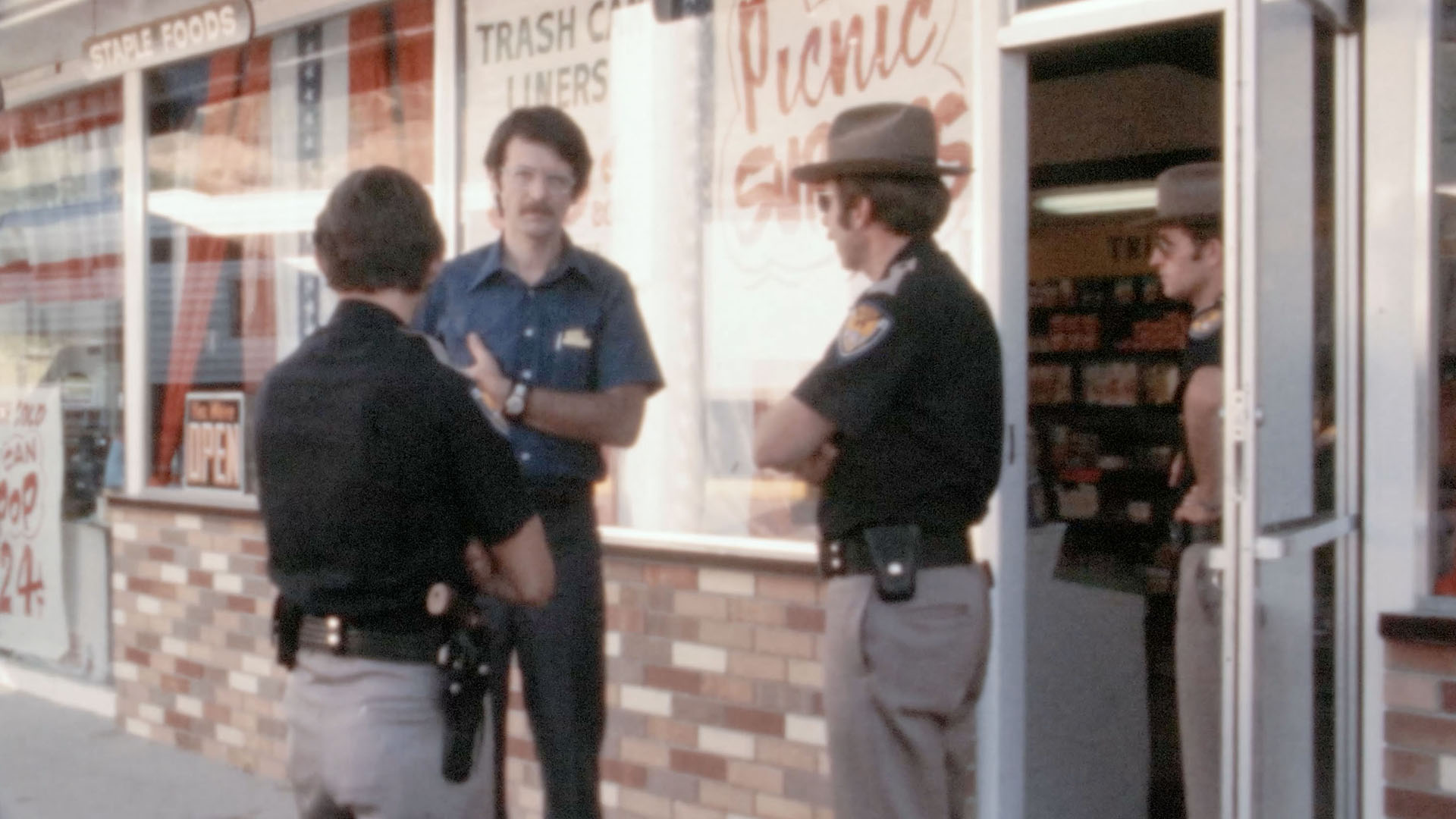
The East Layton Police Department at the time consisted of just four people: a part-time police chief named Ray Adams, full-time officer Anderson, and two part-time reserve officers: Gerald Burton and Thomas Jackson. None of those men had received formal police training. None of them had attended Utah’s police academy at that time. East Layton police immediately requested the assistance of the Davis County Sheriff’s Office in searching for Nancy Baird.
Their cooperative investigation stalled within a matter of weeks, after the East Layton officers and Davis County deputies determined Baird’s ex-husband had a solid alibi. So did most of Baird’s male friends and associates.
Ted Bundy’s first arrest occurred around this same time, in August of 1975. Bundy’s name did not become publicly known until several weeks later, in early October, when the Salt Lake County District Attorney’s Office filed criminal charges against Bundy for the Nov. 8, 1974, attempted abduction of Carol DaRonch at the Fashion Place Mall in Murray.
Bundy stood trial in the DaRonch case in February 1976. He was convicted and sentenced to prison.
Ted Bundy’s alibi for the disappearance of Nancy Baird
At the time of his arrest, Ted Bundy had a steady girlfriend who lived in Seattle. But investigators learned Bundy had also briefly dated a Salt Lake City schoolteacher named Leslie during the summer of 1975.
Leslie’s role in the Bundy saga is not well known or documented. She has not spoken publicly about her time with Bundy. However, in 2019, an independent researcher named Tiffany Jean obtained Leslie’s contact information and shared it with Chris Mortensen, a YouTuber focused on the Bundy cases. Mortensen called Leslie, with Tiffany Jean listening in, and spoke to Leslie.
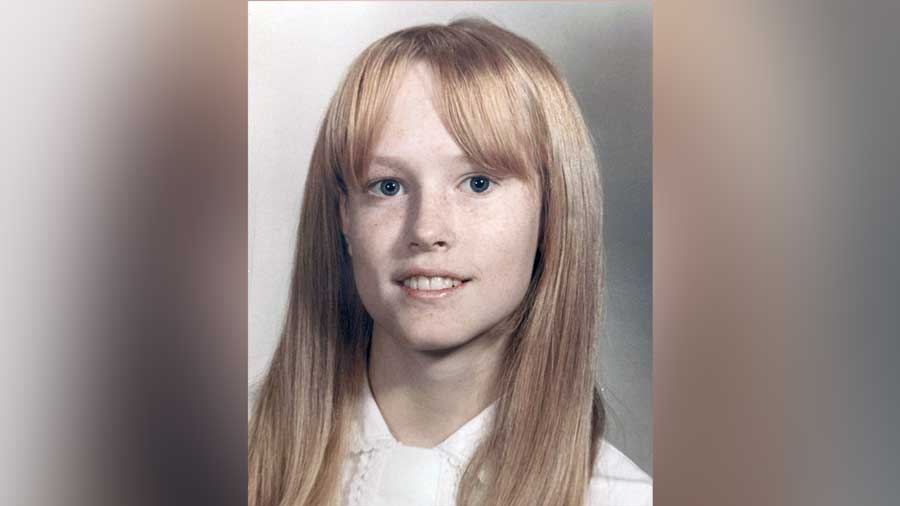
Mortensen did not ask Leslie specifically about Nancy Baird, or about the Fourth of July. Leslie brought the date up herself, in response to a question about whether Bundy had traveled to Colorado during the summer of 1975.
“I know he was in Colorado that summer, for sure,” Leslie said in a recording of the call reviewed by COLD. “I just don’t know the weekend. And the Fourth of July is when he would’ve gone to the family ranch. So, I was definitely seeing him the Fourth of July.”
Mortensen did not draw the connection between that date and the disappearance of Nancy Baird.
“I took him to a family reunion so all of my relatives got to meet him,” Leslie said. “He was appealing, for sure. My parents were very proud of me.”
Leslie did not disclose the whereabouts of her family ranch in the phone call recording. COLD used genealogical records to pinpoint the ranch’s location as Deep Creek, between Strawberry Reservoir and the town of Fruitland, in the Uinta Basin.
A biography of one of Leslie’s ancestors, Moroni “Rone” Smith, stated that he purchased the ranch in 1916. Property records confirmed that descendants of Moroni Smith still owned the property in 1975.
“For many years, (the ranch) was a place of gathering each July 4th,” Moroni Smith’s biography reads. “There was always lots of extended family and friends. We even had fireworks. Since then, various families and their friends visit and stay.”
This description suggests that Leslie and Bundy’s visit to the Deep Creek ranch would’ve been an all-day or even weekend-long affair. COLD has made repeated efforts to contact Leslie to verify this, but she has not responded.
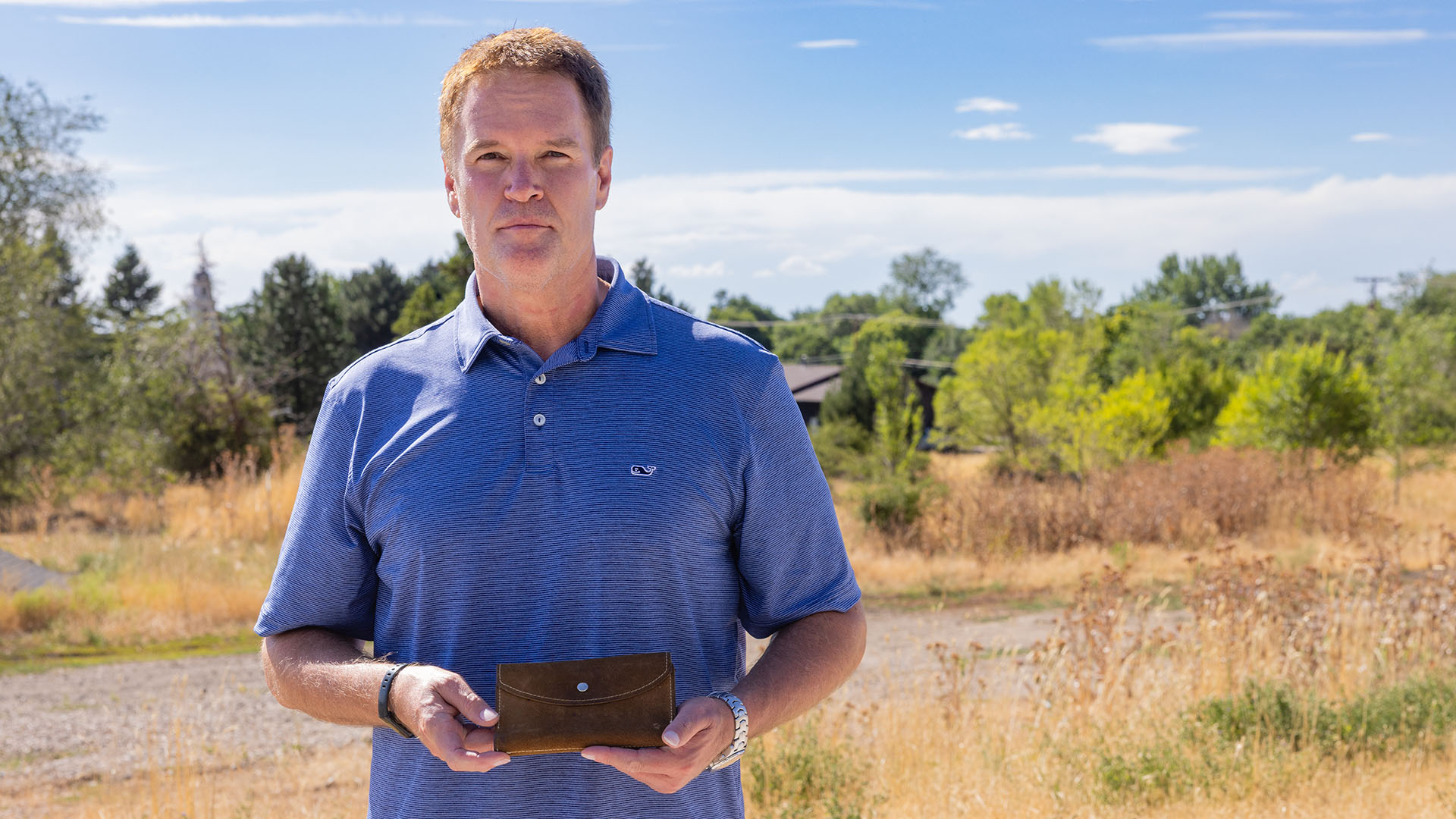
Brant Baird reacts to Ted Bundy’s alibi
In the absence of additional comment from Leslie, COLD shared the audio recording of her comments to Mortensen with Nancy Baird’s son, Brant.
“Wow,” Brant said after listening. “It’s crazy.”
The evidence of Bundy’s alibi shattered the only theory anyone ever provided Brant about his mother’s disappearance.
“It wasn’t until listening to your piece that they kind of ruled (Bundy) out a little bit,” Brant said, “or at least gave some credible deniability to that.”
If Bundy had left the Deep Creek ranch and driven to East Layton to abduct Nancy Baird, then returned to the ranch, the round trip would’ve required roughly four hours. That would not include the time required to kill Baird or dispose of her body.
If Bundy instead departed the Deep Creek ranch and headed for his home in Salt Lake City, his most likely route would not have taken him through East Layton. To pass by the Fina station en route home from the ranch, Bundy would’ve needed to make a lengthy and circuitous detour north on Interstate 84 to Weber Canyon, then south along U.S. Highway 89.
“Why would (Bundy) ever go up 84? It’s an hour-plus out of the way to get back down to Salt Lake City,” Brant said, when presented with this possibility. “You would come down Parleys (Canyon) and to your house. You wouldn’t go that far out of your way.”
Davis County Sheriff’s Office detectives seem to agree.
“I wouldn’t say that we’re heavily looking at Ted Bundy,” Sgt. Ryan Kirkman said. “He is a name in the case file that certainly hasn’t been 100% ruled out, but it’s nobody that we’re focusing on at this time.”
Season 4 of COLD, “Blamed on Bundy,” is out now, streaming on your favorite podcast platform. New episodes are released weekly on Tuesdays. Visit coldpodcast.com for more information.