




A quarter of Idaho voters have already cast ballots. What’s driving the surge?
Published at | Updated at
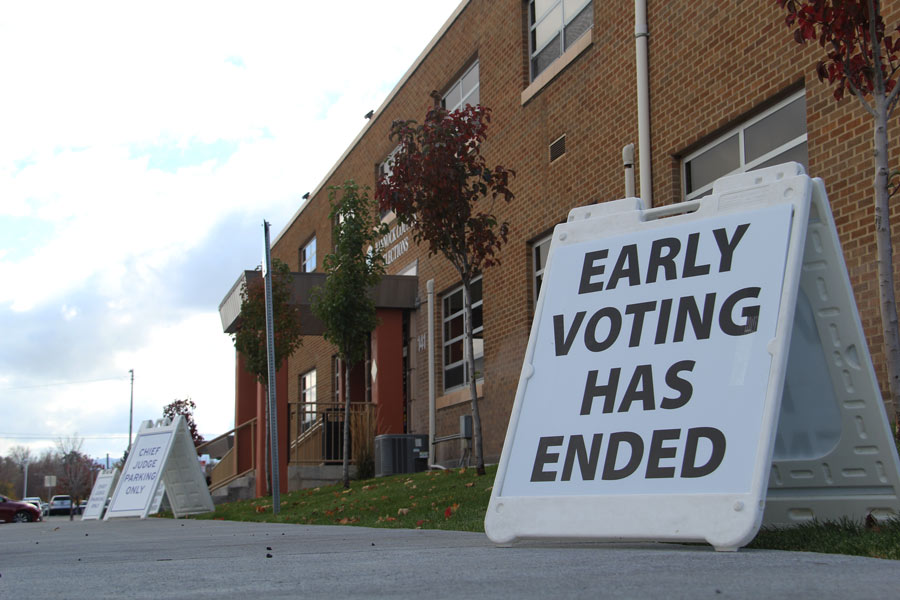
POCATELLO – A quarter of Idaho’s electorate have already cast their ballots in the 2026 election – and this may be the highest early turnout in a midterm election the state has ever seen.
That is likely the case in both Bannock and Bonneville counties at least, where election officials told EastIdahoNews.com how busy their offices have been during this year’s early voting period. Election officials in both counties agreed that this is “likely” the highest amount of early and absentee votes cast in a midterm election in their respective counties.
Bannock County Elections Director Julie Hancock said between 500 to 600 people per day voted early. On the final day of early voting on Friday, a total of 1,091 people showed up.
“Almost all day, we had people on the sidewalk or at least on the stairs waiting to get in,” Hancock said.
It was a similar story in Bonneville County.
“(Voter turnout) is definitely more than what we typically see in midterms. If you go back to 2022, it’s almost twice the number,” said Bonneville County Election Administrator Helena Welling.
RELATED | Idaho’s early voting numbers driven by ‘fired up’ electorate
It isn’t clear whether the same can be said statewide. According to the Idaho Secretary of State’s Office, data collection methods have changed over time, with less-specific data being available for previous midterm years.
Still, state officials say this year’s early voting turnout has been “robust.”
“It’s safe to say that there’s been robust turnout statewide,” a spokesperson for McGrane’s office said.
The final update before election day shows there have been 263,257 early and absentee votes cast, with 144,167 of those being early votes, and 119,090 being absentee ballots. With 76% of absentee ballots returned so far, there are still 37,798 ballots that could be returned before 8 p.m. Tuesday.
As of Monday, 25.3% of the Idaho electorate had already voted in 2026.
“The thing that’s exciting in our early voting numbers is that turnout is much higher than it was four years ago, and that’s a good sign in terms of just Idaho voter engagement,” McGrane told EastIdahoNews.com in an interview on Friday, before the final update on Monday.
While this amount is lower than it was in the 2024 presidential election, with 38.2% of the total electorate early and absentee voting, this is close to seven points higher than the last midterm election in 2022, when only 18.6% of the total electorate voted early and by absentee ballot.
McGrane says Proposition 1 is the main issue driving early voting.
“Both sides are very passionate about the issue itself,” McGrane said. “Millions of dollars (are) being spent on both sides, and anywhere (you go), you see some form of an ad … so that’s one (thing) bringing attention to it.”
Shawn Keenan, the Democratic nominee running against McGrane, agreed with Proposition One being one of the main drivers, but he views the overall state of the economy as the main factor bringing Idahoans out to the polls.
“That’s what it really boils down for folks, when they look at their quality of life and how they can manage their day-to-day needs when prices are through the roof on a lot of things. I think people are looking for answers,” Keenan said.
Polling shows the national environment as favorable to the Democratic party, with VoteHub moving its election forecast to there being a 68% chance Democrats win control of both chambers of congress. This has prompted much discussion about the possibility of a Democratic “blue wave.”
But Idaho is a historically red state, and it has grown more favorable to Republicans as its population has grown, McGrane said.
“Idaho is just getting redder. (For) the people moving here … politics is one of the major driving forces, and so pretty much every area is experiencing that to some degree,” McGrane said.
However, a factor that makes Idaho’s midterm election less predictable is Proposition One.
McGrane said that it’s possible that the proposition drives turnout from people against the initiative, diluting the effects of a blue wave, but it also could depend on the voter’s location.
“If it’s the north end of Boise, that’s not going to be the case … It’ll enhance the blue wave. But I think in an area like Pocatello, (there’s) the possibility … that one may cancel the other out,” McGrane said.
In Kootenai County, where Keenan lives, he’s seen more energy for the Vote No on Proposition One campaign. But he also thinks there could be a “quiet majority” that supports it.
“I think what you have is maybe kind of this quiet majority that doesn’t want to (wade) into the fray, that might still turn out and vote in favor of Prop One,” Keenan said.
Hancock says that because of Proposition One, as well as the other issues on the ballot and the “chitter chatter (was) on the street,” they were prepared for a busy election season.
“There was quite a bit of talk about a few of the issues on the ballot, and not just issues on the ballot, but an overwhelming dissatisfaction with what’s happening: gas prices and housing and cost of living,” Hancock said.
But even still, Hancock said, “I did not know we were going to be that busy.”
As for what turnout will be on the day of the election, Hancock doesn’t have a clear picture.
“You just never know what this community is gonna do,” Hancock said.