



Review: ‘I Play Rocky’ reminds us every success story has a chapter we never see
Published at | Updated at
When I was growing up in the 1980s, Sylvester Stallone was a movie star.
Not just a movie star. He was a superstar.
He was Rocky Balboa. He was John Rambo. He was the guy from “Tango & Cash,” not to mention the dude hanging from cliffs!
To me, Stallone was larger than life. He was the action hero who could take a beating, deliver a one-liner and somehow find the strength to get back up when everyone else would have stayed down.
What I didn’t understand as a kid was that Stallone wasn’t always that guy.

Before the fame, the money, and the franchises, he was a struggling actor who couldn’t seem to catch a break. He was broke, frustrated and desperate for someone to give him an opportunity.
And when he finally created that opportunity himself, Hollywood nearly took it away from him.
That’s the story behind “I Play Rocky,” and it’s one I found every bit as entertaining as the movie that made Stallone famous.
We know the ending, but not the whole story
“I Play Rocky” tells the story of a young Stallone (Anthony Ippolito), an aspiring actor who is struggling to find his place in Hollywood.
After years of rejection, Stallone writes a screenplay about an underdog boxer named Rocky Balboa. The script attracts attention, and suddenly, the struggling actor has something Hollywood wants.
There’s just one problem.
Stallone doesn’t simply want to sell his screenplay. He wants to star in it.
The people with the money have other ideas, and it’s not hard to understand why. Stallone is an unknown actor with an unconventional look and a speech impediment. From their perspective, he’s a risky choice to carry a major motion picture.
But Stallone believes in the character he’s created, and he’s unwilling to give him up.
We all know how this ends. “Rocky” becomes a massive success, wins the Academy Award for best picture and launches Stallone into superstardom.
Yet somehow, “I Play Rocky” makes that familiar ending feel uncertain.
And that’s one of the things I enjoyed most about it.
Making us care when we already know what happens
There’s a challenge in making a movie about a famous success story: How do you create tension when the audience already knows the outcome?
“I Play Rocky” handles that challenge beautifully.
The movie doesn’t ask us to wonder whether “Rocky” will become a hit. Instead, it puts us in the shoes of a young man who has absolutely no idea what’s coming.
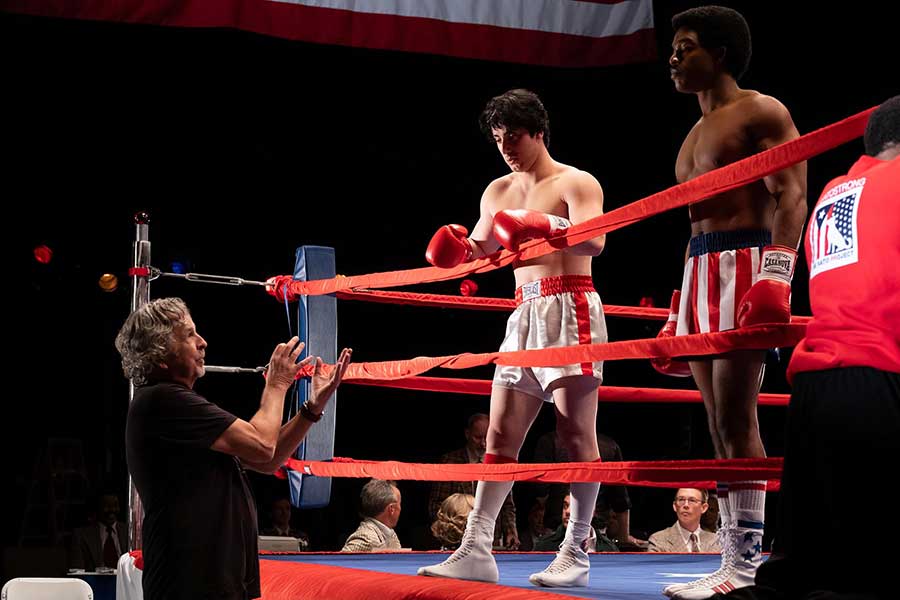
We know he’s going to make it. He doesn’t.
Every rejection matters. Every opportunity feels fragile. Every time someone tells him to give up his dream of starring in his own movie, we understand just how tempting it must have been to take the money and walk away.
That’s what makes the story work.
It’s easy to look at someone like Stallone today and assume success was inevitable. After all, how could Hollywood have failed to recognize a future superstar?
But that’s the luxury of hindsight. At the time, he was just another struggling actor with a screenplay and a dream.
The movie does a wonderful job of reminding us of that.
Ippolito is fantastic
A movie like this lives or dies with its lead performance, and Ippolito is terrific.
Playing someone as recognizable as Stallone is no easy task. There’s a fine line between portraying a famous person and doing an impression of one.
Ippolito certainly captures Stallone’s distinctive voice and mannerisms, but what impressed me most was everything underneath them.
He gives us a young man who is stubborn, insecure, ambitious and occasionally his own worst enemy.
There are moments when you want to cheer for him and others when you want to grab him by the shoulders and tell him to stop making things so difficult.
That’s a good thing.
If the movie had portrayed Stallone as a misunderstood genius who was always right and everyone else was always wrong, it wouldn’t have been nearly as interesting.
Instead, Ippolito makes him human. His determination is admirable, but it also comes with frustration, fear and some difficult choices.
The supporting characters also help give the story its heart. Stallone’s journey wasn’t something he accomplished entirely alone, and the film makes room for the people who believed in him when it wasn’t necessarily the smart bet.
More entertaining than you might expect
Another pleasant surprise is how funny “I Play Rocky” can be.
This isn’t two hours of a struggling actor getting doors slammed in his face while inspirational music plays in the background.
There’s plenty of humor, much of it coming from the absurdity of the situations Stallone finds himself in and the personalities he encounters along the way.
The film also moves at a good pace. It understands when to let a moment breathe and when to move on.
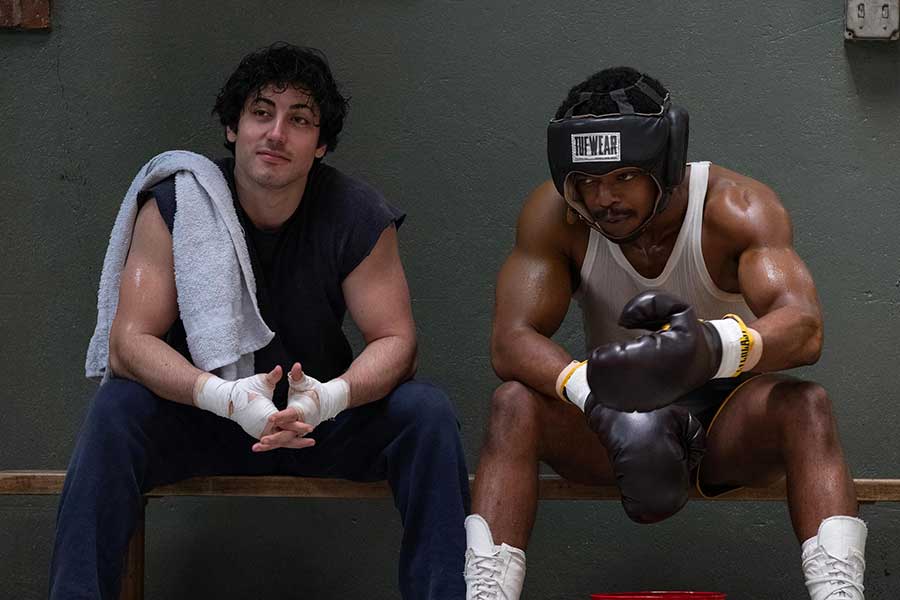
If I have a reservation, it’s that the movie is clearly interested in celebrating Stallone’s perseverance, and that occasionally makes the story feel a little too neatly arranged around its inspirational message.
Some of the complications are resolved with the kind of efficiency that reminds you you’re watching a dramatization rather than a documentary.
But those moments didn’t take much away from my enjoyment. I was invested in the people, entertained by the journey and genuinely moved by the outcome.
And considering I walked into the movie knowing exactly how it would end, that’s a pretty impressive accomplishment.
The chapter we don’t see
I think one of the reasons I enjoyed “I Play Rocky” so much is that it changed the way I looked at a story I’ve known practically my entire life.
When I was a kid, Rocky Balboa was inspiring because he could take a punch and keep fighting. I loved the training montages, the music and the big moments in the ring.
And yes, I still think “Rocky IV” is peak cinema. I will not be taking questions at this time.
But watching “I Play Rocky” made me appreciate something different.
The real Stallone didn’t know he was going to become Rocky Balboa. He didn’t know audiences would love the character or that the movie would change his life.
He just believed he had a story worth telling and was willing to risk an awful lot to tell it.
We tend to hear success stories after the success has happened. We see the awards, the accomplishments and the recognition. We rarely spend much time thinking about the years when none of those things seemed possible.
“I Play Rocky” gives us a glimpse of that missing chapter.
And that’s why I’d recommend it, even to people who aren’t particularly interested in boxing movies or Stallone.
It’s funny, heartfelt, wonderfully acted and surprisingly suspenseful for a story whose ending is already written.
“Rocky” made audiences believe an underdog could go the distance.
“I Play Rocky” reminds us that before anyone could cheer for Rocky Balboa, somebody had to believe he deserved a chance in the first place.