



Recent fire in national forest a reminder to never abandon a fire pit
Published at
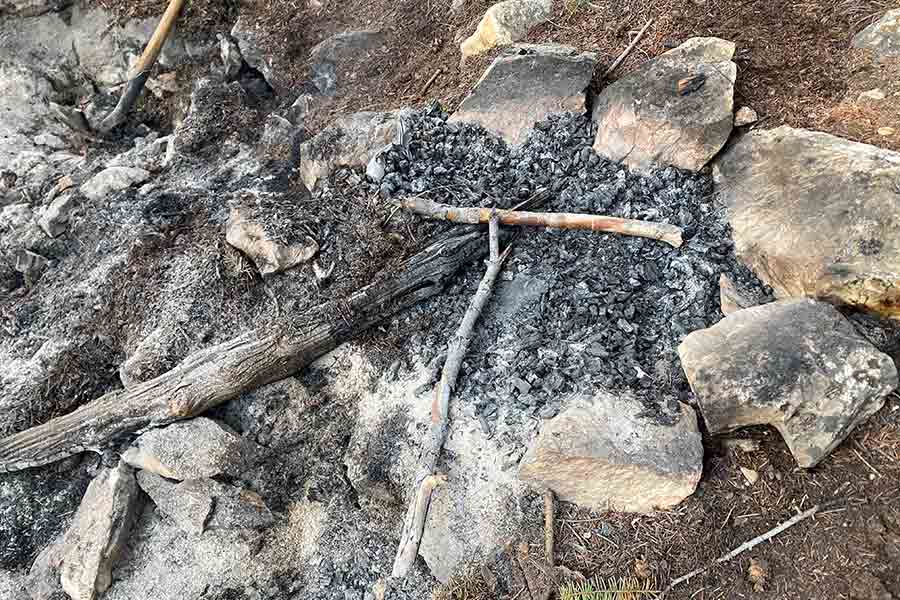
SHOUP — A small fire in a national forest in Idaho has prompted forest officials to remind the public how important it is always to put out their fires.
On March 11, firefighters hiked into the vicinity of Goldbug Hot Springs in Salmon-Challis National Forest after receiving a report of a fire. They found a fire that had burned out of the ring of the fire pit, consuming dead and dried grass.
“Just because we are in winter and there is still snow on the ground, it doesn’t mean that an abandoned campfire cannot spread,” said Amy Baumer, the public affairs officer for the national forest.
Also, there is a standing forest order that requires people not to camp within 500 feet of Goldbug Hot Springs, and this fire was found within 260 feet from the center.
The firefighters were on site for several hours and contained the fire, which burned only 0.1 acre of land. They continued to work on the fire until that evening to make sure it was completely out.
Baumer said that one of the dangers of this time of year approaching spring is that it tends to be more windy, and the grass hasn’t “greened up” yet.
“Before the grasses and everything starts to green up, they’re really dry, and they’re more flammable than they are when you get into the actual springtime,” Baumer said.
She said that if there was enough wind and vegetation around the fire pit, it could have carried into a larger fire.
Baumer doesn’t know why the campers abandoned their fire, but there are many possibilities, including that the campers didn’t know how to check to make sure that their fire was completely out.
While not always possible, Baumer said, if a campfire has larger pieces of wood, it’s good to let them burn completely down to ash.
Campers should then pour water on the fire and drown all the embers, “not just the red ones because there can still be heat where you’re not seeing red with your eyes.”
Baumer said the campers should keep pouring water on the fire until they can’t hear a hissing sound.
“If you don’t have that much water available, you want to stir that dirt just like you’re stirring a pot of soup … to bury that fire so that it can’t creep out and get into that vegetation,” Baumer said.
After that, the campers should feel the ground to ensure that it’s no longer hot.
“Just drown, stir and feel until you can touch it,” Baumer said. “If it’s too hot to touch, it’s too hot to leave.”