



Stop the yellow: When and how to apply iron for greener lawns, trees, and gardens
Published at
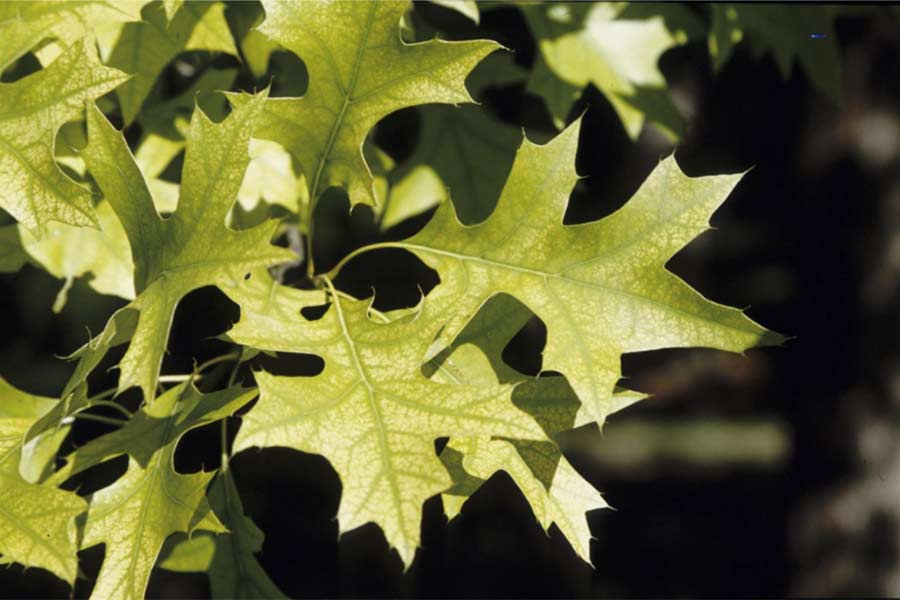
If your trees or lawn start the season looking more lemon than lime, you may be seeing iron chlorosis—a common nutrient problem across much of the west. It’s especially noticeable in early spring, when new leaves emerge pale yellow, but the veins stay dark green. While the symptoms may look like a fertilizer deficiency, the real problem isn’t always a lack of iron in the soil. More often, it’s that the iron already present has become unavailable to plants because of our region’s high-pH, alkaline soils.
You might say, my trees and shrubs have already lost their leaves, and my grass is going to sleep for the year—why worry about this now? The answer is that fall and early spring are the best times to correct the problem before it shows up again next growing season. With a little planning now, you can prevent yellow leaves next year and keep your plants healthier for the long haul.
Why Plants Turn Yellow
Iron is a critical nutrient that plants use to produce chlorophyll—the green pigment that powers photosynthesis. When plants can’t take up enough iron, they can’t make chlorophyll efficiently, so the leaves turn yellow between the veins. This condition, known as interveinal chlorosis, is most visible on the newest growth and can stunt plant development or even kill branches if it continues unchecked.
In much of the Intermountain West, our soils are naturally alkaline, often with pH values between 7.5 and 8.5. In these conditions, iron becomes chemically bound to other elements and unavailable for plant roots to absorb. Cool, wet spring soils and overwatering can make the problem worse by reducing oxygen and further limiting root activity. Trees such as maples, aspens, and pin oaks, along with lawns and roses, are frequent victims.
When to Apply Iron
Early Spring: The Prime Time
University of Idaho and Utah State University Extension publications agree that early spring—just before or as new growth begins—is the best time to apply iron. That’s when plant roots are most active and ready to take in nutrients. For soil-applied or injected iron, aim for the window when buds are swelling but before the leaves have fully expanded.
If you miss that early window, foliar sprays can provide a quick green-up later in spring. Idaho Extension recommends applying foliar iron about three weeks after leaves appear, ideally in the early morning when temperatures are cool. These sprays can green leaves within days, but the effect is temporary, lasting only a few weeks.
Fall: A Second Opportunity
If spring gets away from you, fall is the next best time to treat trees and shrubs. Utah State University Extension notes that roots remain active even after leaves have dropped, so applying iron chelates in the fall allows plants to absorb and store the nutrient for the following spring. Soil temperatures are still warm enough for chemical reactions to occur, and the treatment has time to move into the root zone before winter dormancy.
Fall applications are especially useful for larger trees where early spring soil treatments may be harder to manage. Many professionals also combine iron chelate with a light sulfur or compost application in the fall to gradually lower soil pH and improve future iron availability.
Summer: Quick Fixes Only
By mid-summer, when soils are dry and hot, most root systems slow down, and soil applications become less effective. The best option at that point is a foliar spray, which provides a short-term boost by applying iron directly to the leaves. Use a soluble product such as iron sulfate or chelated iron and spray during cool, cloudy weather or in the evening to avoid leaf burn. Reapply as needed every few weeks until cooler weather returns. Remember, these sprays treat symptoms, not the root cause.
Choosing the Right Form of Iron
Not all iron products are created equally. For our alkaline western soils, chelated iron containing Fe-EDDHA is the most effective form. This chelate remains available to plants even when soil pH is above 7.5. Other forms like Fe-DTPA or Fe-EDTA break down quickly in high-pH soils and may provide only short-term results. Iron sulfate is inexpensive and can help temporarily, but it tends to react with soil minerals and become unavailable within weeks.
For large or severely affected trees, trunk injections are another option. The University of Idaho recommends performing injections in early spring or after September 30, when temperatures are moderate and tree stress is minimal. Injections can last multiple years but should be done carefully to avoid wounding the tree.
Long-Term Solutions
Quick fixes can help your plants recover, but preventing iron chlorosis requires improving the growing environment. Consider these long-term steps:
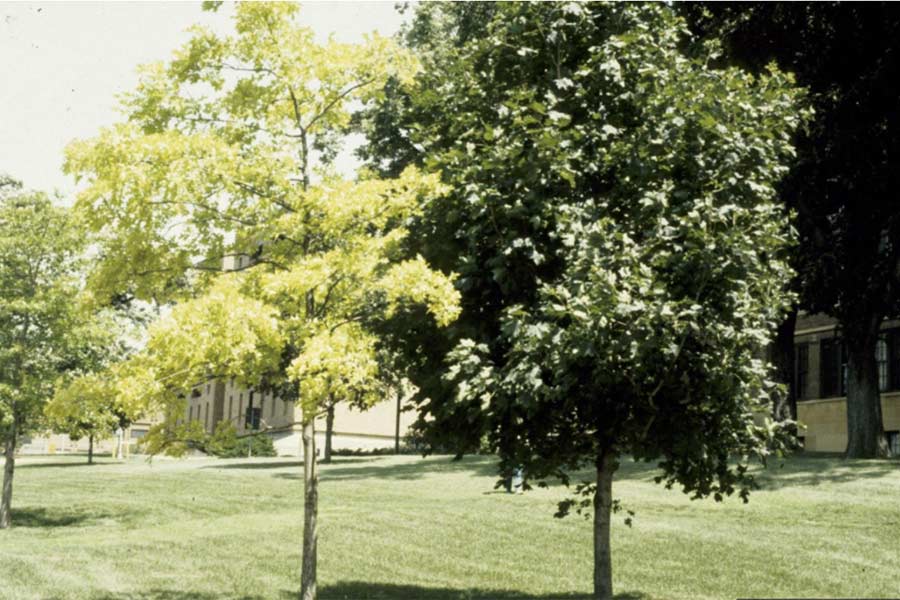
Choose iron-efficient species. For example, bur oak tolerates high-pH soils far better than maples. Additional tree species that tolerate high-pH soils include Limber Pine, Honeylocust, Serviceberry, and Crabapples.
Improve soil structure and aeration. Avoid overwatering and compacted soils, which limit root oxygen.
Incorporate organic matter or elemental sulfur. These can slowly lower soil pH and improve iron availability.
Test your soil. A simple soil test from your county Extension office will confirm pH levels and help you choose the right treatment.
Chlorosis symptoms often appear early in the year when soils are still cool. That’s the best time to act—before the problem becomes severe.
Putting It All Together
Iron chlorosis can be frustrating, but it’s one of the most manageable plant problems once you understand the timing. Apply iron chelates in early spring or fall for the longest-lasting results and use foliar sprays only as temporary relief. Work toward lowering your soil pH gradually and select plant varieties that thrive in alkaline conditions.
Treating early—before leaves fade to yellow—saves both time and money and keeps your landscape looking healthy all season long.
If you’re unsure which product or timing is best for your situation, contact your local University of Idaho Extension office. They can help interpret your soil test results and recommend treatment options that fit your plants and soil type.