



Catching a photo of a pygmy owl in Howe was a dream come true
Published at
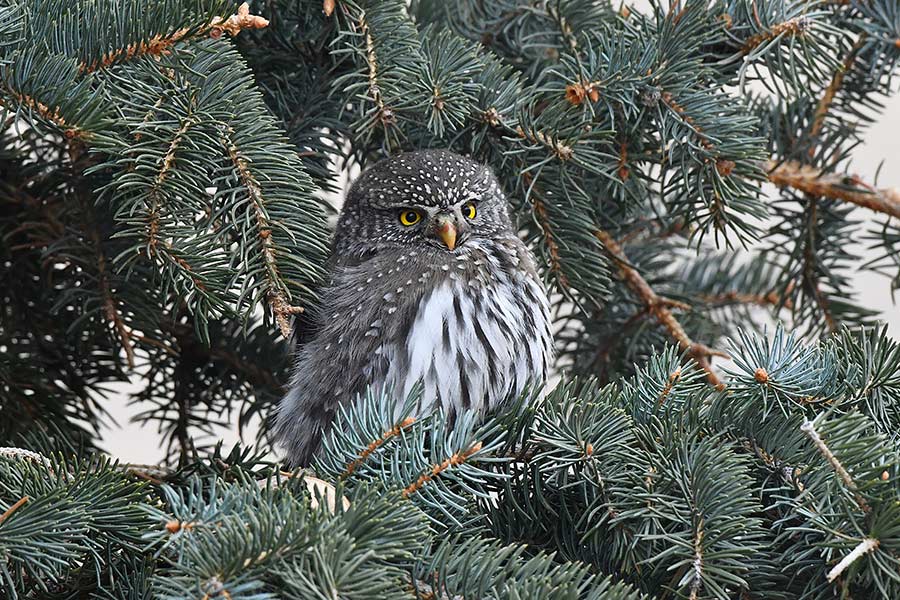
As Alex Bell and I were finishing our area of the Howe Christmas Bird Count on Saturday, January 3, his cell phone rang, interrupting our watching of two Golden eagles soaring in a stiff wind. The call came from Teresa Meachum and Kit Struthers from Howe Elementary School.
“We just found a pygmy owl here at the school,” Teresa reported. “It is on top of the spruce, by the gray building.”
“We will be there as soon as we can get there,” I told Alex to relay to her. I had seen two of them in my life prior to this one, one while elk hunting (without a camera) and one while picking huckleberries, also without my camera. This was my first chance to get a photo that I had longed to get.
Ten minutes later, we pulled into the school yard only to have a pickup with a dog in it pull in one minute before us to let the dog run and poop. The dog was running around and the owl had disappeared. Teresa and Kit were parked there and told us that they had not seen the owl fly away, but it was not perched on top of the tree.
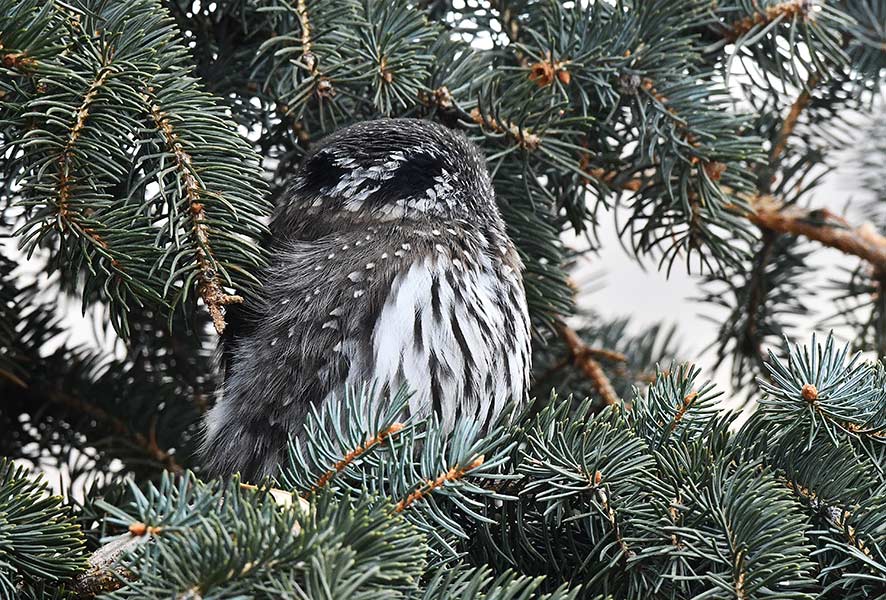
Alex and I decided to wait there for a few minutes. We walked around the tree a few times and finally I saw some movement in the thick foliage after the pickup and dog left. A few minutes later, Alex located the four-inch-tall owl on one of the lower branches. It sat there on the limb while we got pictures of it. It was as cute as I had dreamed about! We watched as it turned its head back and forth, far enough for me to see the fake eye spots on the back of its head. Dreams really do come true!
It stayed there the rest of the day with all of the participants involved in the bird count to study it and get pictures. We usually see other owl species, but due to the lack of voles in the Little Lost Creek Valley, it was the only owl that we observed.
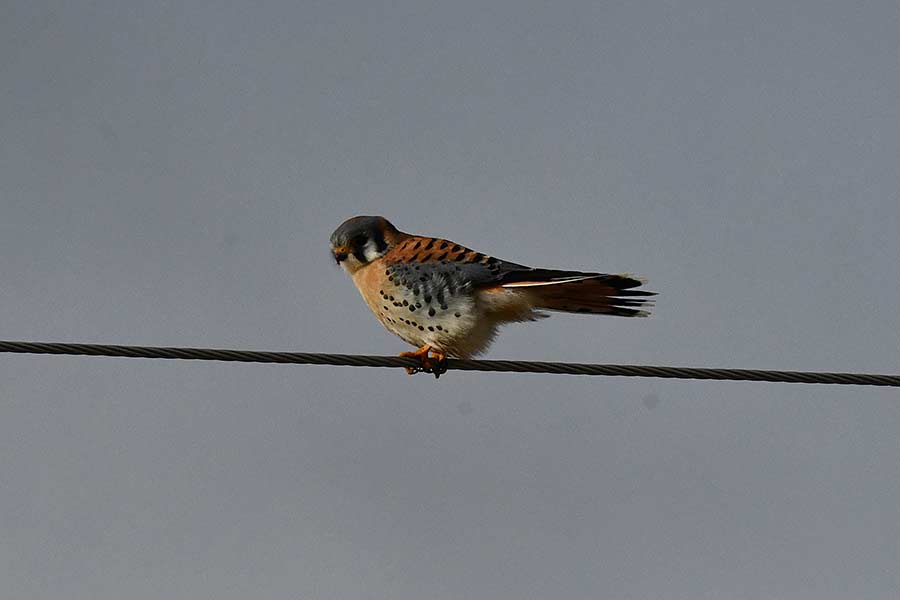
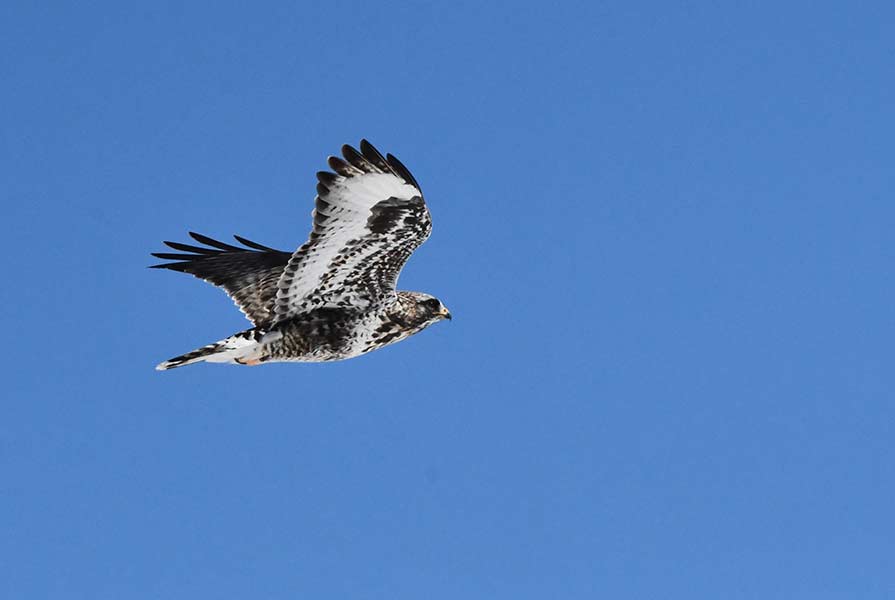
The yearly Howe Christmas Bird Count has been driven by the number of raptors that usually winter in the valley. There are usually hundreds of rough-legged hawks and an abundance of ferruginous hawks and prairie falcons that feed heavily on voles. We had a total of 10 rough-leggeds, two red-tailed, two prairie falcons and no ferruginous. The small hawks that harvest small songbirds ands voles, like Merlins and American Kestrels, numbered eight each.
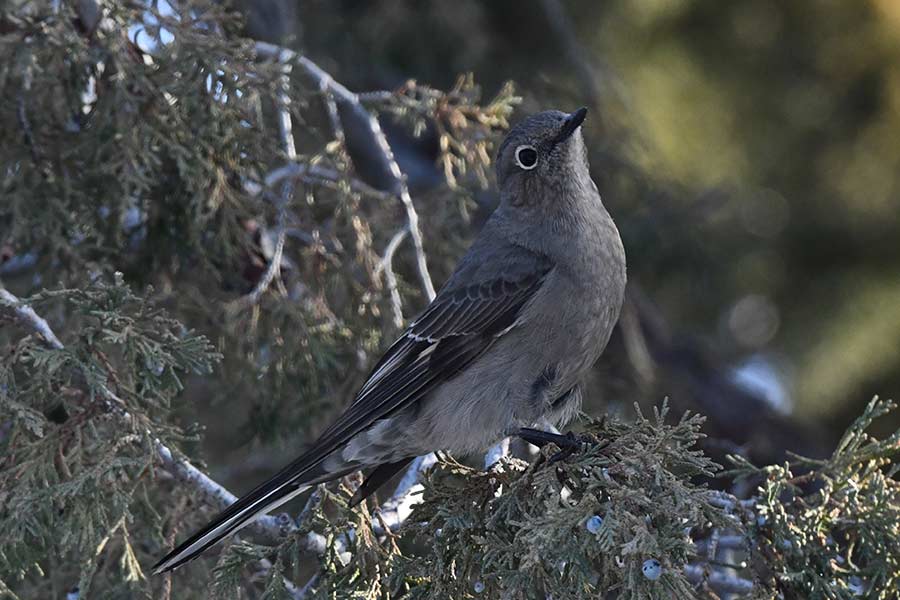
We ended the day with 27 species, the most numerous being House sparrows (540), Common raven (159) and Eurasian Collared-doves (191). The “must see” bird, the Virginia rails at the Warm Spring Creek, were there with three of them being recorded. Five bald eagles and the local nesting pair of golden eagles were there, hanging around the flocks of sheep grazing on the snowless hay fields. The surprise bird was the four Townsend’s solitaires that Alex and I found hanging out with seven American robins along a creek.
Other usually common birds that were not observed were gray partridge, greater sage-grouse, chukars and California quail. The only waterfowl seen were two Canada geese and two mallards.
With the area Christmas bird counts now completed, I will be looking for some odd birds, big game migrations, specific owl sightings, and fishing. It looks like we may have an influx of pygmy owls showing up, with one reported seen in Moody Creek area, Ririe Reservoir and the Heise area this winter.
My favorite winter bird count will happen on February 13 – 16 when the Great Backyard Bird Count will occur. Hopefully we will have snow on the ground by then and the birds that usually show up in my backyard will be here in abundance to put on a show.
Be safe in your outdoor activities and pray for ice on Ririe Reservoir – I need to catch some kokanee!

Living the Wildlife is brought to you by Yellowstone Teton Territory. Experience 7,500 square miles of untamed wilderness in Eastern Idaho's Yellowstone Teton Territory. Where majestic peaks meet endless adventure, your perfect outdoor escape is waiting. Start planning at YellowstoneTeton.com.