



Fact or Folklore: Did the Eastern Idaho State Fairgrounds once house POWs?
Published at | Updated at
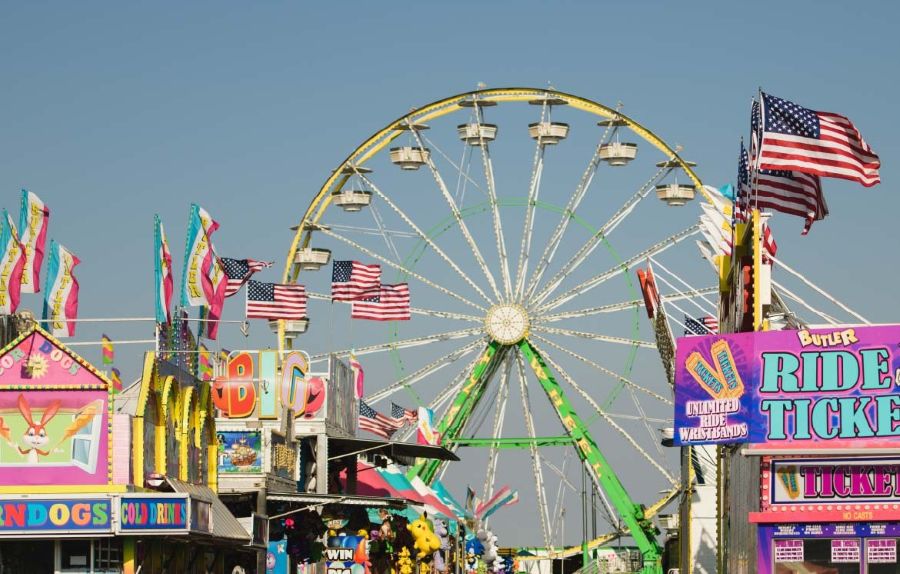
EDITOR’S NOTE: This is the first in a three-part series taking a closer look at some of Blackfoot’s most talked-about legends, separating fact from folklore.
BLACKFOOT — As the town enters a new year, celebrating 125 years since its founding, EastIdahoNews.com thought it would be both fun and informative to revisit some of Blackfoot’s most persistent myths, legends and long-standing rumors.
From stories passed down through generations to questions that still surface at coffee shops and community gatherings, some local tales refuse to fade.
We start with a question that continues to surprise newcomers and some longtime residents alike: Did the Eastern Idaho State Fairgrounds once house World War II prisoners of war?
The short answer is yes.
Historical records confirm that in the fall of 1944, the fairgrounds’ agricultural buildings served as temporary housing for Italian prisoners of war as east Idaho grappled with a severe agricultural labor shortage caused by the war.
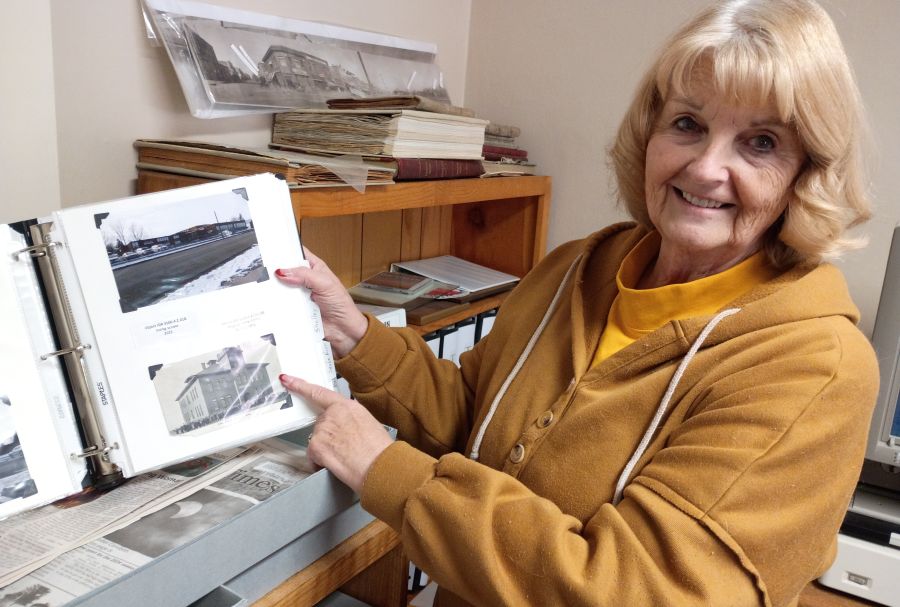
Bingham County Historian Leslie Mickelsen said POW camps and branch camps were common throughout east Idaho during World War II and confirmed the fairgrounds were used for that purpose, though photographs and detailed firsthand accounts from that period are difficult to find.
What kind of camp was it?
What is often misunderstood is the type of camp that existed in Blackfoot. According to Idaho State Historical Society records, the prisoners associated with the fairgrounds were held in a prisoner-of-war branch camp, not a concentration camp and not a civilian internment camp as is often rumored.
A POW camp is a military-run facility used to hold captured enemy soldiers during wartime. These camps operated under international law, including the Geneva Convention, which governed treatment, housing, medical care and allowable work assignments.
Historians emphasize that the men housed at the fairgrounds were enemy soldiers, not civilians, and were detained as part of a lawful wartime system rather than as punishment or because of ethnicity.
Why POWs were brought to Blackfoot
By the fall of 1944, east Idaho, like much of the country, was facing an acute agricultural labor shortage. Thousands of American men were overseas, and crops critical to the war effort, particularly sugar beets and potatoes, still needed to be harvested.
Records from the Idaho State Historical Society show that approximately 500 Italian prisoners of war were temporarily housed at the Eastern Idaho State Fairgrounds beginning Sept. 22, 1944, just days after that year’s fair ended. With the fair canceled during the war years, large buildings on the grounds were available for temporary use.
U.S. Army personnel established headquarters at the fairgrounds and guarded the prisoners, who lived there for just over a month while being transported daily to nearby fields to work.
Accounts from the era describe the Italian prisoners as generally cooperative and, in many cases, welcomed by farmers who relied on their labor to save the harvest.
Old documents provided by Eastern Idaho State Fair officials quote the late Claude Johnson, who served as Bingham County’s extension agent at the time, as saying, “They (the POWs) were no different than our boys. They were just fighting a different army.”
The late Ruth Hartkopf, who was the fair’s secretary at the time, is reported as saying, “I always gave them a greeting when I passed; however, sometimes they made suggestive or lewd remarks toward women.”
Lifelong Bingham County resident and historian Richard Lindsay, then about 7 or 8 years old, recalls watching the prisoners being transported to work in nearby fields.
“There were groups of the POWs that were brought from the fairgrounds out to Thomas to work,” Lindsay said. “I was very curious about them. I remember watching them come in and out of the beet and potato fields.”
Lindsay also recalls POWs being housed in schools in Aberdeen and Fort Hall during the war.
A small part of a much larger system
Nationally, the United States operated 141 base prisoner of war camps and more than 300 branch camps during World War II. Idaho and Utah together hosted nine base camps and 21 branch camps, supervising roughly 11,600 prisoners, or about 3.6% of all POWs held in base camps.
The Blackfoot camp served as a branch camp under the larger base camp in Rupert. Similar branch camps existed in Aberdeen, Pocatello, Filer, Franklin and other communities. All were administered by the U.S. War Department and operated under the rules set forth by the 1929 Geneva Convention.
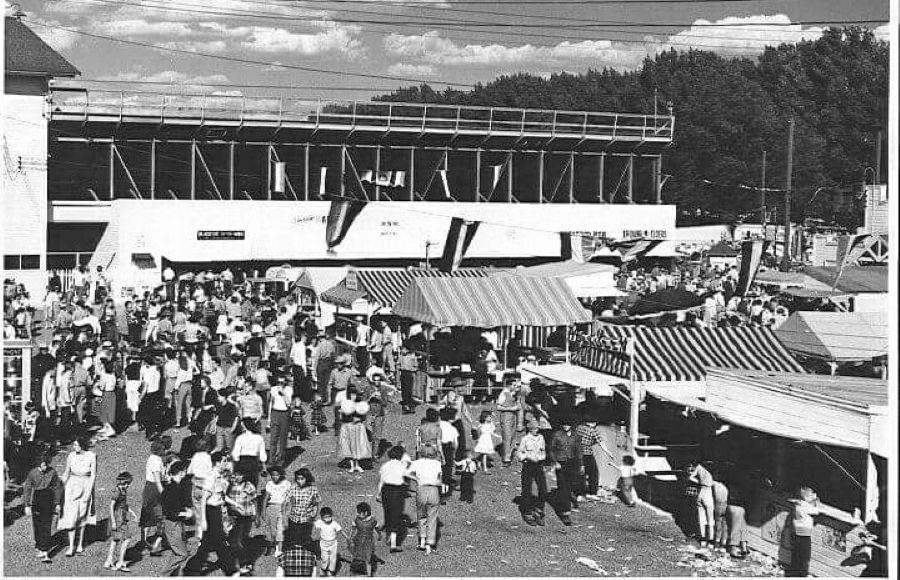
Today’s east Idaho state fairgoers likely don’t realize the same grounds once housed enemy soldiers during one of the most consequential wars in human history. For a brief moment in 1944, a familiar Blackfoot landmark quietly became part of a global story.
RELATED: Blackfoot kicks off birthday celebrations as the city turns 125 and America turns 250
Watch for Part 2 of Fact or Folklore, which explores the long-running rumor: Was Jensen Grove built on a dump?