Former lawmaker from Idaho Falls was one of 3 brothers to hold public office
Published at
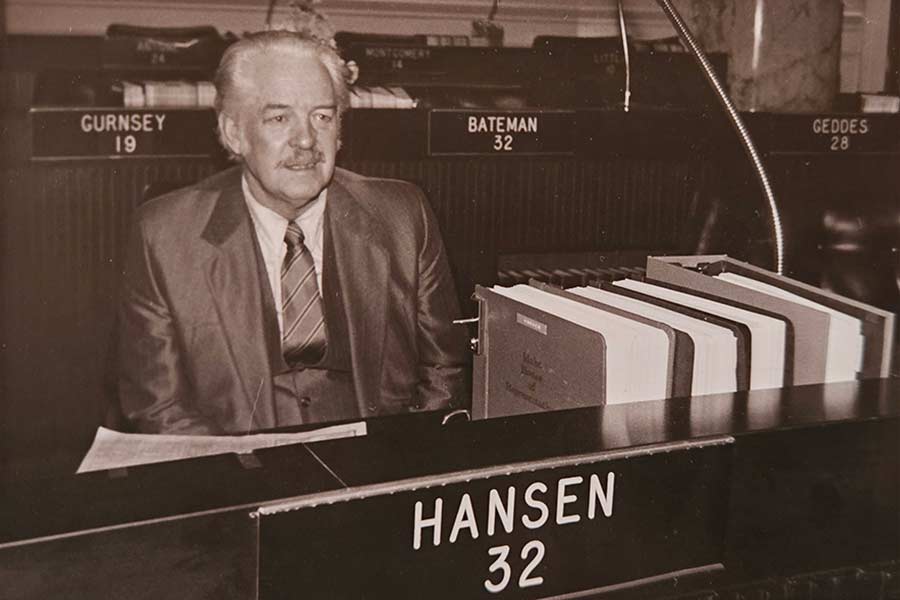
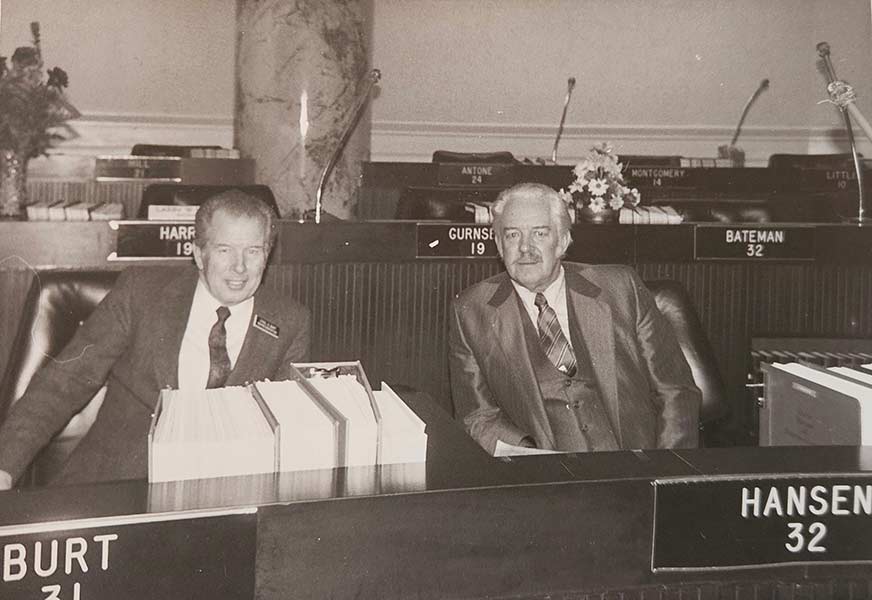
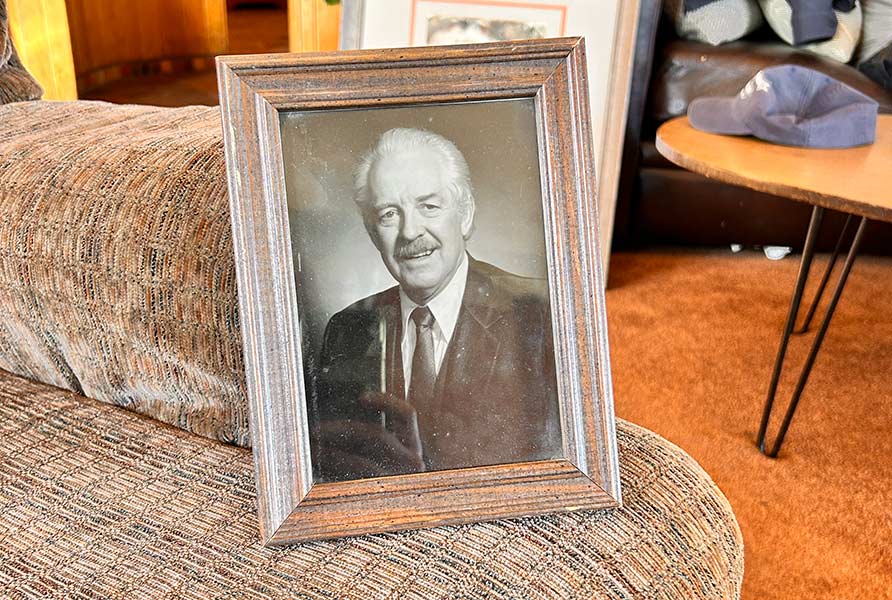
IDAHO FALLS — At the conclusion of the 48th Idaho Legislative Session, Reed Hansen was listed among the standout lawmakers.
That’s what was reported in an April 1985 newspaper column. The Idaho Falls Republican — who died in 2009 at age 79 — was one of two freshman legislators that year. He served a total of 16 years in office, from 1984 to 1992, and then again from 1994 to 2000.
Hansen’s brother, Orval, had represented Idaho in Congress from 1969-1975. His other brother, John, stepped down as a state legislator in 1998 after 12 years in office.
The Idaho Legislature passed 311 bills in 1985, including a package of six water rights bills, the creation of the Department of Commerce, and a bill providing $304 million for public education and $88 million for higher education.
Reed and a young Mike Crapo — who currently represents Idaho in the U.S. Senate — had “stamped themselves as lawmakers to watch” because of “their performances and the influence they exert on their colleagues.” Hansen, who the report characterizes as a “progressive” Republican, had voted for the creation of the Department of Commerce.”
“He was also a leader in pushing for more education funding and took a leading role in approval of the Swan Falls water rights adjudication measure,” the paper wrote.
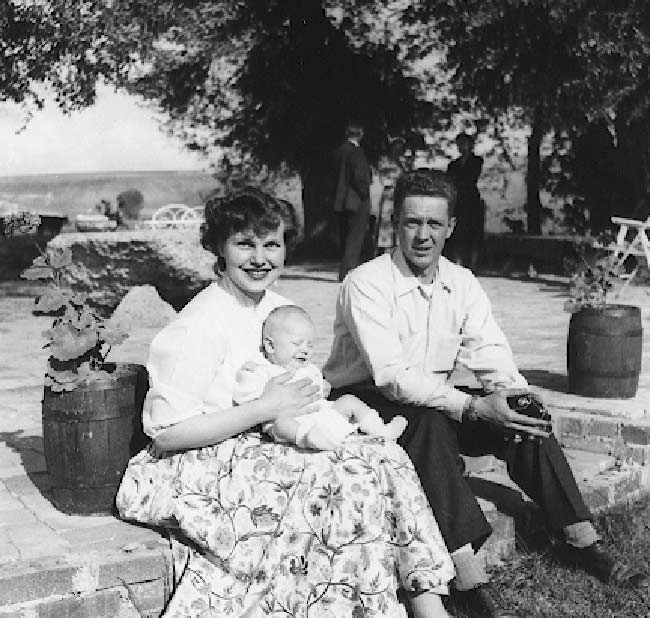
Reed’s 94-year-old widow, Marilyn Hoff Hansen, recalled her husband’s time in office during a conversation with EastIdahoNews.com. He’d gotten his start in politics decades earlier as a member of the Bonneville County Planning and Zoning board. Marilyn started calling him “Hotseat Hansen” because he often dealt with contentious situations.
Reed loved to debate issues with lawmakers and constituents “with great fervor,” according to written family records. Marilyn says he always treated people with respect and valued honesty. He enjoyed the camaraderie, regardless of the outcome, she says.
Marilyn says it was his ability to put people at ease during heated debates that made him an effective leader.
“He had a keen sense of humor and a keen sensitivity about people. When things got tense, (he lightened the mood) and broke up the tension,” Marilyn says.
There was one time when Reed went to Salmon to help clarify an issue at a public meeting. He walked into a room full of “very hostile” women and started telling them about his sourdough bread.
Marilyn says Reed had started making sourdough bread years earlier after meeting some sheep herders from Spain. They’d brought a sourdough starter to share that was more than 100 years old.
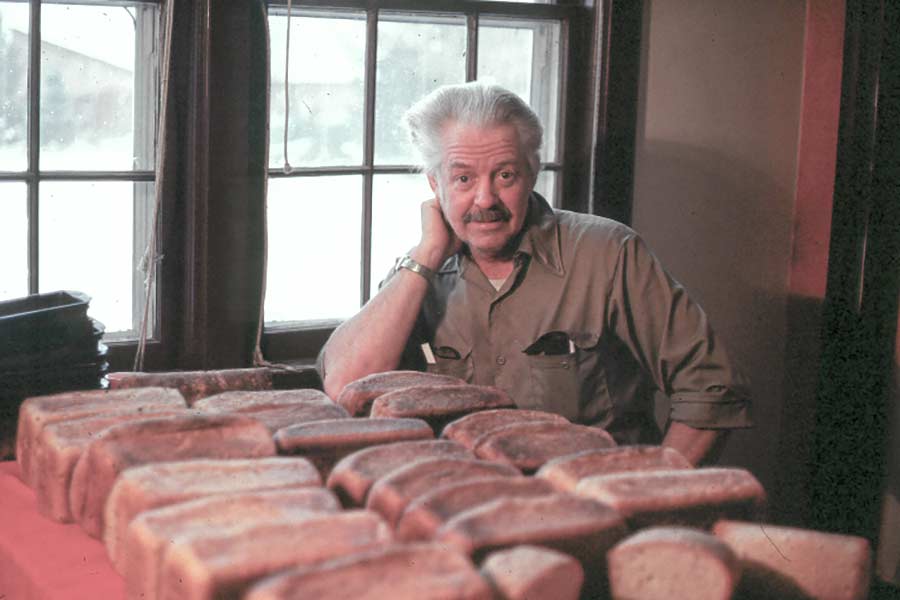
Reed also made bread to share with others and show at the fair. It often won awards. As he told the women in attendance about this, Marilyn says it helped ease the tension.
“Soon, they were laughing. The tension was dissipated, and they could discuss the issues,” she says.
In 1974, Gov. Cecil Andrus appointed Reed to the Idaho Water Resources Board. It’s a position he held for the next 10 years.
Getting elected to the Idaho House of Representatives in 1984 was a thrill for Reed, according to Marilyn. She says her husband’s time in the Legislature is where he felt most at home, and was a natural extension of what he’d been taught as a kid.
“(Serving in the Legislature) was his cup of tea,” she says.
Hansen’s early life
Hansen was born in 1929 to Farrel and Lily Hansen. They owned a 480-acre farm that included land where the Idaho Falls Regional Airport now sits. A red barn that occupied the space still exists, but has been relocated. Farrel later became the original owner of what is now Broadway Ford.
RELATED | Local mechanic sells automotive repair kits through new business venture
Although farm life kept the family busy, Marilyn says the family was politically involved from the beginning.
“They were weaned on politics at the kitchen table,” Marilyn says. “Current affairs were always discussed in the Hansen home. The children were taught that public service was their obligation.”
Marilyn says Lily Hansen was a historian and followed the daily agenda of the Idaho Legislature and the United States Congress.
Farrel Hansen was well-liked in the community and was asked to run for governor at one point. He died at a young age before he got the chance, but three of his sons went on to serve in public office.
“To Reed, (running for office) was the natural thing to do,” says Marilyn.
Reed began young, serving as president of the Future Farmers of America in high school. He attended college at the University of Idaho and later served two years in the Army.
Reed began his tenure with Bonneville County Planning and Zoning in 1964.
“The kitchen table became his desk because the telephone was right there (and he’d get continuous calls),” Marilyn says. “The table was always covered with papers.”
Her husband eventually became the planning and zoning chairman, she said. After 10 years, he was appointed to the state water board.
The battle of the falls
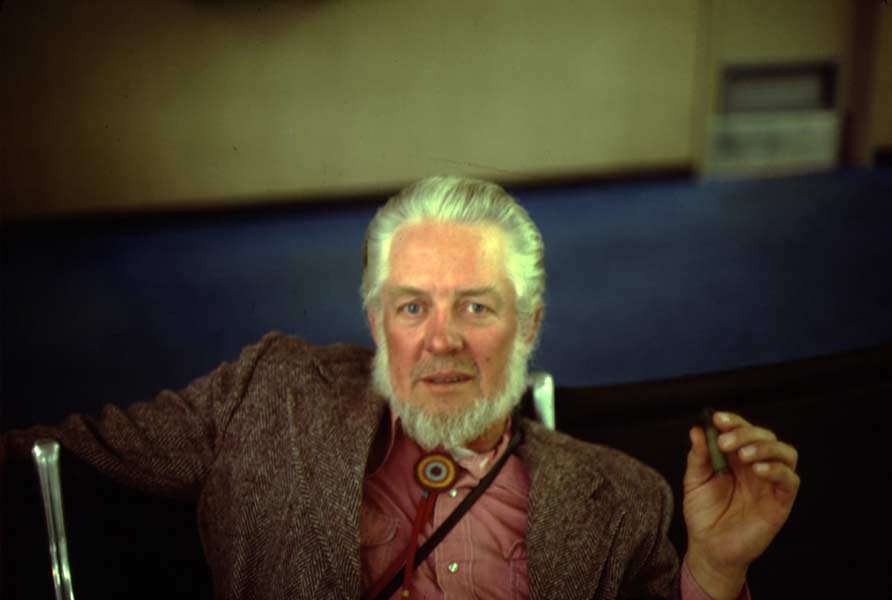
During this time, Reed played a role in preventing Mesa Falls near Ashton from becoming a power plant, which Marilyn considers his greatest achievement. It began sometime in the early 1980s and overlapped with his inauguration as a legislator.
Marilyn’s second husband, Monte Later, who was then a board member for the Idaho Department of Parks and Recreation, says Mesa Falls was owned by Montana Power at the time. Its president wanted to divert the water down a penstock to a powerhouse at the base of the falls.
The IDPR proposed implementing a minimum stream flow in response, which required involvement from the Idaho Legislature. As a board member for the Idaho Department of Water Resources, Reed was familiar with the Mesa Falls proposal. As Later wrote in a book several years ago, Reed “picked up the cause … and began to steer legislation.”
“To the people who argued that a dam could be built to serve a powerhouse at the base of the falls … Representative Hansen had this to say: ‘Let’s take the Grand Teton Peak. If a commercial body of ore was discovered on that magnificent peak, would it be alright to just lop off the top third of it?'” Later wrote.
The argument resonated, and the legislation passed. To this day, Later says Mesa Falls is the last free-flowing falls on the Columbia River system.
Another important piece of water legislation that helped define Reed’s political career was the Swan Falls Agreement of 1984. Remembered as one of the most contentious water battles in state history, it settled a lawsuit between Idaho Power Company and 7,500 upstream water users. In the lawsuit, IPC, which held senior water rights to the Swan Falls Hydroelectric Dam near Murphy in western Idaho, claimed the junior rights of irrigators impaired its ability to store water and produce electricity.
Ultimately, it was settled through the creation of the Swan Falls Trust, which gave the state control of the water to allocate future water rights to IPC and water users.
“IPC agreed to subordinate its hydropower rights at Swan Falls and 10 other facilities to all upstream uses existing as of Oct. 25, 1984,” longtime Rexburg attorney Jerry Rigby told EastIdahoNews.com last year. “The state secured minimum flows to protect instream values and IPC’s generation capacity.”
Reed voted to approve the measure during the 1985 Legislative session and helped codify it in Title 42, Idaho’s primary law dealing with water rights and water usage.
‘A beautiful legacy’
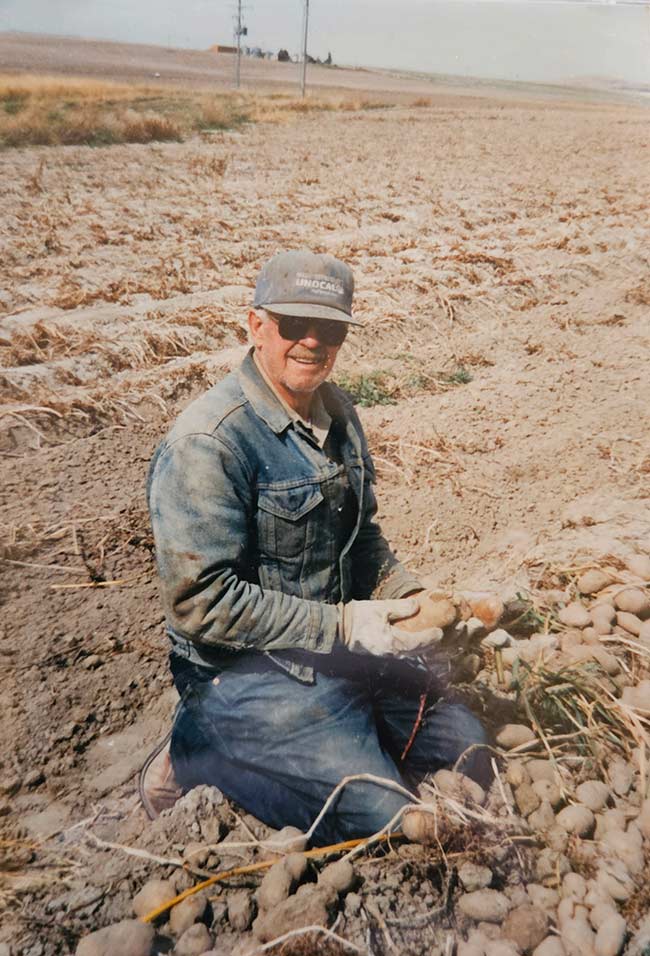
During his years in the House, Marilyn says Reed’s farming sensibilities became a hallmark of his service. At the beginning of the Legislative session, he’d put a potato on his desk as a time-keeper for fellow lawmakers.
“When this potato sprouts, it’s time to go home,” Reed said, according to Marilyn.
In 1992, after eight years in office, Reed was not reelected. He lost the race that November to Jack Barraclough, a 33-year veteran of the U.S. Geological Survey.
Reed’s son, Bruce, says the state had changed the boundaries of the voting district to include a large number of employees with what is now Idaho National Lab. Barraclough appealed to voters because of his long history at the site and Bruce says he ran a strong campaign.
“The Republican Party didn’t like my dad because he (was moderate) and didn’t like to answer to them. They were always trying to put somebody up (against him), and this one was a success for the party,” Bruce recalls.
Reed didn’t stay out of politics long. He ran for the same seat two years later and was reelected. He remained in office for another eight years.
Reed was 71 when he retired in 2000. He died nine years later.
Nearly 20 years after his death, family members say Reed exemplified through his actions what a legislator ought to be. They use words like “fairness” and “honesty” to describe him.
“He treated the farmhand with the same respect as the governor,” says Marilyn. “Status isn’t what he cared about. Who you were as a person is what mattered to him.”
“He had a high regard for the little people … those who didn’t have a voice,” Later adds.
Bruce runs the family farm today, which is now 700 acres.
Although no one else in the family has ever run for public office, they remain politically involved as citizens behind the scenes.
Marilyn speaks favorably of her husband’s service and says she appreciates the legacy he left behind.
“He left a beautiful legacy and a mighty challenge for his children and their children to live up to,” Marilyn says in family records.