



Gov. Little addresses recent budget cuts, water concerns during visit to eastern Idaho
Published at
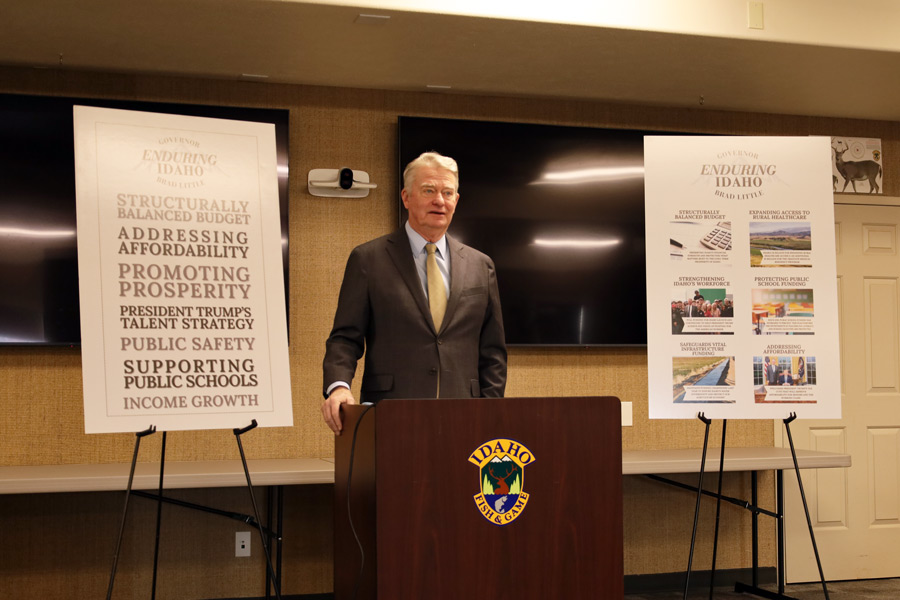
IDAHO FALLS — Idaho Gov. Brad Little visited Idaho Falls on Monday, where he spoke to the media about recent state budget cuts, his new “Enduring Idaho” plan, concerns for summer water levels and more.
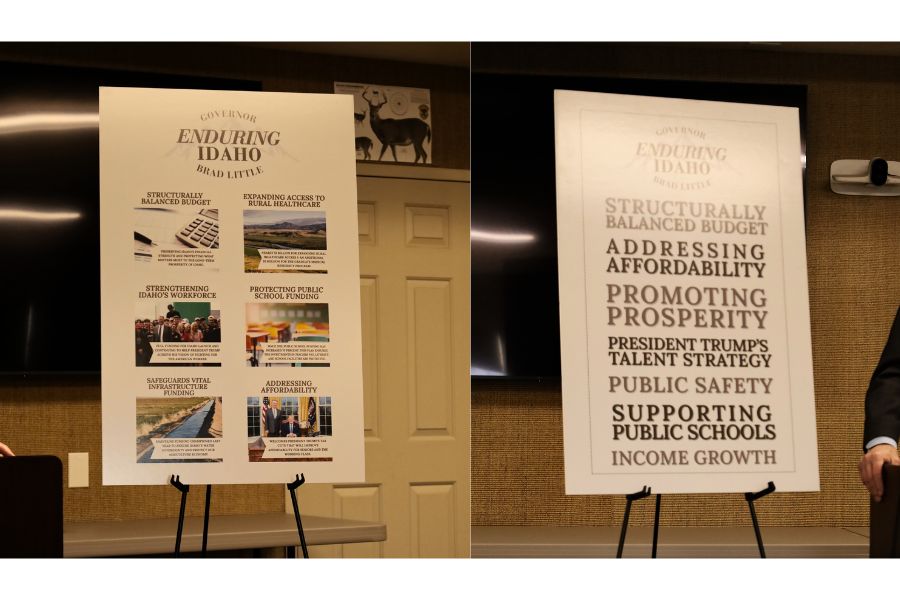
Little discussed the idea behind his “Empower Idaho” initiative, which he says aims to achieve a balanced state budget and increased public safety, as well as address affordability, income growth and promote prosperity.
He touted President Donald Trump’s “talent strategy.”
“We call it ‘Enduring Idaho’ for a reason, because it’s how you preserve the things that have catapulted Idaho to where we are, and ensures that our trajectory that we have right now continues going forward,” Little says. “I was around the last time we had a significant recession, and this is vastly different. Our economy remains strong and resilient.”
According to Little, Idaho has the fastest-growing personal income of any state and union in the country.
“Granted, we started with fairly low personal incomes, but that trajectory continues to ratchet up as we go forward,” Little says. “We had record surpluses, we offer historic tax cuts more per capita than any other state.”
Little addressed a 3% budget cut he implemented last summer, and a potential further 2% budget cuts, which would bring the total cuts to 5% for most state agencies and departments.
In a 2025 report, the Idaho Center for Fiscal Policy found the budget cuts follow five years of tax cuts passed by the Idaho Legislature. Although those cuts reduced funding available for the state budget by a combined total of $4 billion, Idaho is now facing an estimated cost of at least $155 million per year to comply with federal tax cuts championed by President Donald Trump in the federal One Big Beautiful Bill Act.
“Right now, there’s some talk of up to a 2% cut for the remainder of the year, which only goes to July 1, which means it’s over 6%. We knew a 6% cut was gonna really inflict damages,” says Little.
Little says the main things that he aims to protect in the budget are public education, water investments and strengthening Idaho’s workforce, specifically through his Idaho Launch program.
“College of Eastern Idaho has been a very big participant in Launch, and a lot of their enrollment growth is a result of Launch,” Little says. “Idaho is one of the only states in the union where the go-on rate has been accelerating, and I credit most of that with our launch initiative. It’s really directed toward in-demand careers.”
Prior to his morning press conference at the Idaho Fish and Game Office, Little said he spoke with the Idaho Advanced Nuclear Task Force about the trajectory of Idaho National Laboratory — one of eastern Idaho’s biggest employers. He cites this as another credit to helping the Idaho Launch program succeed.
Speaking about the lack of snowfall and widespread concerns about water sources this coming spring, Little says lawmakers will need to make “hard decisions” if the dry-weather trend continues.
“Water is always a critical issue, and by the looks of things outside right now, it’s gonna be a very, very important issue going forward,” Little says. “If this continues, there’s gonna be some hard decisions, but a lot of those decisions will be local.”
If water does become a major issue following winter, Little says he feels hopeful they will be able to work well with local surface water users. In 2024, he signed an executive order requiring surface water users and groundwater users to reach a longterm solution to their conflict by Oct. 1. The parties reached an agreement that November, which Little approved.
After all the progress in 2024, Little says he doesn’t want to see another contentious dispute.
“We have to continue to protect the Eastern Plain Aquifer; we can’t overly deplete that, and we need to address both surface and groundwater,” Little told local media. “We will have the right people in the room.”
Little also addressed the heightening concerns for Idahoans on Medicaid and those in K-12 education, after the Legislature released a memo indicating a 2% budget cut would represent a $55 million funding reduction for the K-12 public school system, while a 2% cut would represent a $19.9 million cut for Medicaid.
“The Legislature, through law last year, mandated we do some things in Medicaid,” Little explains. “They said, ‘You’ve got to cut Medicaid spending.’ We gave the Legislature a smorgasbord of about seven different things they could look at, and that’s what’s taking place right now.”
After previously saying the K-12 budget would not lose any money, Little says cutting spending was one of the only viable options.
“The Legislature (can) decide where the money’s spent, but in my view, they really don’t have a lot of options. They can raise taxes. They won’t,” he said. “We submitted a very solid, balanced budget; protected water, public education, Launch and that’s what we’re sticking with.”
When asked about rumors surrounding layoffs at Idaho State University and in the local higher education field, Little suggested there likely will be layoffs if the Legislature cuts an additional percentage to the budget. The Idaho Launch initiative, he says, has increased enrollment and prevented job loss.
“What’s helping our institutions is our go-on rate. You can imagine what the problem would be at the community college and at Idaho State if they had falling enrollment. I’m a huge advocate for higher education, but public schools are in the (state) constitution,” says Little.