



Amid concern over cuts, Idaho Gov. Brad Little says setting the budget is the Legislature’s job
Published at | Updated at
Clark Corbin, Idaho Capital Sun
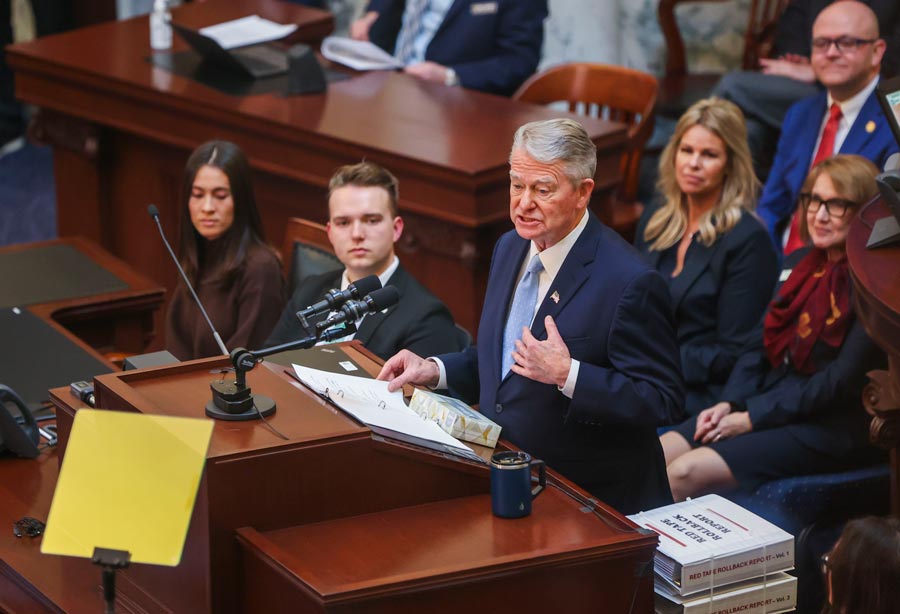
BOISE (Idaho Capital Sun) — Idaho Gov. Brad Little told reporters Tuesday he is concerned new legislative budget cuts would hurt the state’s ability to fight wildfires and could jeopardize mental health and treatment courts, but he distanced himself from the budget-setting process and downplayed the likelihood of vetoing the budgets.
“I laid out my priorities (in the State of the State address),” Little said during the annual press conference with reporters in downtown Boise. “I shipped them to the legislative body under the Constitution, (and) they’re all in their court now.”
For the past two weeks, several state agency directors, state officials and Little’s budget chief Lori Wolff have been publicly sounding alarms about permanent new 5% across-the-board budget cuts the Idaho Legislature’s budget committee approved Friday for most state agencies beginning in fiscal year 2027, which starts July 1.
Little does not support the additional new cuts, which would be on top of the 3% cuts he approved last summer.
Little and his staff have repeatedly said the permanent new cuts are not necessary because the governor submitted a plan to balance the budget using one-time cuts and interest and funding transfers.
According to a new series launched by the Idaho Capital Sun, the new cuts will likely delay tax refunds for Idahoans, endanger the state’s crisis response system, lead to hiring fewer state wildland firefighters and increase wildfire risk, jeopardize mental health court and treatment courts that have helped thousands of Idahoans turn their lives around, lead to less water quality monitoring and more.
What role does Idaho’s governor play in the budget-setting process?
It is true that the Idaho Legislature is responsible for setting the state budget each year and is required by the Idaho Constitution to set a balanced budget where expenses do not exceed revenues.
But Little also has a handful of options for responding to the Idaho Legislature’s new budget cuts and the overall budget crunch. Those options include:
- Vetoing any budget bills he disapproves of, including using a line item veto on budget bills.
- Calling the Idaho Legislature back in session if it adjourns the 2026 legislative session without solving the budget issues.
- Putting pressure on Idaho legislators to kill the budgets once they reach the full Idaho House of Representatives and Idaho Senate.
- Generating public awareness about the impact of the budget cuts in hopes the public will pressure state legislators to fix the budget problems or kill the budgets that reduce state services.
- Telling the public that the Idaho Legislature is responsible for setting the budget and therefore responsible for consequences the additional new across-the-board cuts cause.
Based on Tuesday’s press conference and conversations with members of Little’s team, it sounds like the governor is focusing on the third, fourth and fifth options of pressuring legislators, generating public awareness and telling the public the Idaho Legislature is responsible for the budget.
“My job in the Constitution is to present the budget and then, at this point on, is to talk about the intended and the unintended consequences of what’s taken place,” Little said.
Under the new maintenance of operations budget process the Idaho Legislature’s Joint Finance-Appropriations Committee, or JFAC, implemented over the last few years, all budgets for all state agencies, departments and branches of state government are pretty much lumped together in 10 giant maintenance of operations budget bills.
That can create a sort of all-or-nothing feel to the maintenance budgets with everything lumped together. But that also means a line item veto may not be possible and a full veto is politically risky because of everything else that would be tossed out.
“It would be nicer if I had better line item (veto) authority because some of the things that I am not delighted about are embedded in other things that we absolutely have to have,” Little told reporters.
When reporters asked Little if he would intervene to stop the Idaho Legislature’s new state budget cuts, Little said he will look at all options. But Little suggested to reporters that the timing of next week’s deadline to file to run for office and the upcoming May 2026 primary election may be an additional factor that makes issuing a veto challenging.
In general, the rule of thumb is it takes two weeks to pass a budget and have it circulate through the Idaho Legislature’s process. That means that if Little vetoes a budget, that could extend the legislative session by two weeks at a time when legislators are trying to adjourn the session so they can return home to their districts and run for reelection in May.
“(If) those critical bills, as you stated, come late and the filing deadline has passed and legislators want to go home, and I do something that is going to add two weeks to the session, my override option doesn’t look very good,” Little said.
This year Little and all 105 members of the Legislature are up for reelection.
Where do things stand with Idaho state budgets?
The new 5% ongoing cuts are not a done deal.
After passing the budget committee on Friday, the fiscal year 2027 maintenance of operations budgets head next to the full Idaho House of Representatives and Idaho Senate for consideration. It takes a simple majority vote of the legislators present to pass a budget.
If the full Idaho House and Idaho Senate pass the maintenance of operations budgets, they head to the governor’s desk for final consideration. Once the budgets reach his desk, Little may sign them into law, veto them or allow them to become law without his signature. If Little vetoes a budget, the Idaho House and Idaho Senate can override a veto with a two-thirds supermajority vote.