



Say goodbye to bur buttercup in your landscape
Published at | Updated at
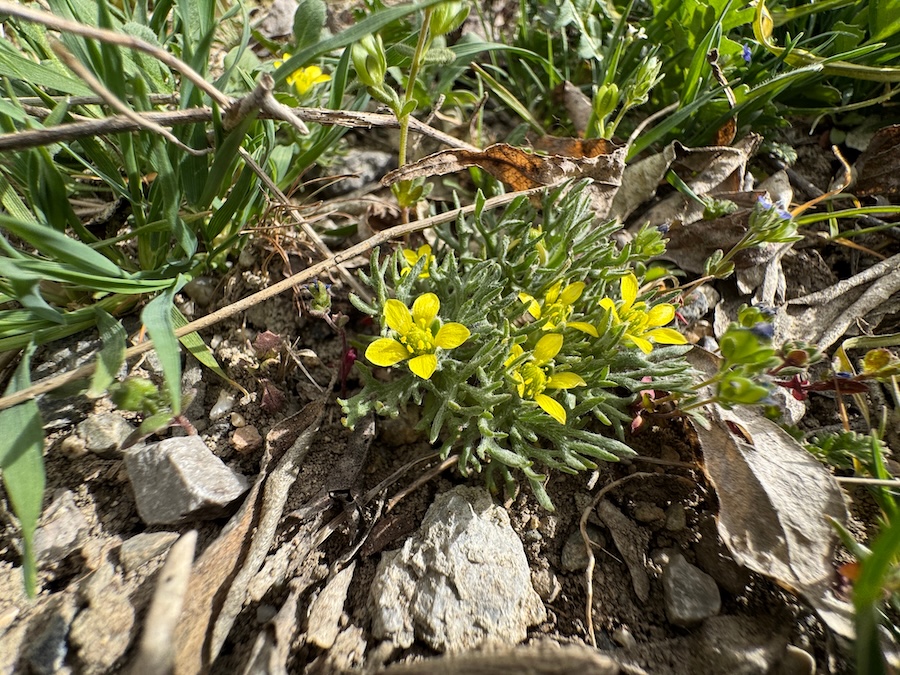
Bur buttercup was the bane of my summer childhood. While not as lethal to bare feet as puncturevine, bur buttercup still elicited plenty of tears when my feet encountered its little spiked seedheads.
Early identification and control are critical to managing this annual broadleaf weed because it completes its life cycle very early in the growing season.
Identification
Bur buttercup seeds germinate in fall or very early spring. Seedlings form a small basal rosette with finely divided leaves, giving it a lacy appearance.
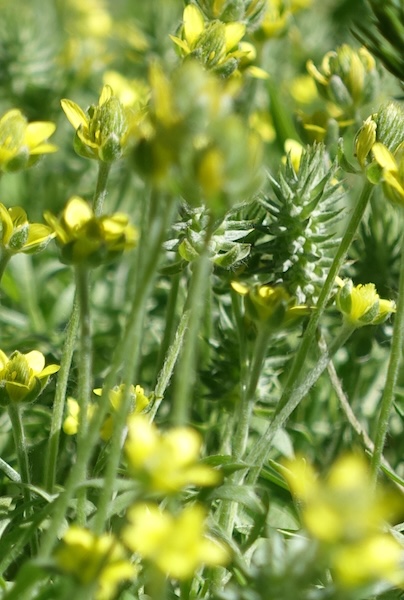
Plants are small, usually 2 to 4 inches tall. Flowering occurs very early in spring, often before many perennial grasses break dormancy. The flowers are small — approximately one-quarter inch wide — and bright yellow, typical of buttercup species. These flowers quickly transition into clusters of small, hard burs in tight, rounded seed heads.
By late spring, plants die and turn brown, leaving behind sharp, dry residues and abundant seeds. Because the plant completes its life cycle so early, this weed is often overlooked until seed production has already occurred.
Control strategies
Despite the prevalence of this weed in the Intermountain region, it can be readily managed if we simply pay attention to it in early spring. Annual plants rely solely on seed production for survival from year to year. Break that cycle, and you win the battle.
1. Cultural Control
- Maintain healthy, competitive perennial vegetation. Avoid bare soil wherever feasible. Nature will always try to fill an empty space.
2. Mechanical Control
- Hand pulling is effective for small infestations. The key is to remove seeds from the site.
3. Chemical Control
- The most effective herbicide applications occur in early spring. Both broadleaf herbicides and glyphosate are effective, but applications made after flowering are generally ineffective because the plant can still produce viable seed. Once again, treat it early. Spraying after flowers have set is pointless.
Regardless of the method, timely management before seed production is essential to long-term control. Integrated perennial grass competition, combined with targeted herbicide applications to young plants, yields the most consistent results.