



Officials say Medicaid expansion repeal would increase costs, have ‘detrimental’ effect on rural hospitals
Published at | Updated at
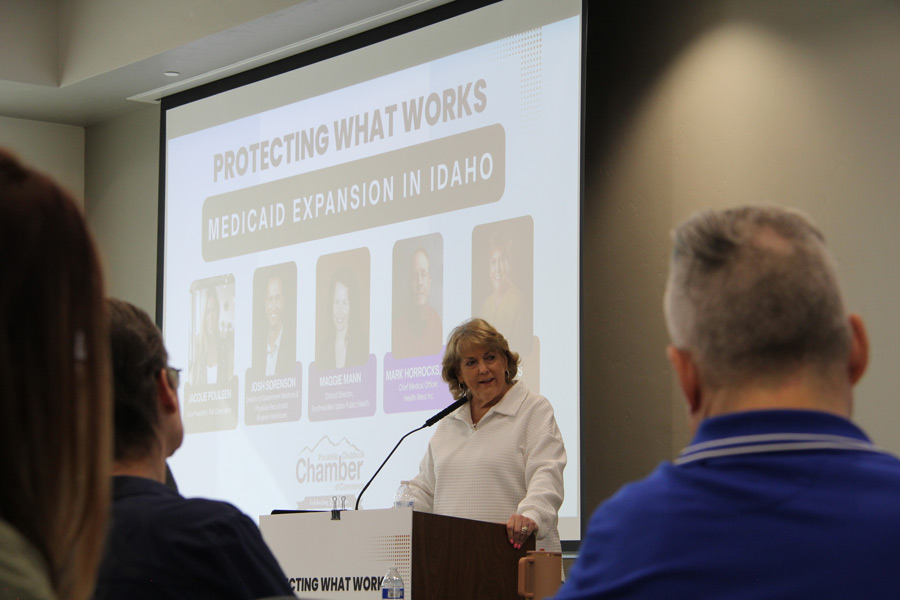
CHUBBUCK – A group of concerned citizens gathered to hear from a variety of experts and elected leaders about what a potential repeal of Medicaid expansion would mean for the Gem State.
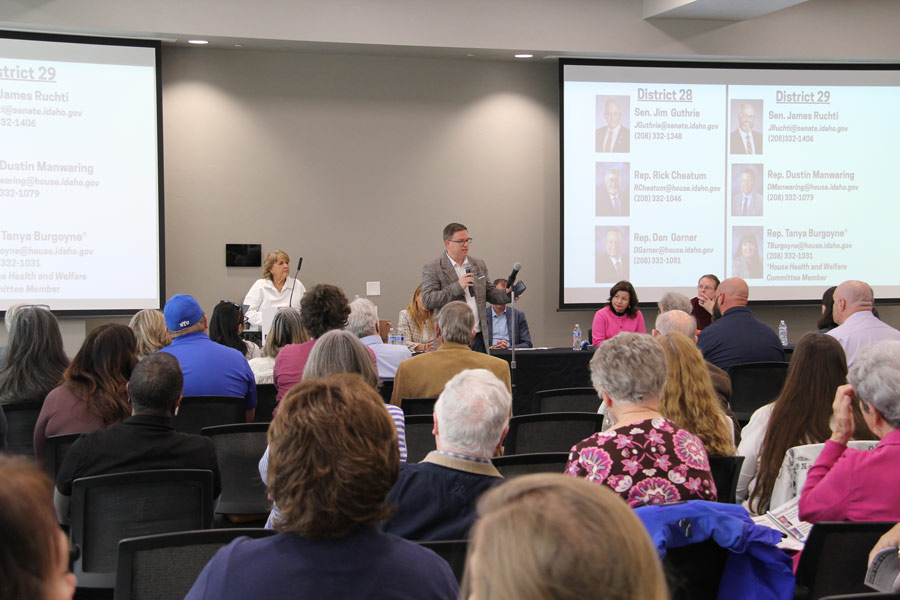
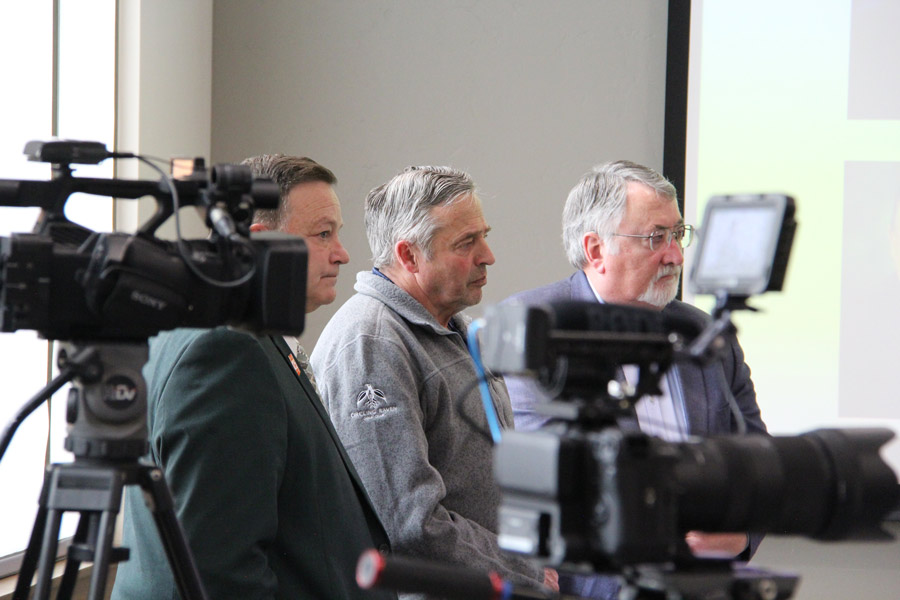
Around 80 people gathered at Chubbuck City Hall Saturday morning for the Pocatello/Chubbuck Chamber of Commerce Legislative Council’s community forum, “Protecting What Works: Medicaid Expansion in Idaho.”
After years of tax cuts, Idaho legislators have spent this legislative session grappling with the state’s budget deficit. Some argue that a repeal of Medicaid expansion is necessary. Medicaid expansion was passed by ballot initiative in 2018 with 60.6% of the vote.
RELATED | Over a hundred people show up for town hall on ‘catastrophic’ cuts to Medicaid
RELATED | ‘These students feel betrayed’ says ISU professor at town hall on cuts to higher education
Governor Brad Little has not advocated for repealing expanded Medicaid, instead calling for millions of dollars in cuts and reduced services.
But on Thursday, the Idaho Capital Sun reported that Rep. John Vander Woude, R-Nampa, chairman of the House Health and Welfare Committee, is drafting a bill that would repeal Medicaid expansion at the end of the year.
RELATED | Idaho lawmakers may cut Medicaid home care services, repeal expansion
“We have elected officials that are saying, ‘Our current budget crisis is such in Idaho (that) we have to eliminate (Medicaid expansion). This is the only way we could get on base again,’ which is definitely not true,” said panel moderator Karole Honas.
A variety of experts spoke at the community forum on what repealing Medicaid expansion would mean for Idaho.
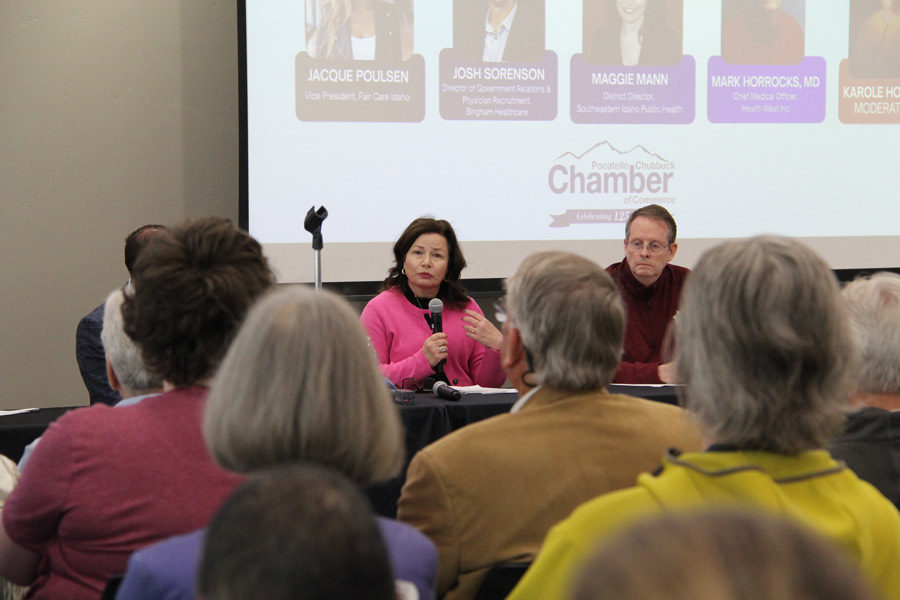
Maggie Mann, director of Southeastern Idaho Public Health, said that in the time since it took effect, Medicaid expansion “has helped to ensure that Idaho residents, our neighbors in our community, have access to basic, high-quality preventive health care that is absolutely needed if we want to help people to be healthy.”
When people lose insurance coverage, Mann says they stop receiving preventative care, and instead wait until an issue is severe enough to go to the emergency room.
“You end up with symptoms that are really problematic, so you go to the emergency department for the UTI that would have cost $85 to treat in a clinic, (and) now (it) becomes several thousand (dollars),” Mann said.
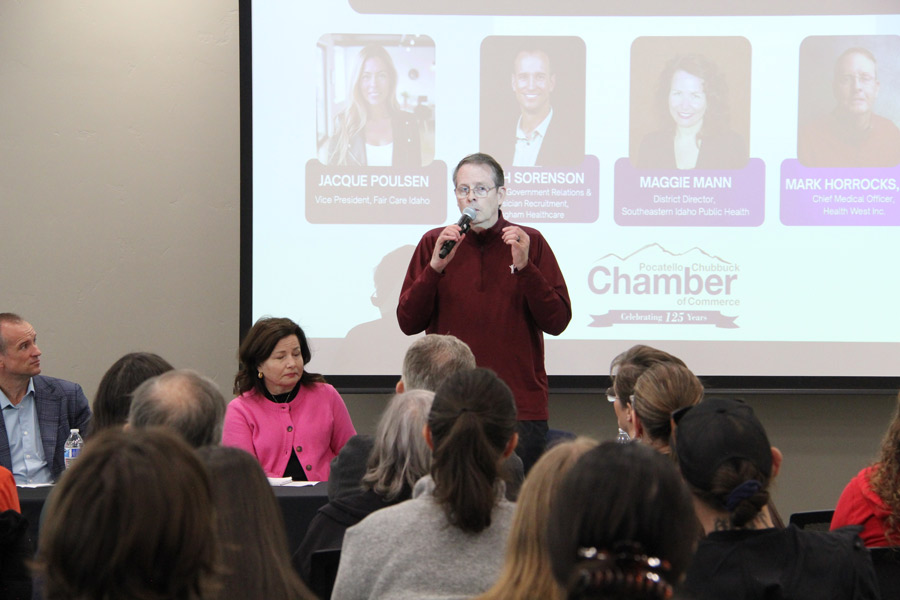
Dr. Mark Horrocks, chief medical officer of Health West Inc., argued that for this reason, repealing Medicaid expansion would increase costs system-wide.
He argues that without healthcare coverage, people still find themselves in need of medical care, and have to visit an emergency room. In response, providers have to increase prices, which causes insurers to raise premiums.
“We all pay for it, the whole state. We’re all paying that in the form of extra premiums. So it is something that actually affects all of us, whether you want it to or not,” Horrocks said.
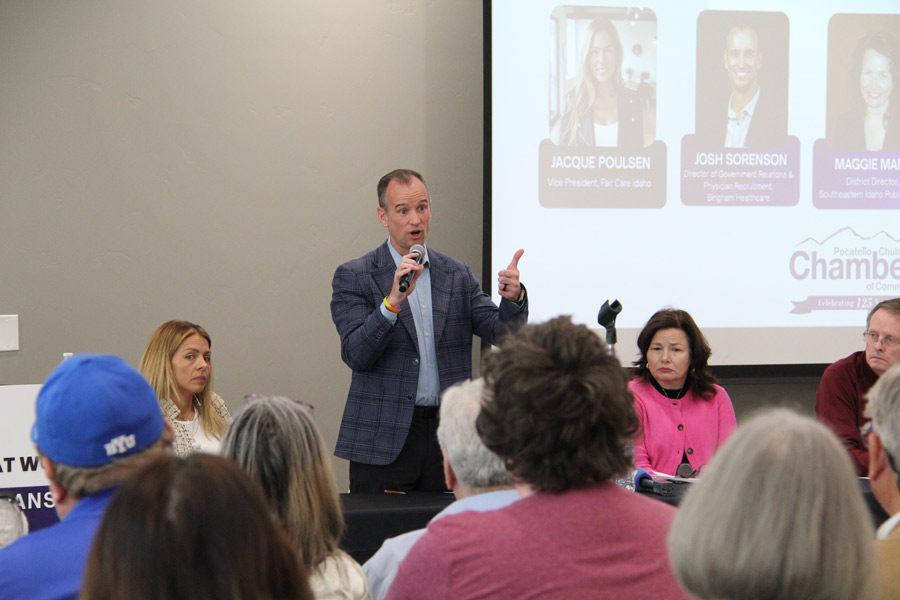
Rep. Dan Garner, R-Clifton, affirmed this point when he addressed the crowd.
“This is just a cost shift. The State either picks it up or the counties pick it up,” Garner said.
Josh Sorenson, director of Government relations & Physician Recruitment at Bingham Healthcare, fears what this would do to hospitals, particularly rural ones, which already operate on thin profit margins.
“This would be detrimental. I could see a scenario where many hospitals could or would close,” Sorenson said.
Sorenson referenced a hospital in Teton Valley that he said “nearly” had to close, and would have if it weren’t for a generous private donation.
“I’m not going to say this is exclusively Medicaid (cuts). I’m not going to say that there wasn’t probably some mismanagement, but I do feel like when you have the perfect storm, sometimes you just can’t survive,” Sorenson said.
Rep. Rick Cheatum, R-Pocatello, and Sen. Jim Guthrie, R-McCammon, also spoke at the town hall. All three legislators said they don’t support a total repeal of Medicaid expansion.
Guthrie expressed that Medicaid expansion is a “human issue” rather than a political one, recounting his experience of walking through the Capitol building on days when people who have medical issues that “none of us would want to have,” were testifying.
“If you can be in that environment and not feel something, then I feel something for you,” Guthrie said.
Cheatum spoke to who he thinks would be the most affected by a total repeal of Medicaid expansion.
“I don’t think they’re going to feel the effects of what we’re talking about as much in Treasure Valley … as they’re going to feel in Teton County … or in Franklin County, if the hospital there closes. Our rural Idaho residents are going to be affected most dramatically by what’s happening,” Cheatum said.
Rep. Ben Fuhriman, R-Shelley, also spoke at the event. He’s been publicly vocal about his stance against cutting Medicaid expansion, and he told the crowd why.
“In my opinion, it is not about what we can’t afford. It’s about what we’re choosing to afford. It’s about prioritizations, and we’re prioritizing tax cuts and we’re prioritizing school vouchers over Medicaid and helping children with disabilities,” Fuhriman said.
While no representatives of District 29 — which encompasses most of Pocatello — were present at the meeting, candidates for the district’s two house seats, Mary Shea and former state representative Nate Roberts, were in attendance. Roberts shared with the crowd that Sen. James Ruchti wanted to attend, but couldn’t due to a prior engagement.
RELATED | Idaho has $1.3 billion in rainy-day funds. Should that money help public schools?
Ruchti, Roberts and Shea have called for the legislature to use some of the $1.6 billion held in various “rainy day” funding accounts, rather than making any further cuts. After the meeting, Fuhriman told EastIdahoNews.com that he’s also in support of using that funding.
“That’s why I say I don’t believe that this is about what we can afford. I believe this is about what we’re choosing to afford. These are self-inflicted choices that certain people in the legislature want,” Fuhriman said.