



The best time to prune fruit trees in east Idaho
Published at
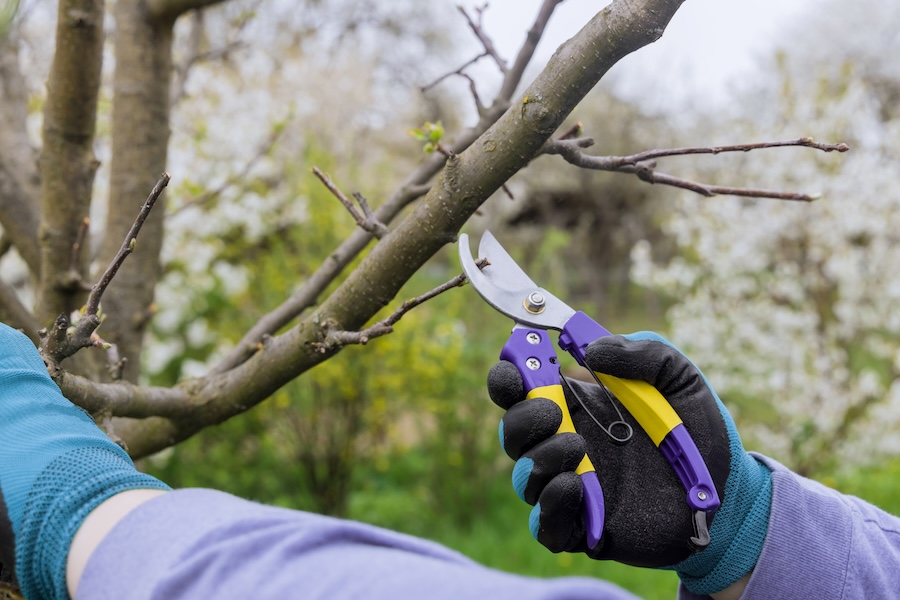
IDAHO FALLS — One of the most common questions we receive in Extension is: When is the best time to prune my fruit trees?
The general rule of thumb is to prune in late winter or early spring, while trees are still dormant. However, timing can be adjusted to better fit different species and growing conditions.
Understanding these differences will help you make more effective pruning decisions and support healthier, more productive trees.
Why we prune fruit trees
Pruning plays several important roles in the health and productivity of fruit trees:
- Reduce excess vegetative growth. Fruit trees naturally produce more shoots and foliage than they need. Removing some of this growth increases light penetration and air movement within the canopy, and redirects more of the tree’s energy into fruit production rather than leaf production.
- Improve fruit size and quality. Pruning reduces the total number of blossoms and fruit. This trades many small fruits for fewer, larger, higher-quality fruits. Because fruit trees are genetically inclined to produce many seeds, pruning helps manage that natural tendency to ensure better fruit quality for the grower.
- Remove dead, diseased or damaged wood. Eliminating unproductive or compromised branches reduces disease pressure and encourages healthier new growth.
- Develop a strong scaffold structure. Good pruning ensures fruit is supported by sturdy, well-spaced branches rather than long, weak limbs. A strong structure is essential to carry the weight of a full fruit crop.
Why late winter/early spring is best
Pruning during dormancy offers two major benefits:
- Cleaner, healthier cuts. Dormant pruning allows wounds to seal as growth begins in spring, reducing the risk of disease entering pruning cuts.
- Better visibility. With leaves absent, it’s easier to see the tree’s structure, identify crossing or damaged branches, and make more precise cuts.
Although light pruning can be done at other times of the year, major structural pruning is best completed during dormancy.
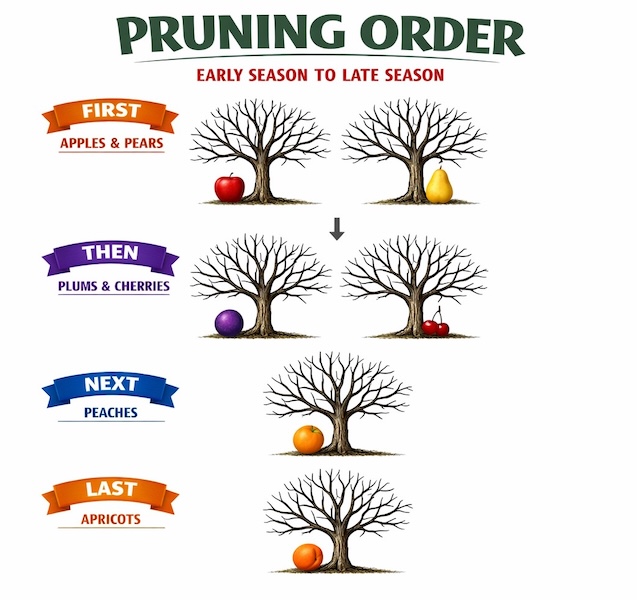
A nuance: Pruning can encourage early growth
Pruning stimulates growth and, as a result, it can encourage a tree to break dormancy a little earlier. This isn’t a major concern for most species, but it matters for varieties that naturally bloom early.
In our climate, apricots are especially sensitive. They often bloom early and are vulnerable to frost injury. To help mitigate that risk, apricots should be pruned last — just before bud break. Delaying pruning slightly can help protect blossoms and reduce frost damage.
Conclusion
Pruning is one of the most important annual practices for maintaining healthy, productive fruit trees. By understanding both the purpose of pruning and the timing for each species, you can support better structure, reduce disease pressure, and improve fruit size and quality.
While the basic rule is to prune during dormancy, paying attention to species-specific needs — especially for early-blooming trees, like apricots — can make a meaningful difference in your harvest.
With a thoughtful approach and a little seasonal awareness, growers can set their trees up for a successful year of growth and fruiting.