



Springtime bird-watching: Wood ducks in migration through east Idaho
Published at
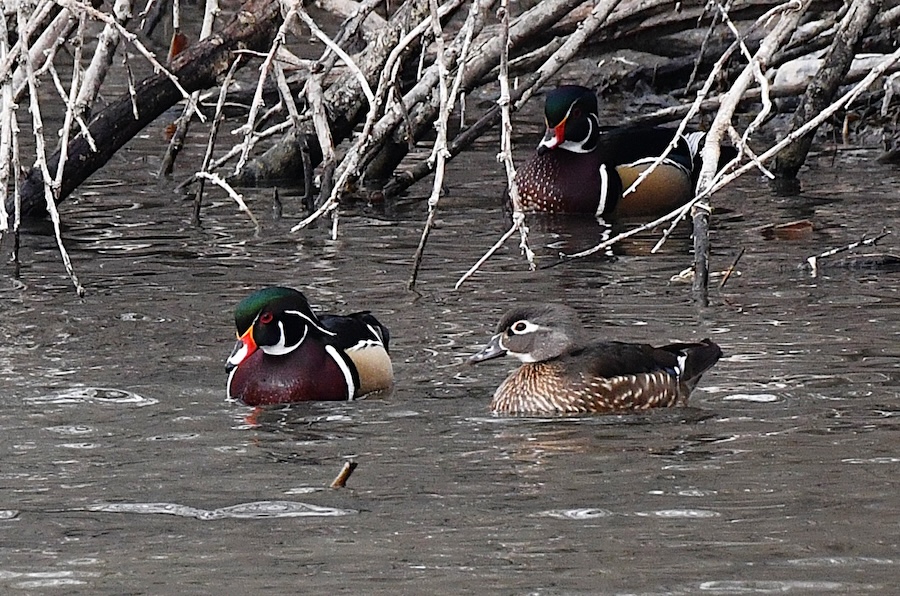
REXBURG — While watching hooded mergansers and mallards feeding on a canal near Rexburg on Tuesday evening, I counted 14 wood ducks flying in to join their feeding friends just before dark.
The next morning, I headed back out to the canal and parked near a Russian olive tree where the wood ducks had landed the night before.
Due to some field work along the canal, there were no ducks present. However, I had received permission to park on the private property to wait for the ducks to return.
It did not take long, as about 10 minutes after the farm work was finished, a hen and two wood duck drakes flew in. With the warm temperatures, insects were hatching and the three ducks were picking them off the surface of the canal.
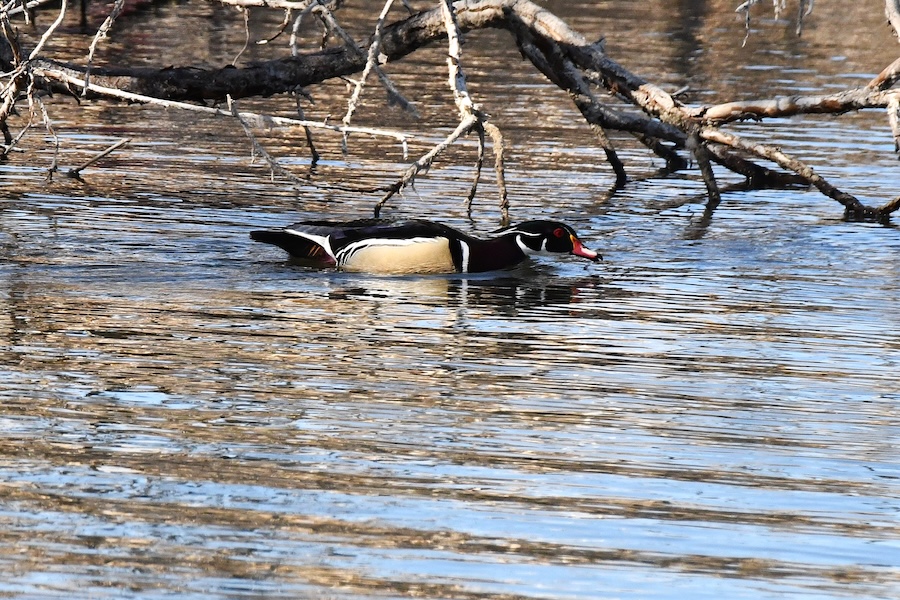
For the next hour, more of these beautiful ducks continued to both swim and fly in small groups to a single large Russian olive tree on the opposite side of the canal. A total of 18 ducks were soon hidden beneath the tree’s branches.
Occasionally, one or two ducks would venture to the edge of the canal, but the clicking of my camera or my slight movements would send them right back to the tree.
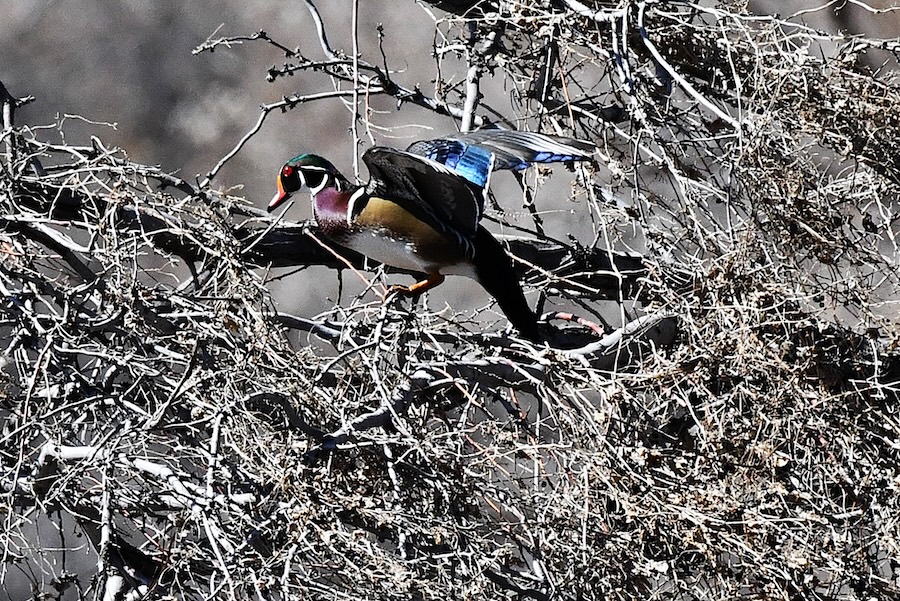
Finally, after about an hour and a half, one male duck flew out and landed in the top of a nearby bush. Then another male came to the canal’s edge long enough to pick up a few floating insects — and even harvested a flying insect — before heading back to safety.
I stayed for over three hours, with most of the wood ducks still hidden by the time I had to leave. On Thursday afternoon, I made a quick visit to that area once again and, from a distance, I counted 12 wood ducks feeding near that same tree.
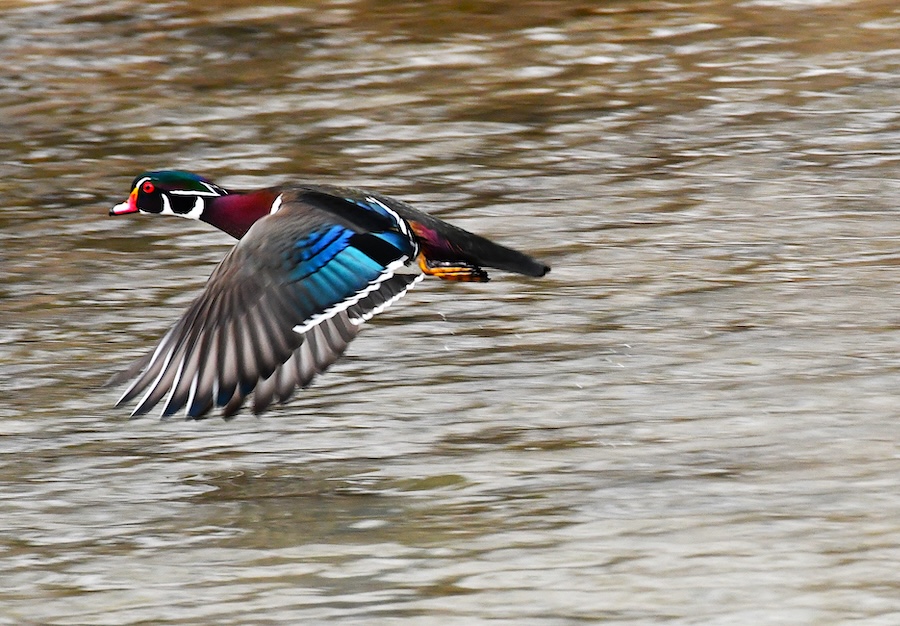
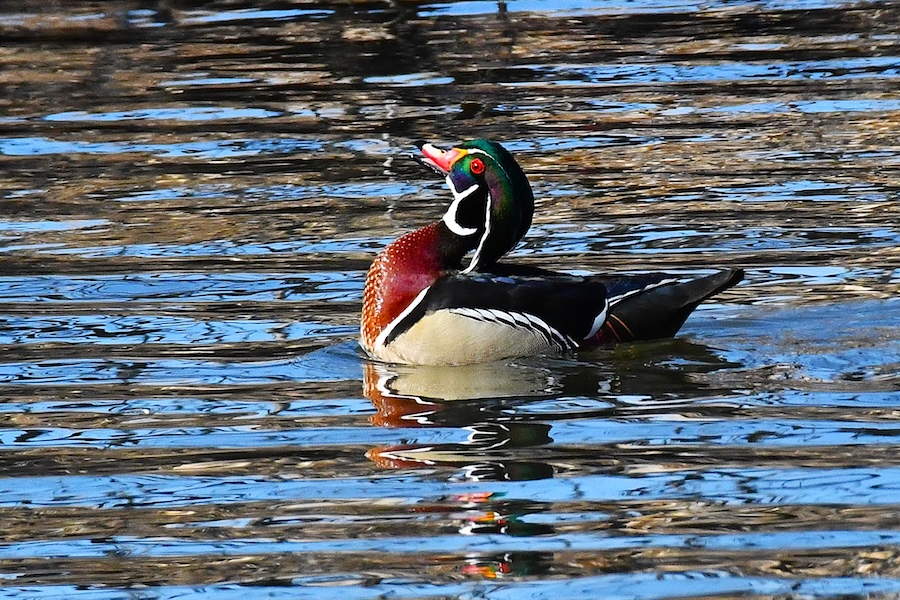
Two weeks ago, I was sitting on a log, watching a flock of turkeys, about a mile from where these wood ducks played. A male woodie landed on a pond of water about 40 feet from me, and I started taking some photos. The camera’s click startled him, and I was able to get some good shots as it flew off.
It’s nearly nesting season
It is a little too early for woodies to begin nesting, but they usually pair up in January; as they migrate, they are always on the lookout for cavities to nest in.
Natural cavities are scarce, so the ducks readily use artificial nest boxes that have an entrance hole about 4 inches wide. Females engage in “egg dumping” by laying some eggs in other nests, so if the nest boxes are placed too close together, one box may be used by several females. Nests have been found with over 30 eggs inside, with no female to sit on them.
Most successful nests will have anywhere from 9 to 12 eggs in them, and most females will raise two broods each summer. Once the eggs hatch, the female will position herself below the nest and call the ducklings out. The babies will jump out of the nest to join mom on the ground.
I noticed the ducks feed on hatching insects, but they also eat seeds, fruit and other vegetation. Sometimes they’ll grab a snail or caterpillar, too.
Watching wood ducks in east Idaho
Woodies are very skitterish. If you can find a place to observe them, make sure you park in the right spot. Any movement from the vehicle, or a lot of movement inside, will cause them to fly away or hide. This year, I have been guilty of both.
The wood duck population has been increasing in the Upper Snake River Valley over the last few years, likely due to more nest boxes being built for them. I regularly see them on the Henrys Fork, South Fork of the Snake River, the Teton River and some of the area canals.
If you find wood ducks on private property, be sure to get permission before entering the property to observe them.
There are a lot of spring migrations to enjoy out there this week. So, get out and take advantage of the great weather we are having.

Living the Wildlife is brought to you by Yellowstone Teton Territory. Experience 7,500 square miles of untamed wilderness in Eastern Idaho's Yellowstone Teton Territory. Where majestic peaks meet endless adventure, your perfect outdoor escape is waiting. Start planning at YellowstoneTeton.com.