



‘I knew it wouldn’t hold’: Truck driver involved in Teton Dam construction predicted its collapse
Published at | Updated at
EDITOR’S NOTE: This is the fourth in a series of stories highlighting the 50th anniversary of the Teton Dam Disaster.
SHELLEY – Fifty years after the collapse of the Teton Dam, Virgil Jonak still gets emotional when he recalls what happened.
The 93-year-old Shelley man was a truck driver who hauled material to and from the dam’s construction site. The U.S. Bureau of Reclamation broke ground on the project in 1972 and oversaw its construction over the next four years.
Jonak was hired by the agency as a truck driver and was involved in the project the entire time.
“I went to work the first of April in ’72 and I worked until the day before it broke,” Jonak says. “I kept saying when I went to work there, ‘That dam will never hold water.'”
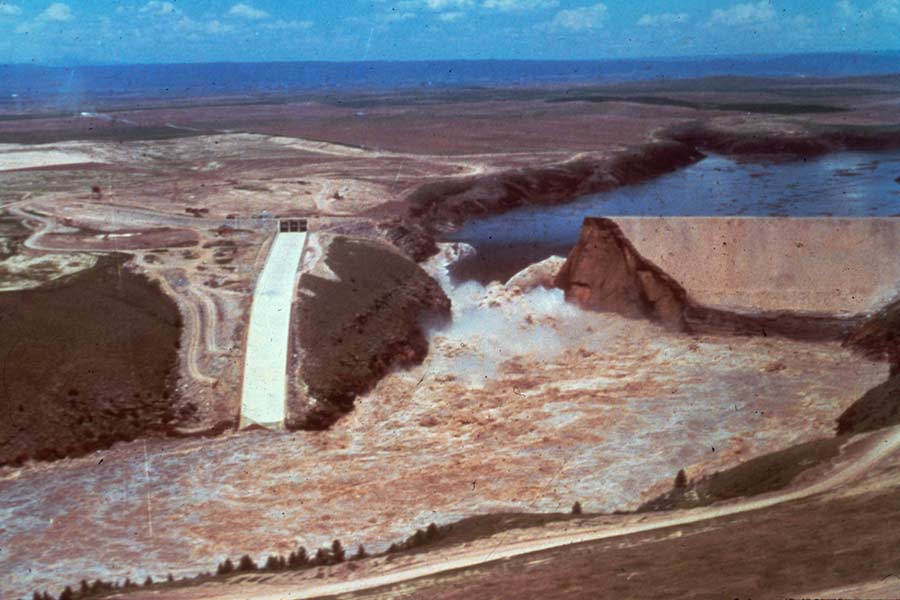
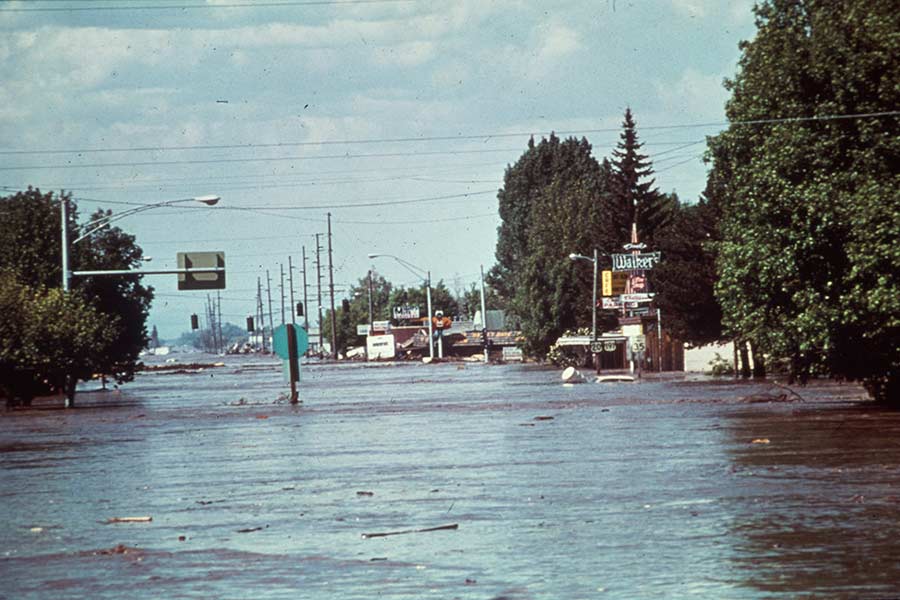
Just before noon on June 5, 1976, the 3,100-foot-long flood mitigation dam located about 15 miles northeast of Rexburg failed, spilling 80 billion gallons of water into east Idaho. Not only was the city of Rexburg buried under five feet of water, but 11 people and about 13,000 head of livestock were also killed. Beyond that, about 3,000 homes and tens of thousands of acres of land were destroyed or heavily damaged.
Cleanup took months and cost over $2 billion — more than $11 billion in today’s dollars.
Despite concerns about the dam’s design before and during construction — it sat on a foundation of compacted dirt that covered porous and unstable canyon rock — the dam was completed and rushed into operation without any testing.
Between 1950 and 1979, more than 40,000 dams were built across the country, mainly for hydropower and irrigation, and the Teton Dam was no exception. A hydroelectric power plant was under construction in a tunnel at the bottom of the dam, which Jonak says wrapped around the canyon and came out on the other side.
Jonak drove the truck that hauled the dynamite used to blast through the canyon wall to build the tunnel.
“Somebody had to guide you (into the tunnel). You couldn’t have lights, glass or mirrors on the truck (because they were a safety hazard around dynamite), so you were really backing up blind,” Jonak recalls, choking up.
That tunnel, along with a second one that connected to the spillway on the other side of the dam, is still intact today.
When asked why his recollection of this experience made him so emotional, Jonak said he’s always been an emotional person. He never said it, but it’s clear some of his experiences during this time were traumatizing.
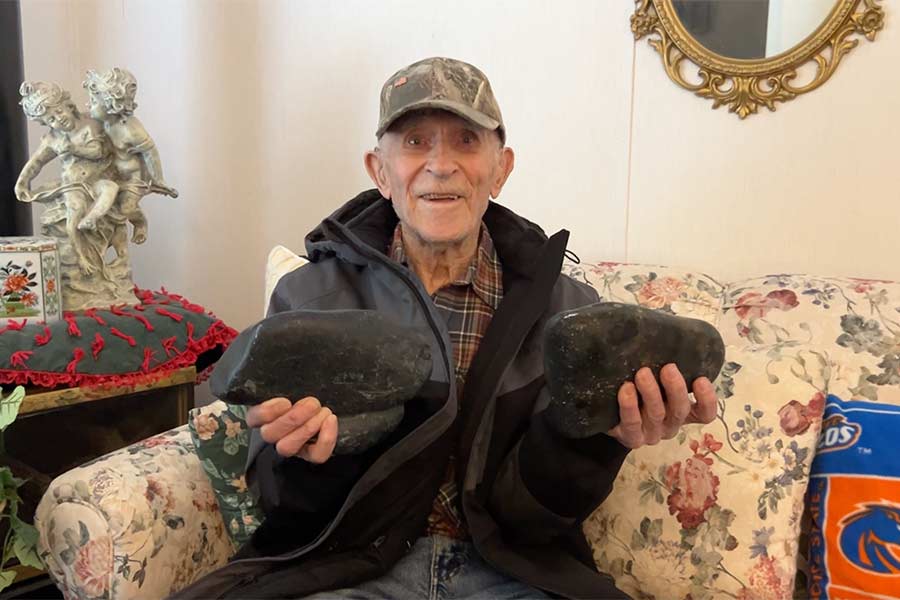
After the explosion of the dynamite, some of the resulting rock and debris were used as fill material for the dam’s foundation.
“Most of the hot rock was hauled to a rock quarry east of St. Anthony,” says Jonak.
That same quarry later supplied the large boulders to build the wall of riprap on the downstream face of the dam. The idea was to use the rock to prevent water from washing away the fill.
“In the bottom of the fill, they blasted out a tunnel about 4 feet deep. It was what they called the kiwi, and it’s what supported it. For some reason, I figured it wasn’t going to hold,” recalls Jonak. “It turned out that I was right after all.”
Jonak says he was one of the last men on site the day before it broke.
Hours before its collapse, the reservoir was nearly filled to capacity, and the dam was operating without a functioning outlet works or spillway gate. Without a mechanism to control water flow and pressure, the dam’s failure was imminent.
“I bet a guy $5 that water would go through the spillway on the west side, but they had the gates closed. The water was up about 4 feet in the spillway, but they didn’t open the gates; I don’t know why. So I lost my $5 bet,” Jonak recalls with laughter.
Jonak says he was shopping in Idaho Falls at the time of the collapse. He owned an apartment in the vicinity of the dam and was buying materials to do some remodeling. He saw a TV news report at the store, and that changed his plans.
Once the dam collapsed, Jonak and everyone else involved in the construction were called back to work.
Although his home in Woodville was not affected, Jonak recalls seeing flooded streets, dead horses and damaged homes in Shelley.
“The water was moving fast over here,” Jonak says, tearing up.
‘The worst part’
But to Jonak, the worst part of the disaster was not knowing the whereabouts of his daughter. He says his oldest daughter, Jillyn, had planned to go camping with some friends in that area. He was worried sick for three days.
Eventually, he discovered Jillyn was safe. Jonak’s youngest daughter, Jacqueline Wittwer, says Jillyn and her friends ended up going to Spencer instead, a decision that saved their lives.
“They had no idea that the dam had broken because they were camping,” Wittwer says. “When they heard the news, they drove into Spencer and called (Mom and Dad) to let them know they were OK.”
During the cleanup effort, Jonak recalls an experience that he finds funny in hindsight, but was embarrassing at the time. He says he helped haul away some of the debris, which included copper wiring from fallen power lines. Most of it was buried in the ground, but he salvaged some of it during a lunch break one day and was arrested.
“A deputy put me in handcuffs. On the way (to jail), he said (the wiring) doesn’t belong to anybody. I wondered why I was being arrested if it doesn’t belong to anybody,” Jonak says.
Jonak was taken into custody on a $200 bond. He says he’d been in jail about 30 minutes when his wife came and bailed him out. The charges were later dropped in a court hearing, and Jonak was released.
Later, Jonak says the confiscated wiring was given to the city and sold in a surplus sale. Jonak’s cousin bought it and gave it back to him.
“I ended up with the copper wiring after all,” he says, laughing.
In retrospect, Jonak says he could’ve filed a false arrest claim.
Jonak says he can hardly believe it’s been 50 years since the Teton Dam disaster. He still tears up when he thinks about those who were killed or lost homes in the tragedy.
“The worst part of it is the people who lost their lives,” he says, crying. “Some of them lost their lives because they didn’t listen, they didn’t evacuate when they had a chance.”
WATCH OUR INTERVIEW WITH JONAK IN THE VIDEO ABOVE.