




Two Republicans hoping to become nominee for Clark County coroner
Published at | Updated at
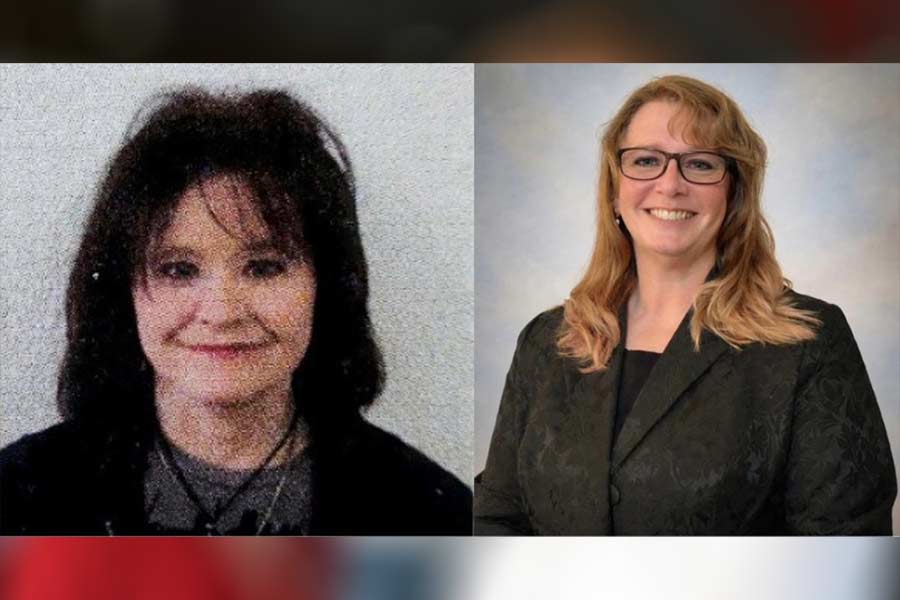
IDAHO FALLS — Two Republican candidates are running for Clark County coroner.
Incumbent Brenda Laird is being challenged by Shellie Summers.
EastIdahoNews.com sent the same eight questions to each candidate to learn more about their platform. Their responses were required to be 250 words or less, and were only edited for minor punctuation, grammar and length.
The winner of the primary will appear on the general election ballot in November. The primary election is happening on May 19.
Tell us about yourself — include information about your family, career, education, volunteer work, and any prior experience in public office.
Laird: My name is Brenda Laird, and I am a lifelong resident of Clark County. I have a Bachelor’s Degree from ISU in Social Work and with an emphasis in health services. My commitment to this community is evidenced by an extensive history of volunteer service, including roles as a 4-H Summer Program Teacher, an assistant coach for youth baseball, and a Domestic Violence Advocate and Group Counselor at the YWCA in Pocatello, Idaho. Furthermore, I have served as an EMT and driver for the Clark County Ambulance and as an assistant to the Ombudsman for the Elderly in Bonneville County. This volunteer experience, combined with my professional background as a library director, dispatcher, school aide, and marketing representative, has provided me with the foundational skills and community insight necessary to serve effectively as an elected official for Clark County.
Summers: My husband and I have 5 children, with our daughter being the only one left at home. I am a resident of Clark County with a strong commitment to public service and to improving how we serve families during times of loss. I am a Registered Nurse, and also a volunteer EMT for Clark County Ambulance. I have been involved in efforts that focus on strengthening Idaho’s coroner system through collaboration, standardization, and access to resources.
I believe rural communities deserve the same level of professionalism and investigative accuracy as larger jurisdictions. I have supported initiatives that emphasize training, certification, and consistency in how death investigations are conducted.
My approach is grounded in respect for the decedent, clear communication with families, and accountability in every case. I am committed to building a coroner’s office that reflects the values of Clark County while aligning with broader efforts to modernize Idaho’s medicolegal system.
Why are you seeking political office within your community? Briefly explain your political platform.
Summers: I am seeking this office because the current system in rural Idaho is fragmented and under-resourced. Clark County deserves a coroner’s office that is connected to a larger, coordinated system that ensures consistency, professionalism, and access to expertise.
My platform is centered on three principles. First, regional collaboration to ensure access to forensic pathology and specialized resources. Second, standardization of investigative practices so that every case is handled with the same level of quality and professionalism. Third, transparency and accountability to the public.
This role is not about politics. It is about building a system that works better for families, law enforcement, and the community by aligning Clark County with a more modern and sustainable model of death investigation.
Laird: I am reseeking my position as the Clark County Coroner. I have served in the post of coroner for 16 years, during which I have consistently strived to maintain the highest standards of professional integrity. My work requires rigorous administrative efficiency to ensure the production of accurate death certificates. I strive to remain accountable not only to state agencies, such as the Bureau of Vital Statistics, but also to the grieving families and funeral homes with whom I collaborate. I attend all the deaths in Clark County and conduct scientific tests and consulting when necessary. It serves as a vital safeguard for public health and the judicial process.
What are the greatest challenges facing people in your county? What is your plan to meet and overcome those challenges?
Laird: I believe that in today’s climate, we must be ever mindful of the impact of drugs. Many people travel through our county via Interstate 15, and I am grateful for the training I have received from the Idaho Association of Counties over the years. The IAC’s educational committee of the Coroner’s Division does its best to keep us informed of the latest drug trends nationwide. I perform my due diligence by utilizing toxicology tests to determine a decedent’s cause of death.
Summers: One of the greatest challenges is limited access to forensic resources. Rural counties often rely on distant services, which can delay answers and create inconsistencies in investigations. Another challenge is the lack of standardized practices across jurisdictions, which can lead to variation in case handling.
The plan to address these issues is to actively participate in regional systems that share resources, improve access to forensic pathologists, and create consistent investigative standards. This includes supporting coordinated scheduling, shared services, and training opportunities.
By integrating Clark County into a broader network, we can improve response times, increase accuracy, and provide better service to families while maintaining fiscal responsibility.
How will you best represent the views of your constituents – even those with differing political views? How do partisan politics play into your role as an elected leader?
Summers: The role of coroner requires impartiality. I will represent all residents by focusing on facts, evidence, and professional standards. Every case will be handled the same way regardless of background, beliefs, or circumstances.
I will ensure that communication is respectful, clear, and consistent. Families deserve transparency and professionalism, especially during difficult situations.
Partisan politics should not influence this office. The responsibility is to determine cause and manner of death and to do so with integrity. My role is to serve the community as a whole, not any political group.
Laird: Partisan politics has not really affected my position as coroner. In Clark County, at least to my knowledge, we have not really had many political conflicts among my constituents.
What parts of the county budget could use more funding? Where are places in the budget where cuts could be made?
Laird: Clark County is very strapped tight for money. Our commissioners do the best that they can to allocate funds to all of our different departments. I always try to keep within my budget, and I make no budgetary demands for monies in my department other than vehicle maintenance.
Summers: Funding should be directed toward areas that improve the quality and consistency of death investigations. This includes training, certification, equipment, and access to forensic services.
At the same time, there are opportunities to reduce costs by eliminating duplication of services across counties. Regional collaboration allows counties to share resources such as transport, pathology services, and specialized expertise, which reduces overall expenses.
The goal is not simply to increase spending, but to spend more effectively by investing in systems that improve outcomes while controlling long-term costs.
What specific changes can be made in this office to increase public transparency and access to public information? How will you communicate directly with your constituents?
Summers: Transparency begins with consistent processes and clear communication. I would ensure that reports are completed accurately and in a timely manner and that families are informed of the process and what to expect.
I would also work to make general information about the coroner’s office more accessible, including how investigations are conducted and what services are provided.
Direct communication will include availability to families, coordination with local agencies, and community outreach when appropriate. Transparency builds trust, and trust is essential in this role.
Laird: Idaho has maintained robust constitutional protections for crime victims. If a case is still under investigation with local law enforcement and our county attorney, I will always take cues from them of how to proceed with a sensitive case.
Can you give a concrete example of a policy or budget decision you would support to improve a county service within your first year in office?
Summers: In the first year, I would prioritize formal participation in a regional system for accessing forensic pathology and shared investigative resources.
This would include establishing agreements that allow Clark County to access timely autopsy services and specialized expertise without unnecessary delays. It would also involve aligning local practices with regional standards to ensure consistency.
This is a practical step that improves service quality immediately while laying the foundation for long-term system improvements.
Laird: See answer five.
What experience do you bring that prepares you to manage county finances, and how will you ensure fiscal responsibility?
Laird: See answer five for answer.
Summers: Managing a rural office requires careful use of limited resources. I understand the importance of prioritizing essential services while finding efficiencies wherever possible.
Fiscal responsibility will be achieved by focusing on core functions, avoiding duplication, and leveraging regional partnerships to reduce costs. Shared services and coordinated systems allow counties to do more with the resources they have.
Accountability and transparency in budgeting will ensure that funds are used effectively and directly support the mission of the coroner’s office.