




Three on the primary ballot for Power County sheriff
Published at | Updated at
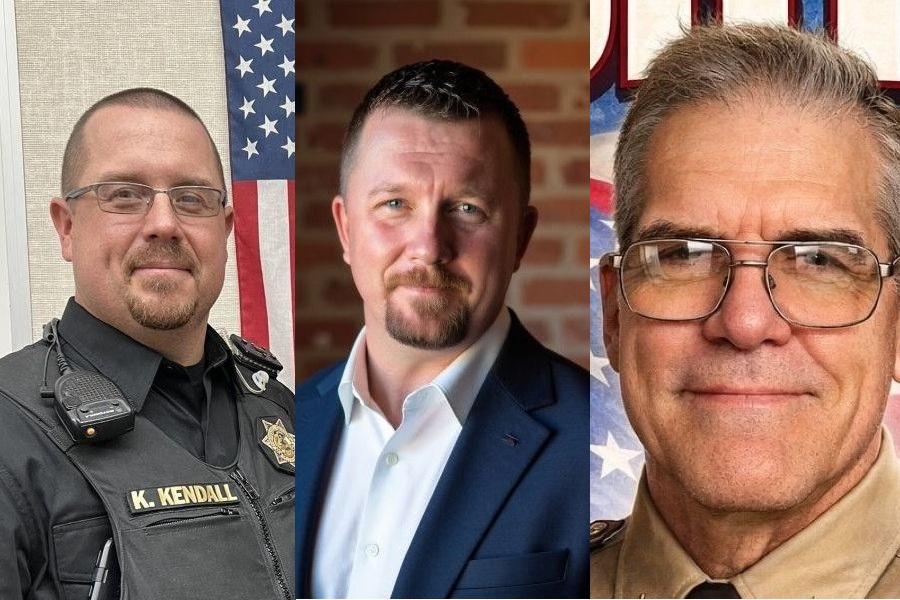
AMERICAN FALLS – Three candidates are vying for Power County sheriff. They are the current sheriff, Kasey Kendall, who was appointed by Power County commissioners after former Sheriff Josh Campbell resigned earlier in the year. The other candidates are Jesse Johnston and Michael Porter.
EastIdahoNews.com sent each candidate an eight-question questionnaire, with responses limited to 250 words. Their unedited answers are published below.
The candidate who wins the primary will be on the general election ballot on Nov. 3. The primary election will be held on May 19.
For more candidate questionnaires and further information on this year’s primary election, check out East Idaho Elects.
Tell us about yourself — include information about your family, career, education, volunteer work, and any prior experience in public office.
Kendall: I was born and raised in Power County, I attended school in American Falls and graduated from American Falls High School in 2001. My wife and I have 5 children, ages 19-12.
I began my career in 2006 at the Power County Sheriff’s Office as a Detention Deputy. In my 20 years of service at the sheriff’s office, I have served in the jail, patrol, marine patrol, investigations and administration.
I was sworn in as Power County Sheriff on March 2, 2026 after the retirement of Sheriff Josh Campbell. I am Idaho POST-certified and hold 5 active certifications. I am awaiting the arrival of two more certificates, of which, one is my Management Certificate.
Johnston: I am a man whose life has been built on service, accountability, and leadership under pressure. I was born and raised in Southeast Idaho and graduated from Marsh Valley High School. This is where my values were shaped—hard work, personal responsibility, and a deep respect for the kind of community that looks out for its own.
I’m also an avid outdoorsman, and I understand firsthand the importance of preserving our way of life and protecting the people and places that make this area what it is.
My commitment to this community is rooted in a career spent protecting others, making difficult decisions, and standing firm when it matters most.
I served this nation in the United States Army, completing three combat tours to Iraq with the 82nd Airborne Division and one to Afghanistan with the 101st Airborne Division. I also served as a detachment sergeant in Long Range Surveillance, where leadership was tested daily and failure was not an option. Those experiences shaped my ability to lead in high-risk environments, make sound decisions under stress, and take responsibility for the people and missions entrusted to me.
After being medically retired from military service, I continued that commitment in law enforcement, serving at the local level to protect and serve my community. Today, I am a licensed paramedic, responding to critical emergencies and providing care when people need it most.
I am also a business owner, which has given me real-world experience in managing budgets, leading personnel, and ensuring accountability in operations.
My education comes from both formal training and decades of real-world experience. Through the military, law enforcement, and emergency medical services, I have trained extensively in leadership, crisis management, and public safety. For over 20 years, I have also served as a firearms instructor, holding others to a high standard of discipline, readiness, and responsibility.
Porter: My parents and I went to high school in Idaho Falls. My Uncles owned Burns Bros Concrete and Gem State Rentals in Idaho Falls for many years, and my grandfather owned Oden Motor Supply (which I believe is now the Chamber of Commerce Building in Idaho Falls).
I am a graduate of Idaho State University (Law Enforcement degree with Idaho P.O.S.T. certification. I worked for 30 years in Law Enforcement – 2 years for Idaho State University Campus Public Safety while I was a student there, and did my cadet work with Pocatello Police, Chubbuck Police, Bannock and Power County Sheriff’s Departments. I then worked 28 years for the King County Sheriff’s Office in the Seattle area and retired at the rank of Detective Sergeant.
Why are you seeking political office within your community? Briefly explain your political platform?
Kendall: I am seeking the office of Power County Sheriff for several reasons. I have lived in Power County my entire life, I have raised and am raising children in the community I grew up in. Power County is important to me, the Power County Sheriff’s Office is important to me. To be a part of serving and protecting Power County now and into the future is a noble calling.
My platform is to be an approachable, available servant leader who communicates with constituents and serves the people and visitors of Power County with professionalism, experience and consistency. I believe in building relationships with local government and improving the professional relationships the sheriff’s office has with local government, other agencies and the community.
Johnston: I am seeking public office because this community deserves leadership that is strong, accountable, and willing to do the job the right way—not just maintain the status quo. I’ve spent my life in positions where leadership carries real consequences, and I’ve seen what happens when it falls short. I’m running to bring discipline, integrity, and decisive leadership back to the Sheriff’s Office, and to ensure the people of this county are served with professionalism and respect.
My platform is simple and direct.
First, restore trust through transparency and accountability. The people deserve to know how decisions are made and how their tax dollars are being used. That starts with leadership that is honest, visible, and answerable to the public.
Second, strengthen public safety by investing in our people. That means proper staffing, high standards, and real training. I will lead from the front and hold the line on professionalism and readiness.
Third, enforce fiscal responsibility. We cannot continue operating with inefficiency and waste. I will manage the budget like it matters—because it does.
Fourth, reduce strain on the system with practical solutions, including a Sheriff’s Labor Detail program to lower jail costs while holding low-level offenders accountable.
Finally, I will be present in this community—accessible, engaged, and listening. This campaign is about real change—focused, necessary, and long overdue.
Porter: I am running for Power County Sheriff because I believe in protecting our community with integrity, accountability, and dedication. As a lifelong supporter of law enforcement values, I understand the importance of trust between the sheriff’s office and the people it serves. Our Sheriff’s Office deserves a leader who is present, approachable, and dedicated to public safety for all.
I bring unmatched experience, strong leadership, and a deep respect for the rule of law. My goal is to ensure our deputies have the training, resources, and support they need to do their jobs effectively and safely. I am committed to transparency, open communication, and working collaboratively with our community.
I will demand that my deputies treat all members of the public with the respect they deserve. I will also demand that they uphold the high standards of being a Police Officer in Idaho, including obeying and not just enforcing the statutes.
What are the greatest challenges facing people in your county? What is your plan to meet and overcome those challenges?
Kendall: Power County is growing and evolving steadily. With that growth, new problems or areas that have been overlooked in the past come to the surface quickly. As a community grows, so does the need for law enforcement to not only serve the growing community but to also protect it. Increased call volumes and increased investigations need to be properly managed and addressed.
To meet those challenges, I plan to fill vacancies in the sheriff’s office, make specific changes in the sheriff’s office to better address investigations, calls for service and to consistently evaluate crime trends, staffing needs and community needs.
I plan to prioritize working relationships with local government and community stakeholders to ensure that all relevant information, needs and concerns can be identified and addressed as quickly as possible to keep up with growth and ensure the service the community expects continues.
Johnston: The greatest challenges facing this county come down to three core issues: strained public safety resources, ongoing budget concerns, and a growing lack of trust between leadership and the people. We are asking our deputies and first responders to do more with less, while operating within systems that are already stretched thin. At the same time, taxpayers deserve accountability and transparency that they’re not always getting.
Meeting these challenges starts with leadership that is present, decisive, and accountable.
First, I will strengthen public safety from within by raising standards, investing in consistent training, and ensuring proper staffing levels. A well-led, well-prepared team is the foundation of everything we do.
Second, I will bring real fiscal discipline to the Sheriff’s Office. That means closely managing the budget, cutting inefficiencies, and making sure every dollar is used where it has the greatest impact. We cannot continue down a path of unnecessary spending while expecting better results.
Third, I will reduce strain on the system by working with the courts and prosecutor to implement practical solutions like a Sheriff’s Labor Detail program. This approach holds low-level offenders accountable while reducing jail overcrowding and associated costs.
Finally, I will rebuild trust through transparency and engagement. I will be a visible, accessible Sheriff who communicates openly and works alongside the community and partner agencies.
These challenges require action, not excuses. I will meet them head-on with clear priorities, strong leadership, and a commitment to delivering real results.
Porter: Power County has had 4 deputies de-certified by the State of Idaho for misconduct on-duty just since 2012. That equates to almost a fourth of the Sheriff’s Office staff. Two of these were voluntary relinquishments, however the result is the same, they can no longer be police officers in Idaho. This is public information that anyone can find by searching online for “police decertified in Idaho”.
This indicates a huge problem and lack of leadership and accountability. This is unheard of for such a small agency to have so many serious misconduct issues. I believe this shows a clear lack of supervision and proper training for this agency. I spoke to a local reporter here and even the local paper had not heard of these deputies quietly being ushered out with no transparency from the Sheriff here.
There has been a long history of keeping things “quiet” within the Sheriff’s Office in Power County. None of the citizens I have spoken with knew anything about so many deputies being decertified (and I have knocked on hundreds of doors locally). There is currently almost no transparency whatsoever. They have even gone to encrypted radio communications to keep the public and media from being able to monitor radio traffic here and have some idea of what is going on day to day.
DUI arrests are down 53% according to statistics that I was able to find. I do not believe there are that many fewer impaired drivers, but I do believe there is very little emphasis on DUI detection and enforcement in Power County. And as anybody can easily find online, DUI’s kill far more people than drug dealers and the like.
How will you best represent the views of your constituents – even those with differing political views? How do partisan politics play into your role as an elected leader?
Kendall: I will best represent the views of constituents by actively listening to their concerns and points of view to help gather a better understanding of the scope of an issue or point of view. The office of Sheriff is a political office and is an office that is accountable to the people regardless of their political views or party affiliation. The good of the people and the good of the county is a priority regardless of differing political views or partisanship.
Johnston: As Sheriff, my responsibility is to represent and serve every person in this county—regardless of political affiliation, background, or personal beliefs. I am a conservative Republican, and I’ve never wavered from the values that come with that. I believe in the Constitution, individual responsibility, and the rule of law. But the office of Sheriff is not a partisan position—it is a position of public trust that serves and protects everyone.
Public safety is not political, and it should never be treated that way. The badge represents the entire community, and the responsibility that comes with it demands fairness, consistency, and professionalism at all times.
I will represent my constituents by being accessible, present, and willing to listen. That means engaging with people across all perspectives, hearing their concerns, and taking them seriously. Good leadership is not about surrounding yourself with people who agree with you—it’s about listening to different viewpoints, weighing them carefully, and making decisions based on what is right for the safety and well-being of the entire county. You don’t have to agree with me to be heard, and you don’t have to support me to receive fair and professional service.
Partisan politics will not influence how the Sheriff’s Office operates. The law will be applied equally, without bias, favoritism, or agenda. My duty is to uphold the Constitution, enforce the law, and ensure that every individual is treated with dignity and respect.
At the end of the day, this office serves all people. I will lead with integrity, transparency, and accountability—focused on protecting every member of this community and earning their trust through consistent, principled leadership.
Porter: Partisan politics should play very little if any role in Law Enforcement. The Sheriff position is partisan because it is a constitutional authority position where the Sheriff answers directly to the people, and not the City, County, State or Federal Government.
I treat all citizens with equal respect, the same respect that anyone would want especially from law enforcement. All citizens within Power County have a right to equal and fair treatment, not just the friends and family of the deputies that work here.
I do strongly agree with the foundations and beliefs of the Republican Party, however I hold no bias or prejudice toward members of other political parties.
What parts of the county budget could use more funding? Where are places in the budget where cuts could be made?
Kendall: In my opinion, respective to the sheriff’s office, wages continue to be an area where more funding could potentially be useful. The Board of County Commissioners have been active and involved in conjunction with the sheriff’s office to work on bringing wages up to be competitive with the SE Idaho Law Enforcement job market. Several strides have been made in this area within the last couple of fiscal years.
As we continue to move forward in the future, there are many different technologies available that could potentially redirect monies currently used for outdated technology towards other areas of the sheriff’s office. An example would be streamlining funds used for postage, printing etc. and using any savings in those areas towards other areas of the budget that need improvement.
Johnston: There are areas within the county budget that deserve stronger investment, and others where we need to take a hard, honest look at spending—especially within the justice division.
First, funding should be prioritized toward frontline public safety. That includes proper staffing levels for deputies and detention officers, consistent and realistic training, and ensuring equipment is reliable and up to date. These are not optional expenses—they directly impact response times, officer safety, and the level of service the public receives. Retention is also critical. Investing in personnel helps reduce turnover, maintain experience within the agency, and ultimately saves money over time.
Second, more focus should be placed on infrastructure inside the jail. Safety, compliance, and functionality within the facility are essential, both for staff and inmates. Addressing issues proactively prevents larger, more expensive problems down the road.
At the same time, the justice division budget needs to be dissected line by line. There has been unnecessary spending over the last several years that can no longer be ignored.
I will identify and cut the fat—eliminating waste, redundant processes, and expenditures that do not directly contribute to public safety or operational efficiency. That kind of spending will stop.
One of the biggest opportunities for cost reduction is in how we handle low-level offenders. By implementing a Sheriff’s Labor Detail program, we can reduce jail overcrowding and significantly lower housing costs, while still holding individuals accountable and putting them to work in a way that benefits the community.
The goal is not simply to spend more or cut more—it’s to spend smarter, with accountability and purpose behind every dollar.
Porter: The Sheriff’s Office here has been operating on deficit spending for several years, and has already used up their allocated budget for this fiscal year with 6 more months remaining. This indicates mismanagement of public funds and requires a complete overhaul of spending practices.
Everything needs to be analyzed including equipment and staffing allocations. PCSO currently has 4 vacancies according to the current interim Sheriff, however I have seen no recruiting efforts whatsoever. No advertising, job fairs, or public notices attempting to fill these vacancies.
There should be significant salary savings with such vacancies, however this is apparently not the case. I will work collaboratively with the County Commissioners to work out a solution to these spending problems that is within the allocated budget and where appropriate I will fight for additional funding to increase public safety for the community.
This does not mean spend money you don’t have, it means communicate and work out the issues with those who hold the purse strings as is expected by the taxpayers. The Sheriff has the unique ability to go directly to the public and explain his/her position on fiscal matters and if necessary, enlist their support directly.
What specific changes can be made in this office to increase public transparency and access to public information? How will you communicate directly with your constituents?
Kendall: In Power County, some of those changes are in motion to increase public transparency and access to public information. The county is working towards a website refresh which will have a sheriff’s office component. A sheriff’s office employee will be a part of that process to offer specific insight from the sheriff’s office perspective.
I am also aware of apps that are being used by Bannock and Bingham County Sheriff’s Office which provide public information and a directory for various public office contacts. I am interested in implementing that at the sheriff’s office as well to increase transparency, access to public information and to offer another method of connection to the sheriff’s office for our community.
I communicate directly with the constituents in a number of ways, in person, by email or by phone. Whatever the format is, I strive to communicate with constituents promptly and efficiently.
Johnston: Increasing transparency and access starts with a clear commitment: the public has a right to know how their Sheriff’s Office operates, how decisions are made, and how their tax dollars are being used. That standard has to be built into the structure of the office, not treated as an afterthought.
First, I will implement regular public reporting. This includes quarterly reports outlining budget status, staffing levels, major incidents, and measurable performance metrics. In addition, I will publish weekly arrest reports, so the public has a consistent, timely understanding of enforcement activity in their community. These reports will be accessible and easy to understand.
Second, I will ensure key information is readily available and kept current. That includes maintaining and regularly updating the county’s sex offender registry, so residents have accurate, up-to-date information to help them protect their families and stay informed.
Third, I will make policies, procedures, and general operational information easy to access online whenever legally appropriate. Transparency should be proactive, not reactive. I will also establish clear standards for timely responses to public records requests, so people are not left waiting or in the dark.
Fourth, I will hold regular community meetings and open forums, creating direct opportunities for the public to ask questions and voice concerns. Just as important, I will take a proactive approach to those concerns—addressing issues early, communicating clearly, and not waiting for problems to grow before taking action.
Communication will be consistent and direct through public meetings, social media, and community outreach. I will be visible, accessible, and engaged.
My approach is simple: be open, be proactive, and be accountable—because informed communities are stronger and safer communities.
Porter: I will designate a public information officer and immediately begin a weekly public release about department activity including traffic stops, arrests, investigations, and a recap of what the public’s Sheriff Office is doing week to week.
I will push to move the main radio traffic to a non-encrypted radio channel. Encryption is appropriate for tactical and undercover operations, however I see no reason for normal day to day radio traffic to be kept secret from the people who are paying for it. This is not transparency which the public expect and should demand of their deputies.
Can you give a concrete example of a policy or budget decision you would support to improve a county service within your first year in office?
Kendall: A budget decision I would support to improve a county service would be investments into replacing an aging radio infrastructure. The sheriff’s office, police department, ems, fire and search and rescue all utilize the same 700 mhz radio system on different channels.
The Power County Highway District also utilizes this system. Currently, our radio consoles in our server room at the sheriff’s office are end of life and have been for a while. To replace them is over $400,000. New consoles will enhance the reliability and sustainability of not only dispatch operations, but other first responder operations, which enhance the safety of staff and the community.
In my first month as Sheriff, I applied for Federal funds which do not obligate the county or the taxpayer, as there isn’t a fund matching requirement from the county to utilize the funds. I applied for those funds to help either completely fund or fund most of the cost to update radio equipment in an attempt to be a proper steward of public funds. We have not heard back yet on whether the application was approved or not. If not approved, it is an area where budget planning and management will be crucial for future upgrades in that area.
Johnston: A concrete policy I would implement within my first year is the development of a Sheriff’s Labor Detail (SLD) program for low-level, non-violent offenders.
This program would allow eligible individuals to work on supervised crews performing tasks like roadside cleanup, facility maintenance, and other community improvement projects. In return, they would receive structured sentence reductions on a defined basis. This approach holds individuals accountable while putting them to work in a way that benefits the community.
From a budget standpoint, the impact is immediate and measurable. Housing inmates is one of the most expensive burdens on the county. By reducing the number of low-level offenders occupying jail beds, we lower daily housing costs, reduce strain on staff, and extend the life and capacity of the facility without additional construction or expansion.
Operationally, this program would be implemented in coordination with the courts and prosecutor to ensure clear eligibility standards, oversight, and accountability. It also creates an opportunity for individuals to contribute positively, build work ethic, and reduce repeat offenses.
At the same time, I would pair this with a full review of the justice division budget—identifying inefficiencies and reallocating those savings directly back into frontline services like staffing, training, and equipment.
This is a practical, results-driven policy that improves public safety, reduces costs, and delivers visible value to the community within the first year.
Porter: Much of the budget proposals and decisions are under the purview of the County Commissioners. I would however expend a great deal more effort in securing grant funding for things like training, and equipment updates which improve public safety and the safety of deputies within the Sheriff’s Office.
There is also a very high potential cost savings associated with improving training and reducing liability to the County. Having clear Standard Operating Procedures, and Policy Manual outlining expectations is a large part of that process. As I learned in management and supervision training, if it is predictable, it’s preventable.
What experience do you bring that prepares you to manage county finances, and how will you ensure fiscal responsibility?
Kendall: My experience in managing county finances has been developed over many years and in different capacities while at the sheriff’s office. While serving as a Sergeant in the jail, I worked closely with the sheriff regarding weekly and monthly purchases relating to food, supplies, equipment and building maintenance.
By working with the sheriff in that role, I began to learn the budget and how the budget is managed throughout the fiscal year. In my role as a Chief Deputy, I was able to assist in the planning and preparation of not only the jail budget but also the other division budgets of the sheriff’s office.
In my role as the Sheriff, budget management is vital and is an area where I spend quite a bit of time daily and weekly ensuring that the budget is maintained with diligence and care. It is crucial that elected officials be good stewards of public monies and utilize it efficiently and properly.
Johnston: I bring a combination of real-world leadership, operational oversight, and financial responsibility from multiple areas of my career.
As a business owner, I have been directly responsible for managing budgets, controlling costs, and making decisions that determine whether an operation succeeds or fails. That experience has given me a clear understanding of how to allocate resources effectively, eliminate waste, and ensure accountability at every level.
In the military, I was entrusted with the oversight and accountability of millions of dollars’ worth of weapons, equipment, and sensitive assets. That responsibility required strict discipline, detailed tracking, and absolute accountability—there is no room for mismanagement when it comes to resources of that scale. Every piece of equipment had to be accounted for, maintained, and properly utilized. That level of responsibility directly translates to managing taxpayer dollars with the same precision and respect.
In addition, I operated in environments where resources were limited and the margin for error was zero. Every decision had to be deliberate, efficient, and mission-focused. That mindset carries over directly into managing public funds—prioritizing what matters most and ensuring nothing is wasted.
In law enforcement and emergency medical services, I’ve worked within structured budgets while still being expected to deliver results. I understand how to balance operational needs with financial constraints, and how critical it is to ensure that funding is directed toward frontline services that directly impact public safety.
To ensure fiscal responsibility, I will begin with a full, independent review of the justice division budget. I will bring in a forensic auditor to dissect previous years’ budgets line by line, identifying where taxpayer dollars have been wasted, where inefficiencies exist, and where spending has drifted away from core priorities.
Porter: When I worked for King County, I spent a full year in the Police Contracting Unit. I compiled workload statistical data and billing activity reports for each of the 13 contract cities that King County acted as the City Police for.
Part of this duty included ensuring that each of those city contracts were being managed within their respective budgets, and that they were getting the services they were paying for. I prepared Service Delivery Reports for specific specialty unit call-outs (things like Air Support, SWAT and K-9).
Also as the Supervisor in charge of the Criminal Warrants/Fugitive Unit for 7 years I was responsible for a multi-million dollar budget and ensuring that staff were all following cost-efficient SOP’s and staying within the allocated budget for my unit.
I was also the Criminal Investigations Division fleet manager during that assignment, responsible for the issuing, inspection, damage reporting, and management of 67+ vehicles used by personnel within that division.