



Tyler Robinson’s comments on bullet fragment DNA was misleading, state contends
Published at | Updated at
Pat Reavy, KSL
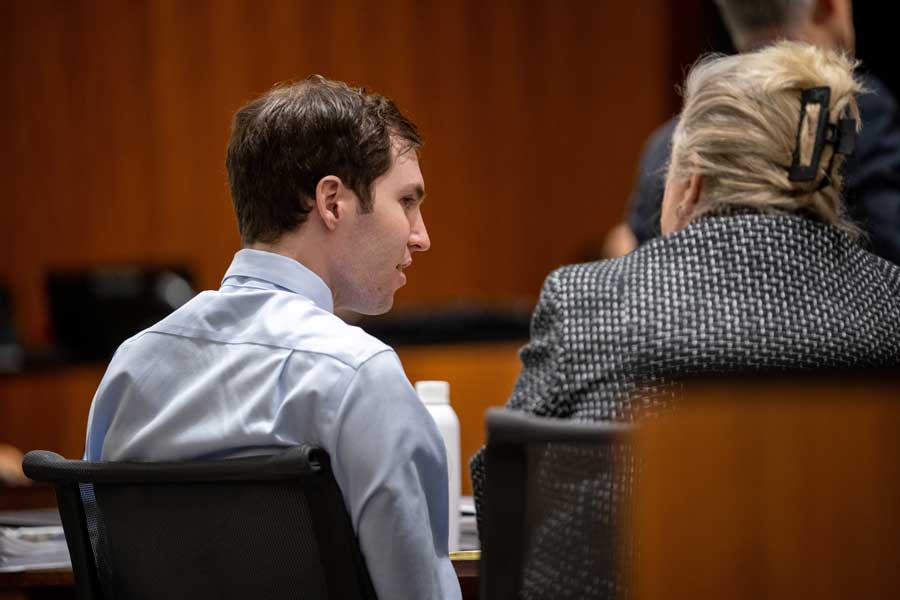
PROVO — As attorneys in the Tyler Robinson capital murder case await a decision about whether the preliminary hearing will proceed as scheduled this month, both sides are already preparing their next legal moves.
Prosecutors are also responding to Robinson’s call that they should be held in contempt for comments made to the media, saying that they were only correcting misinformation about a bullet fragment recovered during the autopsy that sparked media attention.
RELATED | Cameras in the courtroom and preliminary hearing argued at daylong Tyler Robinson hearing
Robinson, 23, is charged with capital murder and faces a potential death sentence if convicted of shooting and killing political activist Charlie Kirk, 31, on Sept. 10 on the campus of Utah Valley University.
A preliminary hearing is currently scheduled for May 18, 19 and 21. But defense attorneys say they still have a lot of evidence to review and want the hearing postponed to a later date in order to properly prepare.
Prosecutors argue that the bar at the preliminary hearing stage to show probable cause is so low that there’s no need to delay the legal proceedings. During a preliminary hearing, a judge determines if there is enough probable cause to proceed to trial on the charges levied against a defendant.
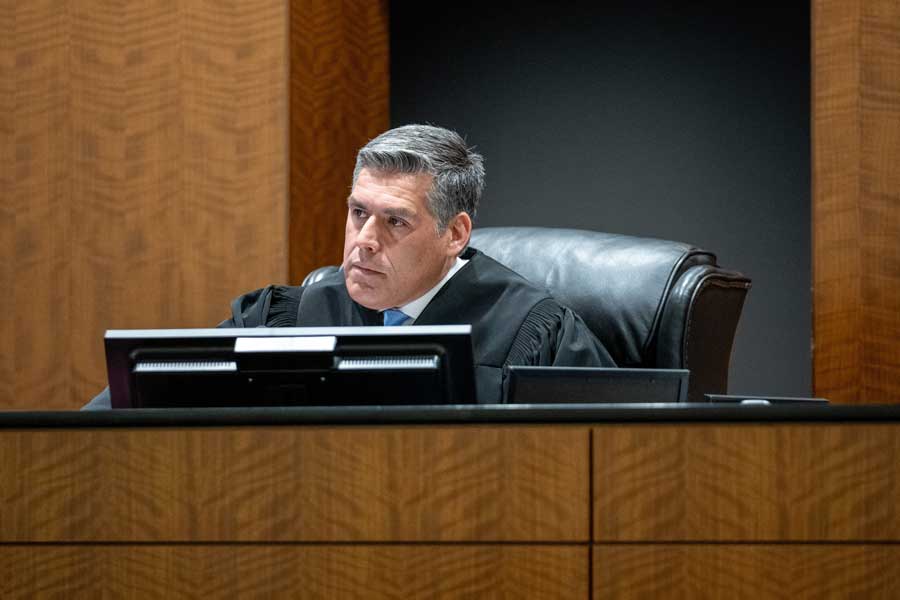
Fourth District Judge Tony Graf is expected to announce his decision on Friday.
Late last week, the Utah County Attorney’s Office filed a notice stating that if waiting for DNA evidence is a reason to delay, it is willing to proceed with the preliminary hearing without it.
“The state has previously proffered that it intends to introduce at the preliminary hearing DNA evidence tying (Robinson) to the crimes charged in the information. However, if the court finds that the state’s introduction of that evidence at the preliminary hearing warrants a continuance, the state is prepared — in the interest of moving this case forward — to proceed with the preliminary hearing as scheduled without the DNA evidence. The state has made this decision after concluding that the other evidence it intends to introduce is more than sufficient to establish probable cause for bindover,” the filing states.
Robinson, meanwhile, also filed a motion last week regarding the preliminary hearing, requesting yet again that portions of it be closed to the public.
His attorneys are calling for “closing those portions of the preliminary hearing testimony which would not be admissible at trial or which, if publicly disclosed prior to trial, may prejudice Mr. Robinson’s constitutional right to a fair trial, and sealing exhibits presented at the preliminary hearing which would not be admissible at trial or which, if publicly disclosed prior to trial, may jeopardize Mr. Robinson’s constitutional right to a fair trial,” the motion states.
Meanwhile, prosecutors are also responding to Robinson’s call for the Utah County Attorney’s Office to be held in contempt of court. The state says it was only trying to correct misinformation the defense put out in one of its motions, which created a media storm.
On March 27, Robinson filed a motion to either vacate or postpone his scheduled preliminary hearing. In the motion, the defense noted that during initial ballistics testing by the Bureau of Alcohol, Tobacco, Firearms and Explosives, it “was unable to identify the bullet recovered at autopsy to the rifle allegedly tied to Mr. Robinson.”
“The media pounced on (Robinson’s) incomplete, and therefore misleading, statement with headlines proclaiming that the recovered bullet did not match (Robinson’s) rifle, that this ‘bombshell’ finding exonerated (Robinson) and that this prosecution was therefore fatally flawed,” the state wrote in its court filing, referring to some media accounts.
Prosecutors say the defense misstated the ATF’s findings and should have said, “that the ATF was unable to identify or exclude the bullet as having been fired from the rifle. As a result, (Robinson’s) statement was misleading,” the state says in its opposition. “In fact, the ATF’s conclusion was that the ‘bullet jacket fragment could not be identified or excluded as having been fired from the … rifle,’ and therefore ‘the result of the comparison was inconclusive.’
“(Robinson’s) mischaracterization of the ATF report sparked a media frenzy that generated reports that the recovered bullet did not match the rifle allegedly tied to (Robinson), that the ballistics analysis therefore exonerated him, and that the state’s case was thus fundamentally and fatally flawed,” prosecutors continued. “In a murder case where a victim was killed by a single bullet, it is difficult to imagine publicity that would be more unduly prejudicial than false reports that the bullet recovered from the victim was proven to have not been fired from the defendant’s rifle.”
The Utah County Attorney’s Office says it was contacted by national and international media organizations for a response and that “the state accurately explained the ATF’s conclusion, expressed confidence that it had sufficient evidence to move forward and prove its case at trial, and reiterated that (Robinson) is presumed innocent and that the state has the burden to prove its case to a jury beyond a reasonable doubt,” which prosecutors say “is precisely the response” they are allowed to make under the the Utah Rules of Professional Conduct.
“And the response did not offer an opinion on (Robinson’s) guilt. Merely expressing confidence that the state has enough evidence to carry its burden to prove its case to the jury guilty beyond a reasonable doubt,” the state argued. “Most importantly, a general statement that the prosecution believes that it has the evidence necessary to carry its burden at trial tells the public nothing more than what the prosecution’s decision to file and continue to pursue this case necessarily communicates — that the prosecution believes it can prove its case.”
Also on Friday, Graf is expected to announce his decision about whether cameras should be allowed in the courtroom for any of Robinson’s hearings.