




Bingham County Commission Seat 2 up for grabs as challenger faces incumbent
Published at | Updated at
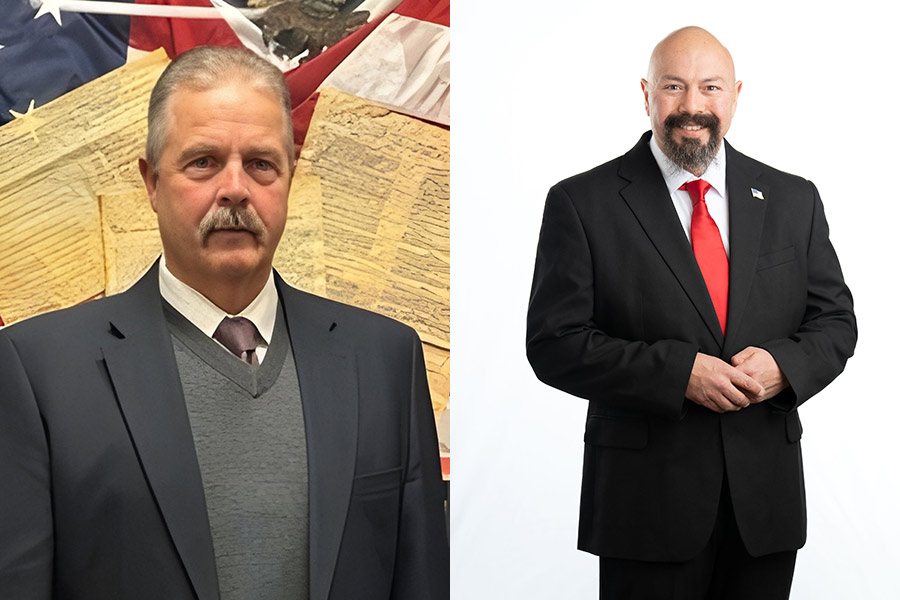
BINGHAM COUNTY – A challenger is running against the chairman of the Bingham County Commission.
Incumbent Bingham County Seat 2 Commissioner Chairman Whitney Manwaring is seeking to get reelected by his constituents, who voted him into office in 2010, while challenger Victor Salinas is running to replace him.
EastIdahoNews.com sent the same eight questions to Manwaring and Salinas. Their responses, listed below, were required to be 250 words or less, and were not edited.
The primary election is on May 19.
Tell us about yourself — include information about your family, career, education, volunteer work, and any prior experience in public office.
Manwaring: I am an experienced leader and a dedicated public servant. I am currently serving as the Chair of the Bingham County Board of Commissioners and prior to that, I was a firefighter/EMT with the City of Blackfoot Fire Department for 24 years. I am a lifelong farmer and resident here and my wife and I have four children and eleven grandchildren who now, thankfully, all live here in Idaho.
Salinas: My name is Victor Salinas, and I’m a proud lifelong resident of Bingham County. I was born in South Texas and moved to Blackfoot when I was nine years old. This community has been my home ever since. I’m a husband, father, and grandfather, and my family is at the center of everything I do.
After graduating from Blackfoot High School, I went straight into the workforce. Over the years, I’ve gained experience in welding, farming, trucking, and medicine. For nearly 20 years, I’ve worked in road and bridge construction for Bingham County, where I’ve developed a strong understanding of our local infrastructure and the needs of our community. I’ve also completed formal police academy training.
Giving back has always been important to me. I’ve volunteered as a coach and board member for Blackfoot Little League Baseball, the Southeast Idaho Youth Football League, and local soccer programs. I’ve also spent many years volunteering with the POW/MIA Association, serving in whatever role was needed.
In my free time, I enjoy hunting, fishing, riding my Harley, staying active, and spending time with my family.
I’m proud of the life I’ve built here and want to continue making a positive influence by serving in public office.
Why are you seeking political office within your community? Briefly explain your political platform.
Salinas: I’m running for public office because this community is home. I’ve worked here, raised my family here, and spent years volunteering here. I want to continue making a positive difference and give back in a bigger way through public service.
My focus is on practical, real-world solutions—taking care of our infrastructure, being responsible with taxpayer money, and making sure our community continues to be a great place to live and raise a family. I believe in hard work, honesty, and listening to the people I represent.
Manwaring: I understand the economy, the culture and most of all the people of Bingham County and see my current role on the Commission as a neighbor who leads and who can bring common sense ideas to problem solving. “Over the years I have learned that being a Commissioner means understanding the issues and questions that sometimes have neighbors or others on different sides of a decision. My knowledge of the area and resources along with hands-on and thoughtful reasoning and sometimes a bit of kind humor can produce best results.
What are the greatest challenges facing people in your county? What is your plan to meet and overcome those challenges?
Manwaring: Challenges change from year to year and we must be ready for those. I think currently the most pressing may be the drought and water conditions this year. Our office is already working with agencies and experts as well as the ag community to be ready to address those issues in the best possible way.
Salinas: One of the greatest challenges facing our county right now is that our growth is exceeding our capabilities. We’re seeing more people move in, but our infrastructure, roads, and services are struggling to keep up. If we don’t get ahead of it, we risk lowering quality of life and increasing long-term costs for taxpayers.
My plan is to focus on responsible, well-managed growth. That means planning ahead for road improvements, coordinating development with infrastructure, and making sure we’re not approving growth faster than we can support it. With my background, I understand what it takes to maintain and expand infrastructure the right way.
We also need to stay fiscally responsible by prioritizing essential services and making sure taxpayer dollars are used wisely and efficiently.
Just as important, I believe in having productive conversations to find solutions that are good for everyone. That means working with residents, local leaders, and developers to ensure decisions reflect the needs and values of our community.
With careful planning, accountability, and open communication, we can manage growth the right way and protect what makes our county a great place to live.
How will you best represent the views of your constituents – even those with differing political views? How do partisan politics play into your role as an elected leader?
Salinas: I believe politics should not be at the core of my role as a leader. My responsibility is to represent everyone in the community, not just one side. That starts with listening, staying accessible, and treating people with respect—even when we don’t agree.
Not everyone will see things the same way, and that’s okay. I believe in having productive conversations, finding common ground where possible, and making decisions based on what is best for the community as a whole.
At the county level, this role should be focused on real, everyday issues—maintaining infrastructure, managing growth, and being responsible with taxpayer dollars. It’s about getting things done in a way that benefits the entire community.
My goal is to serve with integrity, accountability, and a commitment to fair, practical leadership that reflects the needs and values of all constituents.
Manwaring: Sadly, it seems that partisan politics has recently reached the point of demonizing compromise and what used to be called “statesmanship”. I just don’t listen to all that noise and instead listen to people. I listen to what is important to understand what concerns or motivates people and then act rather than react.
What parts of the county budget could use more funding? Where are places in the budget where cuts could be made?
Manwaring: The one part of the budget that is hard to predict and may need more funding from time to time might be IT as safely keeping data and communications open becomes more complex. The are that we hear most about is roads and bridges and public works services and that is high priority for me.
Salinas: From my understanding, it’s difficult to point to specific areas for increases or cuts without a thorough review of the full budget. In past budgets, there have been line items that did not use all of the funds allocated to them, which tells me there may be opportunities to improve how we plan and manage spending.
Before making decisions on increasing or cutting funding, I believe it’s important to take a careful, detailed look at where money is actually being used effectively and where it is not. My priority would be to ensure taxpayer dollars are being used efficiently and aligned with the real needs of our community.
That said, I do believe core services like roads, infrastructure, and public safety should remain a priority, especially as our county continues to grow.
Overall, my approach would be to focus on accountability, transparency, and making sure every dollar is working for the people it’s meant to serve.
What specific changes can be made in this office to increase public transparency and access to public information? How will you communicate directly with your constituents?
Salinas: I believe trust comes from being open, honest, and easy to reach. People should be able to see what their local government is doing without having to dig for it.
That starts with making information simple to find—posting meeting agendas, notes, and decisions in a clear and timely way. When possible, meetings should be recorded so folks who are busy working or raising families can still stay informed. People deserve to know what’s going on and why.
I also believe in being available. I’m the kind of person who will show up, answer calls, and talk face-to-face when needed. Whether it’s at community events or just out in town, people should feel comfortable coming to me with questions or concerns.
We should also use simple tools like social media or email to keep people updated on things like road work, projects, or changes that affect their daily lives. It shouldn’t be complicated to stay in the loop.
But it’s not just about talking—it’s about listening. I want to hear from people, even when we don’t agree. That’s how you get better ideas and make better decisions.
At the end of the day, this is about being straightforward, staying accountable, and making sure people feel heard and respected.
Manwaring: Transparency in government is mandated by Idaho code, and we have legal Counsel to make sure we do the best and the right things according to statute. For me personally, I just respond individually and quickly to every call and every question that I legally can no matter who calls or what time the call comes.
Can you give a concrete example of a policy or budget decision you would support to improve a county service within your first year in office?
Manwaring: I am always actively looking for ways to change or improve processes, and I will continue to do that which also means that I don’t hunt and anticipate problems but when they find me or us at the County, we work together to find the best fix as a team
Salinas: I would support doing a more consistent review of the budget throughout the year, not just at budget time. I’ve seen that sometimes funds are allocated but not fully used.
If that’s the case, I’d support identifying those areas and redirecting those funds to higher-priority needs or preventative work that saves money long-term.
This is about making sure we’re not leaving resources unused while other areas could benefit. It’s a practical way to improve services without increasing the overall budget.
What experience do you bring that prepares you to manage county finances, and how will you ensure fiscal responsibility?
Salinas: Most of my experience comes from nearly 20 years working in road and bridge construction for the county. In that kind of work, you learn quickly that budgets matter. If you waste time or money, it shows up later in higher costs or bigger problems.
I’ve also worked in other hands-on jobs where you have to make the most of what you’ve got. You learn to plan ahead, fix issues early, and avoid spending money unless it’s necessary.
Being on the boards I’ve served on has also given me experience working with budgets—making decisions, prioritizing needs, and making sure funds are used where they actually make a difference.
When it comes to county finances, I believe in a common-sense approach. You look at where the money is going, ask questions, and make sure it’s being used the right way. If something isn’t working, it needs to be adjusted.
At the end of the day, it’s about being responsible with other people’s money—spending wisely, being accountable, and making sure it’s helping the community.
Manwaring: I have a lifetime of trying to make ends meet on the family farm and 16 years of experience working with the county clerk’s office on the County budget and finances. Those years and those relationships matter both in time and in money to all of us.