



Yes, you can grow sweet corn in eastern Idaho. Here’s how
Published at | Updated at
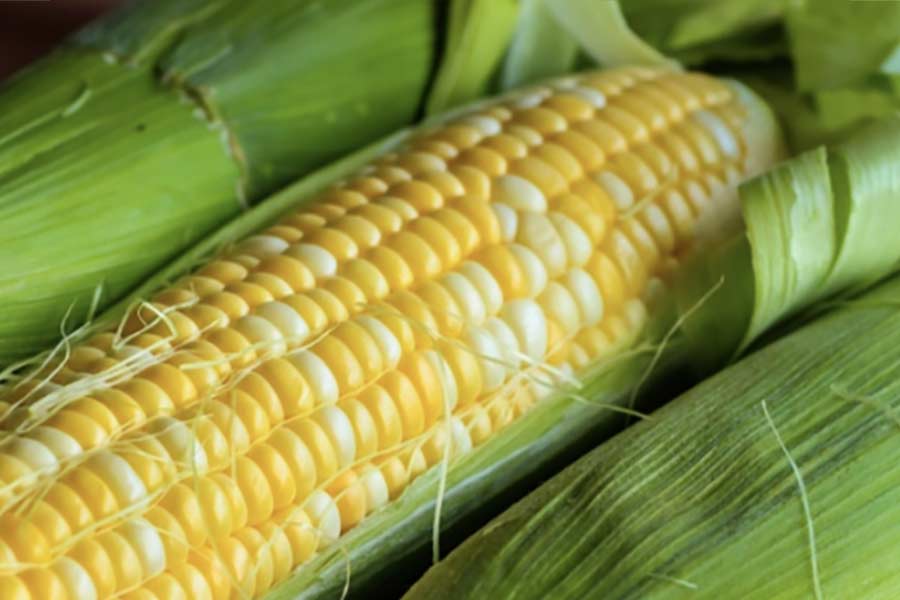
Growing your own sweet corn can be challenging in short (less than 110 frost-free days) or high altitude areas like Eastern Idaho. These conditions limit the types of corn that should be grown. Corn is a warm season crop that depends on heat and not just time.
Choosing the right variety
Selecting the right variety is one of the most important decisions when growing sweet corn. Look for varieties that mature in about 60 – 90 days. These varieties are better suited for cooler climates and are more likely to produce a reliable crop. Longer season varieties may not fully mature or can be impacted by large temperature swings, resulting in poor ear development or reduced yields. Early varieties may produce smaller ears and are less sweet than later maturing types.
Some tried and true varieties of sweet corn with days to harvest less than 76 days include Baby Corn (65 Days), Earlivee (58 Days), Early Sunglow (66 Days), Fantasy (75 Days), Marcross (70 days), Northern Xtra Sweet (67 days), Nordic (70 days) and Seneca Dawn (69 days).
For more information on short season varieties, click here.
Temperature and planting timing
Corn seed begins germinating in soil and air temperatures around 50-degrees Fahrenheit, but grows the best between 60 and 85 degrees. That temperature usually occurs around the middle to end of May in eastern Idaho. This timing is also around the last frost free date. It is important to plant after the soil reaches this temperature or you can have slow growth, seed rot or poor corn stands.
Rather than relying on local anecdotes, use weather stations to monitor temperatures for more consistent results. Once soils have warmed, proper planting and spacing will help ensure a strong stand and good pollination.
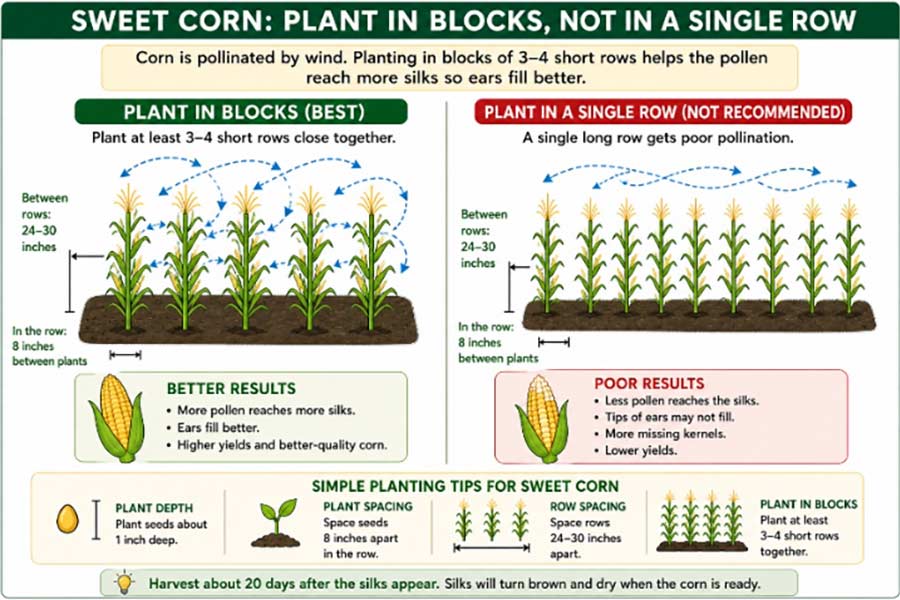
Corn should be planted at about 1 inch deep and spaced 8 inches apart in the row, with 24 to 30 inches between the rows. Plant at least 3 to 4 short rows (in a block) rather than a single long row. Corn is wind pollinated; this block layout helps ensure adequate pollination and ear production. Planting different varieties of corn with longer days to harvest will extend the production of your sweet corn over a longer period.
Season extension methods
If cold temperatures occur early or late in the season, there are several methods to extend the growing window. The soil can be warmed with black or clear plastic mulch which improves early growth and can allow earlier planting. Row covers can be placed over young plants to protect from frost and increase air and soil temperatures. Raised beds are another effective method because the amended raised bed soil warms faster than native soils.
Transplants vs. direct seeding
Transplants are possible but are not common. Corn typically is direct seeded because the roots are sensitive to becoming root bound. Corn seedlings grow rapidly, and after about 18 days they should be transplanted or they may become stunted when transplanted in the field.
If using transplants, plan to move them outdoors around two weeks after the last frost date and use containers large enough to support root growth. If direct seeding plan to plant after the average last spring frost. In most situations, direct seeding after soils have warmed is the most reliable method to grow sweet corn.
Water management
Water is a crucial factor when growing corn. Corn requires about 1 inch per week for normal development. The most critical period for water is during pollination and during final ear filling. The soil should be moistened to at least 6 inches. Early morning watering is ideal so foliage can dry before the evening. Organic mulches, such as aged compost, can help supply nutrients and conserve soil moisture. Drought stress during ear growth will decrease yield, quality, and affect flavor.
Fertility and nitrogen needs
Pollination and ear development
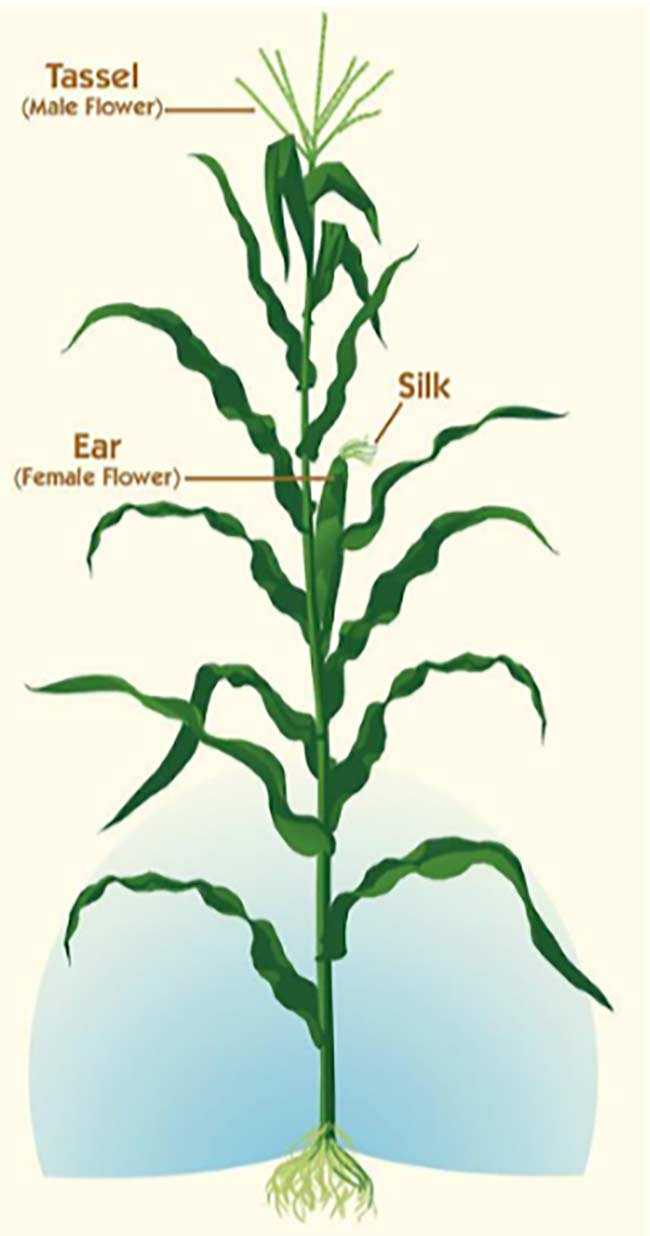
Corn plantings typically fail because of inadequate pollination. Each silk grows into an individual kernel, so block plantings are ideal for proper ear development. Each plant typically produces one primary ear so proper pollination is essential for maximizing yield.
Harvest timing and quality
Corn should be harvested around 20 days after silking. The silks at the top of the ears will turn brown and dry when the corn is ready. Once harvested, corn should be cooled immediately to maintain the best flavor.
Growing sweet corn in eastern Idaho takes planning, but it can be done successfully with the right varieties and timing. By focusing on soil temperature, proper spacing, and consistent water and fertility, home gardeners can produce a reliable and tasty crop.