




3 GOP candidates for Seat 3 on the Madison County Commission answer our questions
Published at | Updated at
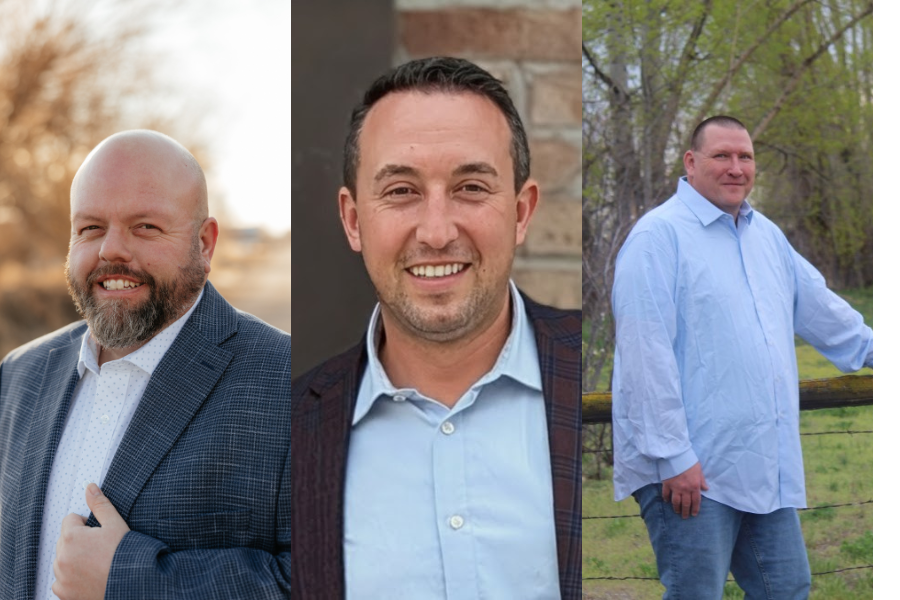
REXBURG — Madison County has three candidates for the Republican nominee for County Commissioner. Incumbent Dustin Parkinson is facing off against JC Weber and Delwyn Klingler.
EastIdahoNews.com sent a questionnaire to each candidate. Their responses were required to be 250 words or fewer. Weber’s Parkinson’s and Klinger’s unedited responses are included below.
The candidate who wins the primary will be on the general election ballot on Nov. 3. The primary election will be held on May 19.
For more candidate questionnaires and further information on this year’s primary election, check out East Idaho Elects.
Tell us about yourself — include information about your family, career, education, volunteer work, and any prior experience in public office.
Weber: I am a lifelong resident of Madison County. My wife Kaylee and I have been married for 15 years and have four children.
Professionally, I own a local small business, Circle of Love, that has been a part of my family for over 30 years. In 2020 I purchased Hearts Bridal & Tuxedo in Idaho Falls.
I graduated from Madison High School, received a bachelors degree in Financial Economics from BYU-Idaho, and a masters degree in Business Operational Excellence from The Ohio State University.
Currently I serve as a Trustee of the Madison School District. I also serve on the Rexburg Urban Renewal Agency and Rexburg Area Chamber of Commerce Board. These positions have prepared me to handle complex budgets, policy decisions, and planning for community growth.
Parkinson: I was born and raised in Plano, Idaho, where I learned early what it means to work in “Acres, Not Hours,” plow straight lines on an open-cab tractor, and stay grounded in faith no matter what life throws at you. I hold state licensure in both drinking water and wastewater operations, and over the years I have built several businesses from the ground up through hard work, grit, and believing there is still value in the American dream.
I have been married to my wife, Brittani, for almost 20 years. We were not able to have children of our own, but we are surrounded by a large and loving extended family, and our nieces and nephews are a constant reminder of why strong communities matter.
Together we operate Mountain West Waterworks and Bespoke Beauty Collective, and along the way we have worked hard to build teams that feel like family.
Today I lead Mountain West Waterworks, serving municipal, private, federal, and state entities across three states. My professional work has given me hands-on experience managing operations, maintenance, and budgets tied to critical infrastructure, helping communities stretch limited public dollars while keeping essential systems reliable and compliant.
I have served on the board of Grand Peaks Medical since 2013, the SEIOS Board of Directors, and other nonprofit boards in the water and wastewater industry. I am now in my fourth year as a Madison County Commissioner representing District 2.
Klingler: I was born and raised in Rexburg, Idaho, and grew up working on my family’s farm near Green Canyon Hot Springs. I graduated from Madison High School and later served a two year mission for The Church of Jesus Christ of Latter day Saints in the Ohio Columbus Mission.
I earned an Associate Degree in Agricultural Business from Ricks College. Professionally, I worked at Steiners Grain for 11 years before beginning my current career with the Idaho Department of Correction. I have worked at the St. Anthony Work Camp for the past 20 years. My wife, Wendy, and I have been blessed with four children three daughters and one son. I value hard work, family, and community, and those principles have guided both my personal and professional life.
Why are you seeking political office within your community? Briefly explain your political platform.
Weber: I am running because I believe Madison County needs leadership that is willing to listen, lead with transparency, and plan strategically for our future. I don’t have a personal agenda; my platform is built on being a representative for the people.
Parkinson: I’m running because the work is not finished. In the 3+ years of serving as Commissioner, we are moving on major priorities: modernizing our financial systems, advancing plans for a new sheriff’s office as well as other projects underway addressing the infrastructure demands of a rapidly growing community. This is not the time to start over.
I came up building roads that became subdivisions, spending long hours on job sites where Rush Limbaugh on the AM radio was my only company. Those years sparked a political fire in me that never went out. Over time, I realized my voice may not carry far in Washington or even Boise, but it carries weight here in Madison County. More importantly, I believe that county government is where practical problems should be solved — at the level closest to the people, their property, and their daily lives.
My platform is straightforward: protect constitutional rights, uphold law and order, plan responsibly for growth, invest in critical infrastructure, and keep local decisions in local hands. I believe government should be practical, accountable, and fiscally responsible. We cannot undo every layer of government overnight, but we can work diligently to shrink it, stop it from growing irresponsibly, spending recklessly, and taking decisions about Madison County out of Madison County.
I am self-funded and self-represented, accountable only to the people of Madison County. I show up, I listen, I have hard conversations, and I work toward solutions that serve real families here.
Klingler: I am seeking office as Madison County Commissioner district 2 because I care deeply about the long-term strength, safety, and prosperity of our community. Madison County is growing, and with that growth comes both opportunity and responsibility. I want to ensure that we manage that growth in a way that preserves our values while improving quality of life for residents.
My platform centers on responsible growth, fiscal accountability, infrastructure investment, and transparent governance. I believe county government should be efficient, accessible, and focused on practical solutions that benefit working families, local businesses, and future generations.
What are the greatest challenges facing people in your county? What is your plan to meet and overcome those challenges?
Weber: The most significant challenge facing Madison County is managing rapid growth without losing our community identity or overextending our resources. This growth puts immense pressure on our infrastructure, including roads, public safety, and waste management.
To tackle these challenges, it is vital that we work hand-in-hand with our community partners—the City of Rexburg, Sugar City, our school districts, BYU-Idaho, the INL, and the Chamber of Commerce. There is real synergy when we come together with a common vision. My plan is to foster a culture of proactive communication between our key partners so that we are planning together rather than in silos. By aligning our goals, we can ensure that growth is sustainable, infrastructure is prioritized, and the quality of life for the people of Madison County is protected.
Parkinson: Law and order must be the top priority. Sex crimes, both locally and online, are in the news here almost every week, and that is deeply concerning. The problem is not new, but as the sheriff’s office has begun training and developing a sex crimes detective, it is revealing just how much need exists. My mission is to continue to work with my fellow commissioners and the sheriff’s office to ensure law and order remains a budget priority and that the sheriff has the funding needed for skilled staff, training, and resources to keep building that capacity to protect our children and our community.
Another major challenge is growth. We have subdivisions today where there were once vast farmlands, and that reflects the strong culture and quality of life we have here. I plan to continue to work with my fellow commissioners and county departments to support growth responsibly by protecting property rights, planning infrastructure carefully, and making sure first responders, roads, water, and wastewater systems keep pace.
The third challenge is affordability. Families are already feeling the pressure of rising costs of living, while also hearing requests for more taxes and funding at the city and school level. My priority at the county level is to accomplish what needs to be done without asking taxpayers for more by improving efficiency, building capacity with what we already have, and prioritizing spending where it matters most.
Klingler: One of the biggest challenges facing Madison County is rapid population growth, which puts pressure on housing, roads, and public services. Affordability is becoming a concern, especially for young families and students, and infrastructure is struggling to keep pace.
To address these challenges, I would prioritize long term planning that coordinates land use, housing development, and transportation. This includes supporting responsible development, improving road maintenance and expansion, and working with local stakeholders to encourage attainable housing options. Additionally, I would advocate for smart budgeting to ensure we can expand services without overburdening taxpayers.
How will you best represent the views of your constituents – even those with differing political views? How do partisan politics play into your role as an elected leader?
Weber: A county commissioner represents every resident, regardless of political affiliation. While I am a firm conservative, the work of the county – maintaining roads, managing budgets, and planning for growth – is about practical results, not partisan rhetoric.
My role is to be a steward of the people’s resources and a listener for community values over political posturing.
Parkinson: In my role as a commissioner, business owner, nonprofit board member, community member, and neighbor, I have the opportunity every day to interact with people from all walks of life.
One of the great problems in our society today is that we are too often asked to see one another through a political lens first, instead of by the content of our character. I reject that way of thinking. I believe we are all God’s children first and foremost, and that truth should guide how we treat one another.
I do my best to live by a simple rule I learned as a child: treat others the way you would want to be treated.
I am an open book to anyone who wants to talk about an issue in the county or share how they believe it should be addressed. I serve every citizen, not just those who agree with me politically. I will always welcome conversation and hear every perspective with respect, but being a voice for the people does not mean I will compromise my integrity, my duty to uphold the Constitution, or the core values that guide my service.
Partisan politics does not guide how I live, how I work, or how I serve in elected office. Character does.
Klingler: As a county commissioner, my responsibility is to represent all residents of Madison County, not just those who agree with me. I will make decisions by listening carefully, seeking input from a wide range of voices, and focusing on what is best for the community as a whole.
County government should be primarily nonpartisan and solution oriented. While people may have different political perspectives, most local issues like roads, public safety, and budgeting require practical cooperation rather than ideology. I am committed to respectful dialogue and finding common ground wherever possible.
What parts of the county budget could use more funding? Where are places in the budget where cuts could be made?
Weber: According to transparent.idaho.gov, the Madison County Budget exceeds $60M annually. The bulk of this is allocated to ‘general government,’ which funds other elected offices and the day-to-day operations of serving our citizens. Since these budget items primarily cover salaries and benefits for people who live and shop right here in Madison County, we are essentially in the ‘people business.’ We owe it to our community to run a county with responsive, helpful staff.
The second and third highest line items are public safety and infrastructure. These are the lifeblood of a growing community and must remain a funding priority. Additionally, because we live in one of the most beautiful parts of the state, I am personally committed to ensuring our parks and outdoor recreation areas are both maintained and thoughtfully developed for our families to enjoy.
While I prioritize funding our people and infrastructure, I believe we should continuously review departmental efficiencies to ensure administrative overhead doesn’t outpace the actual services provided to the taxpayers.
Parkinson: Public safety needs to stay one of the county’s top budget priorities. During my time as commissioner, I’ve worked with my fellow commissioners, the sheriff, and the fire department to support better pay for deputies and dispatchers, while also backing important fire department infrastructure projects.
As our community grows, the need for well-trained firefighters, EMTs, deputies, dispatchers, and detectives grows with it. I’m committed to making sure those needs are funded properly without raising taxes. Keeping people safe is one of the most important responsibilities we have, and I’ll keep working to make sure the resources are there to do that job well.
At the same time, I believe there are places in the county budget where we can operate more efficiently and reduce costs. A few examples in my tenure are me being a strong advocate for closing the 5C detention center, a move expected to save Madison County taxpayers roughly $300,000 a year while still meeting our youth detention obligations through partnerships with other counties. I’ve also worked hard to improve Madison County employee health care coverage while reducing costs by an estimated $800,000 a year by being willing to challenge the status quo.
To me, doing more with less means focusing on efficiency, making smart technology upgrades, and using tools like AI where they make sense to streamline work, cut waste, and make better use of taxpayer dollars everywhere we can. We are currently implementing these things in our county finance department.
Klingler: I believe we should evaluate increasing funding for infrastructure maintenance, including roads and public safety services, as these are core responsibilities of the county government. As the population grows, these areas will require careful investment to maintain quality and safety.
At the same time, I would conduct a thorough review of administrative and discretionary spending to identify inefficiencies. The goal is not arbitrary cuts, but smarter spending ensuring every taxpayer dollar is used effectively and aligned with county priorities.
What specific changes can be made in this office to increase public transparency and access to public information? How will you communicate directly with your constituents?
Weber: Transparency starts with accessibility. This means ensuring that county meetings, minutes, and budgets are not just legally public, but easily accessible on the county website and other platforms, including social media. We must meet the people where they are.
A County Commissioner is a public-facing position, and you must be available to the people you represent. Running a small business in the heart of Rexburg allows me to interact with residents daily; it gives me the flexibility to listen and the opportunity to attend various community events. I want to be approachable in any setting. While I may not always have an immediate answer, I am committed to making the right connections and finding those answers for my constituents. I will continue to use social media and direct community engagement to ensure our neighbors are informed and heard.
Parkinson: I think the biggest thing this office can do better is make county government feel more accessible to everyday people. The commission already posts agendas and meeting links, and that is important, but a lot of folks are busy and are not going to dig through a website to figure out what is going on. We need to do a better job of getting information in front of them.
I would like to see better use of social media to share meeting notices, public hearings, agendas, and other important county information in a way that is clear and easy to follow. Transparency is not just about having the information available. It is about making sure people can actually find it, understand it, and stay informed.
As for communicating directly with constituents, I think people deserve to know they can reach their commissioner. I am not hard to find, and I do not want this office to feel distant or out of touch. If somebody has a question or concern, I want them to feel like they can call me, text me, stop me in town, or send me a message and get a real answer. County government works better when people know they are being heard.
Klingler: Transparency is essential for building trust. I would support improving the county’s online presence by making budgets, meeting agendas, and decisions easier to access and understand. Posting clear summaries of major decisions and maintaining updated public records online would be a priority.
To communicate directly with constituents, I would hold regular public forums, attend community events, and utilize digital communication such as email updates or social media. I also believe in being accessible and responsive when residents have questions or concerns.
Can you give a concrete example of a policy or budget decision you would support to improve a county service within your first year in office?
Weber: I have no hidden agenda or motive to disrupt established policies or budgets on day one. Our county has a rich, century-long history and a functional annual budget process; I believe in leadership that is methodical and respectful of that foundation.
However, within my first year, I would be an avid supporter of a comprehensive review to simplify, deregulate, and modernize the Madison County Code. Specifically, I would support a policy that digitizes and streamlines the permitting and public inquiry process to make it more user-friendly for residents and businesses.
While the budget is ultimately set by the Commissioners, it is built on the needs brought forward by other elected officials and department heads. I would advocate for a collaborative budget review session where department heads and commissioners work together early in the cycle to identify areas where we can share resources or update technology to reduce long-term costs. It is imperative that we work together to ensure the best possible use of every taxpayer dollar.
Parkinson: I have supported continued discussion around implementing impact fees and clawback fees for development in the county. If structured correctly, those tools can help ensure that growth helps pay for the added pressure it places on services like first responders and our Road and Bridge Department.
I strongly believe that when growth is managed well, the full cost should not fall only on existing taxpayers. At the same time, I also recognize that if we want businesses to invest here and families to continue choosing Madison County, local government must remain reasonable and development-friendly.
The right approach is balance. We need to protect taxpayers, support essential county services, and make sure growth contributes its fair share without creating unnecessary barriers to investment. That is the balance I intend to keep working to implement in my next term, if reelected.
Klingler: Within my first year, I would support allocating additional resources to road maintenance and repair, particularly in high growth areas where infrastructure is under strain. This could include prioritizing a data driven road improvement plan to ensure funds are directed where they are most needed.
Improving road conditions has a direct impact on safety, economic activity, and daily life for residents, making it a practical and immediate priority.
What experience do you bring that prepares you to manage county finances, and how will you ensure fiscal responsibility?
Weber: Managing county finances requires more than just balancing a ledger; it requires a strategic understanding of how every dollar impacts our community’s future. My preparation for this responsibility is three-fold:
First, as a small business owner, I live by the reality that you cannot spend what you do not have. I manage payroll, overhead, and long-term planning daily. I will bring that same private-sector discipline to the county, ensuring we prioritize essential services and maintain a lean, efficient operation.
Second, my educational background provides the technical framework. With a degree in Financial Economics and a Master’s in Business Operational Excellence, I am trained to look at complex systems, identify waste, and find ways to improve “operational excellence.” I don’t just want to spend the budget; I want to optimize how it’s used.
Finally, my current service on the Madison School Board and the Urban Renewal Agency has given me hands-on experience with public funds, levy rates, and the importance of inter-agency collaboration.
To ensure fiscal responsibility, I will advocate for long-term capital improvement plans that allow us to save for future infrastructure needs rather than relying on debt. By focusing on “growth paying for itself” and maintaining a transparent, collaborative budget process with all department heads, I will work to keep our tax burden as low as possible while ensuring Madison County remains a safe, vibrant, and well-maintained home for all of our families.
Parkinson: What prepares me to help manage county finances is real experience. I have worked closely with my fellow commissioners to live within the county’s means, cut expenses where possible, and still build toward the future needs of our county.
I believe I bring a unique eye to that process. I am not only a taxpayer, but also a business owner and entrepreneur who has built several businesses from scratch. That teaches you to do more with less, think outside the box, be tough, watch pennies, and keep an eye on the future.
My professional line of work also requires operating within municipal budgets, so I understand the realities and constraints that come with public dollars. I also volunteer on the finance committee for Grand Peaks Medical, which has helped me become well versed in the nuance of government-related finances.
I bring those skills to the commission office in my daily work. I am always looking for a faster, smarter, more common-sense way of doing things, especially in how money is used for good or wasted. Commissioners approve expenses at every meeting, and as a public servant I take that seriously.
Another set of eyes matters, and part of my job is to make sure taxpayer dollars are being used wisely to the best of my ability.
Klingler: I bring a strong commitment to careful decision making, accountability, and long term planning. Whether through professional, academic, or personal experience, I have developed skills in budgeting, prioritization, and evaluating costs versus benefits.
To ensure fiscal responsibility, I will advocate for balanced budgets, clear financial reporting, and regular audits. I will also emphasize long term planning to avoid costly short term decisions and ensure that Madison County remains financially stable for years to come.