




Nurse practitioner running for Fremont County coroner against incumbent
Published at | Updated at
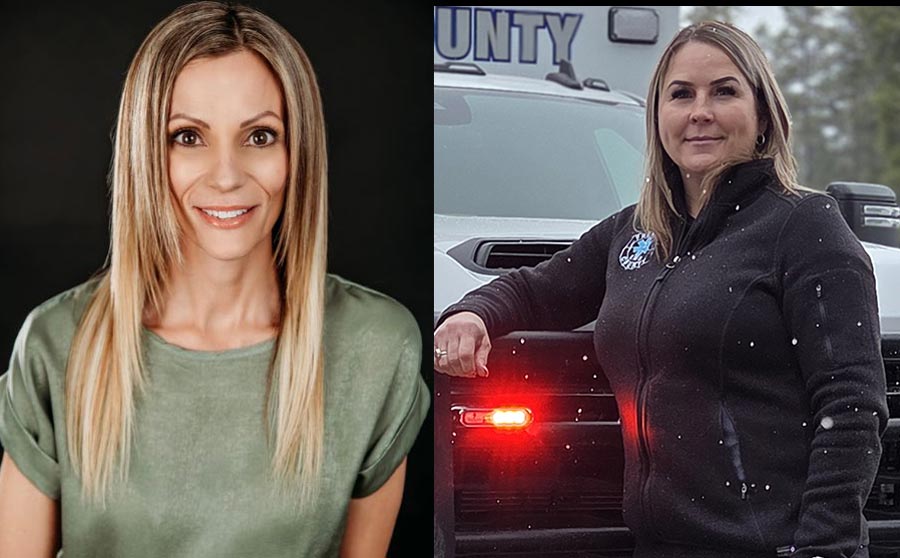
ST. ANTHONY — The current Fremont County coroner is running to keep her spot from a local certified nurse practitioner.
Brenda Dye, the incumbent, is running against Erin Benson.
EastIdahoNews.com sent a questionnaire to each candidate. Their responses were required to be 250 words or fewer. Their responses are included below.
The candidate who wins the primary will be on the general election ballot on Nov. 3. The primary election will be held on May 19.
For more candidate questionnaires and further information on this year’s primary election, check out East Idaho Elects.
Tell us about yourself — include information about your family, career, education, volunteer work, and any prior experience in public office.
Dye: I’m a lifelong Fremont County resident, but more importantly, I’m your neighbor. For over 25 years, I’ve dedicated my life to serving this community in emergency medical services. Currently, as an Advanced EMT, I’ve met many of you on your hardest days—whether it was a backcountry rescue or a call to your front door. Those moments have taught me that my job isn’t just about medicine; it’s about caring for people when they are at their most vulnerable.
I am a mother and a proud member of this community. My family’s roots here run deep, and that’s what drives me. When I serve as your Coroner, I’m not just a government official; I’m a member of this community ensuring our friends and neighbors are treated with the dignity they deserve.
Benson: I was born and raised in St. Anthony, where I have remained my entire life. I began my career in healthcare 25 years ago and have provided direct patient care through all stages of life, developed policies and procedures in healthcare facilities to meet federal standards, and worked in an administrative role in a skilled nursing facility. During this time, I became a CPR instructor through the American Heart Association, providing certification to colleagues in healthcare, high school students, and athletic coaches in Eastern Idaho. After 18 years of bed-side nursing, I returned to school and completed my Master of Science in Nursing degree and am now a Board-Certified Nurse Practitioner.
I currently oversee care of patients participating in rehabilitation from illness and injury, as well as provide care for patients with terminal diagnoses receiving hospice services. In addition to my career, I have focused on raising my two children. My family is now in a stage of life that I am able to serve the communities of Fremont County, who have provided so many opportunities for myself and my children over the years, offering my medical expertise to the role of coroner.
Why are you seeking political office within your community? Briefly explain your political platform.
Dye: I’m seeking reelection because this role is about people, not politics. The Coroner’s office deals with one of the most painful milestones a family can face the loss of a loved one. I want to ensure that during those dark hours, Fremont County families have someone standing with them who offers both a steady, professional hand and a compassionate heart.
My goal is to keep raising the bar. That means staying ahead of the curve with modern training and working hand-in-hand with our local police and fire departments. I’m running because I care deeply about this county, and I believe experience matters when it comes to seeking the truth and providing closure to families.
Benson: For some time, I have been exploring opportunities to give back to my community and serving as the Fremont County Coroner seems a natural fit. With my master’s degree in the Science of Nursing, I have extensive education in human anatomy, physiology, and pathophysiology. With my vast nursing career, I have extensive, first-hand experience with disease processes, related complications, and expected outcomes of illness and injury. I believe this education and experience would allow me to be a valuable partner to law enforcement during death investigations, being able to provide valuable medical insight.
I believe advanced medical education and experience would be hugely beneficial for a coroner to possess, making it possible to accurately identify circumstances when determining cause and manner of death. This is because trained medical professionals can recognize complex physiological failures consistent with disease processes versus subtle signs of a masked violent death. Furthermore, medical knowledge would help a coroner determine which cases require autopsy rather than just an external physical exam, even if homicide is not immediately suspected. When there is a sudden, unexplained death of a seemingly healthy individual, it is crucial that signs of potentially undiagnosed conditions are recognized.
Often people with undiagnosed conditions, such as inherited cardiac conditions, will not experience any symptoms until the first, fatal event. Many of these conditions are autosomal dominant, meaning children of an effected individual would have a 50% chance of also having the condition. Identifying an undiagnosed condition through autopsy would allow the first-degree relatives (parents, siblings, children) the opportunity to be screened and subsequently treated when it is found.
What are the greatest challenges facing people in your county? What is your plan to meet and overcome those challenges?
Dye: Fremont County is beautiful, but our vast, rural landscape creates real hurdles. When you’re spread out, resources can be thin and response times can be long.
My plan is simple but focused:
Benson: The coroner’s role in rural counties, like ours, is very important, but not without challenges. As is true of most rural counties, Fremont County does not have the financial resources to have a licensed physician serving as medical examiner, and fortunately, we do not have enough deaths to keep one busy. However, our county does need someone with the knowledge and experience to recognize medical inconsistencies and when there is reason further investigation at the scene of a death.
A significant issue with the coroner’s office here in Fremont County, and throughout counties in Idaho, is a lack of mandatory standards for death investigations, including a lack of policies and procedures for conducting death investigations and when autopsies should be mandated. The Idaho Office of Performance Evaluations (OPE) released a report in 2024 outlining just how inadequate Idaho coroner practices truly are, revealing that Idaho has the lowest autopsy rates for unexpected deaths of children/infants and homicides.
I look forward to the opportunity to join other eastern Idaho coroners who have established East Idaho Coroner Coalition to institute standards that align with the American Board of Medicolegal Death Investigators.
How will you best represent the views of your constituents – even those with differing political views? How do partisan politics play into your role as an elected leader?
Dye: When the Coroner’s office is called to a scene, political parties are the furthest thing from anyone’s mind. Death doesn’t have a political affiliation, and neither does grief.
My responsibility is to serve every single resident of Fremont County with the same level of objectivity and respect. I lead with facts and empathy, ensuring every investigation is handled fairly, regardless of who is involved. I believe in being a listener first. Even when we might have differing views on other issues, every constituent deserves to be treated with the highest level of professionalism and care during a difficult time.
Benson: As an elected county coroner, the role is fundamentally non-partisan. When executing the role of medicolegal death investigator, representing the views of constituents of any political affiliation should be focused on evidence-based investigative practices, maintaining dignity of the decedent through proper handling and transportation, and clear, empathetic communication with grieving families. This can be accomplished by prioritizing professionalism, transparency, and compassion over partisan ideology.
What parts of the county budget could use more funding? Where are places in the budget where cuts could be made?
Dye: My Deputy Coroner Wanda Adams worked 25 years as the Supervisory Grants and agreements officer for the U.S. Forest service and has worked several years obtaining grants for Fremont county. She is continually searching for and writing grants to continue improving our agency.
I work with the County Clerk for the Coroner Budget and for the last 8 years; we have consistently remained within budget. When unexpected situations arise, such as our mass casualty incident in Island Park; we work professionally and responsibly with the commissioners in Fremont County to secure the additional resources needed. I believe taxpayer funds should always be used carefully and appropriately.
Benson: As was seen through the above mentioned OPE report, funding is a large part of Idaho’s shortcomings regarding medicolegal death investigations. Improving Fremont County Coroner standards will require funding for additional equipment and resources. To accomplish this, I would work to build a meaningful and collaborative relationship with Fremont County Commissioners to establish a budget that allows for appropriate resources for death investigations, including a vehicle for decedent transportation, establish proper office space within the county to meet with colleagues and families, and pursue ongoing forensic investigation training. This is something that will take time and dedication from an invested individual, whose aim is to see best-practices for the citizens of Fremont County.
What specific changes can be made in this office to increase public transparency and access to public information? How will you communicate directly with your constituents?
Dye: Trust is earned through transparency. While the details of my work are often sensitive and private, the process should never be a mystery.
I am committed to making sure families understand exactly what is happening during an investigation. I want to keep our records organized and accessible, and I will always make myself available to answer questions from the public. I will continue to be a visible, reachable, and honest leader for Fremont County, ensuring that this office remains a place of integrity and trust.
Benson: To increase transparency and accessibility to public information, the Fremont County Coroner’s Office could transform their traditionally quiet public presence into one of an accessible, open entity, while maintaining all appropriate privacy and sensitivity required with death investigations. This could be accomplished through practices of proactive reporting of department dealings, increased media relations, and participating in community partnership at public events. Communication with constituents can be accomplished through social media presence, town hall meetings, and office hours.
Can you give a concrete example of a policy or budget decision you would support to improve a county service within your first year in office?
Dye My first-year priority is to elevate our department’s standards through targeted, regional training. By collaborating with our neighboring jurisdictions to host specialized courses in death investigation and forensic documentation, we can provide our staff with high-level professional development while remaining fiscally responsible.
My focus will also be on the dependability of our daily routines, ensuring that our work remains precise and professional from start to finish. By standardizing our reporting protocols, we ensure that every case is handled with the same level of rigorous detail and professional care. This disciplined approach guarantees that our records are always court-ready and that our communication with families remains clear, compassionate, and timely. My goal is to build on the existing foundation of the office, ensuring we provide a reliable, high-quality service that our community and our law enforcement partners can depend on.
Benson: If elected, an important budget decision I would support during the first year in office would be resolving the issue of transportation for decedents. Currently, the Fremont County Coroner relies on law enforcement officers to transport decedents for autopsy with their patrol vehicles. I would like to see a dedicated vehicle for the coroner’s office to be utilized for this purpose.
What experience do you bring that prepares you to manage county finances, and how will you ensure fiscal responsibility?
Dye: Managing public funds is a responsibility I take seriously, and my experience in emergency services has given me a very practical foundation for it. In the field, you learn to be a good steward of what you have, whether that’s operational readiness or prioritizing resources to ensure the highest level of care. You learn quickly that efficiency isn’t just about numbers; it’s about making sure the right tools are available when they are needed most.
As Coroner, I apply that same ‘field-tested’ mindset to the budget. Fiscal responsibility means being intentional, investing in the training and essential tools that directly improve our service, while cutting out the unnecessary extras. I believe in a transparent approach where we regularly evaluate our needs against our spending. My goal is to run a lean, professional office that respects the taxpayer’s dollar while never compromising on the dignity and accuracy our work requires.
Benson: I have previous experience in an administrative role in skilled nursing that required budgetary oversight. I participate in developing and maintaining a budget for salaries, patient-care supplies, equipment procurement, and use of outside services when necessary. I was successful at this by prioritizing essential services and supplies over non-essential expenses.