



Steven Spielberg and the disappearing art of the director as a movie star
Published at
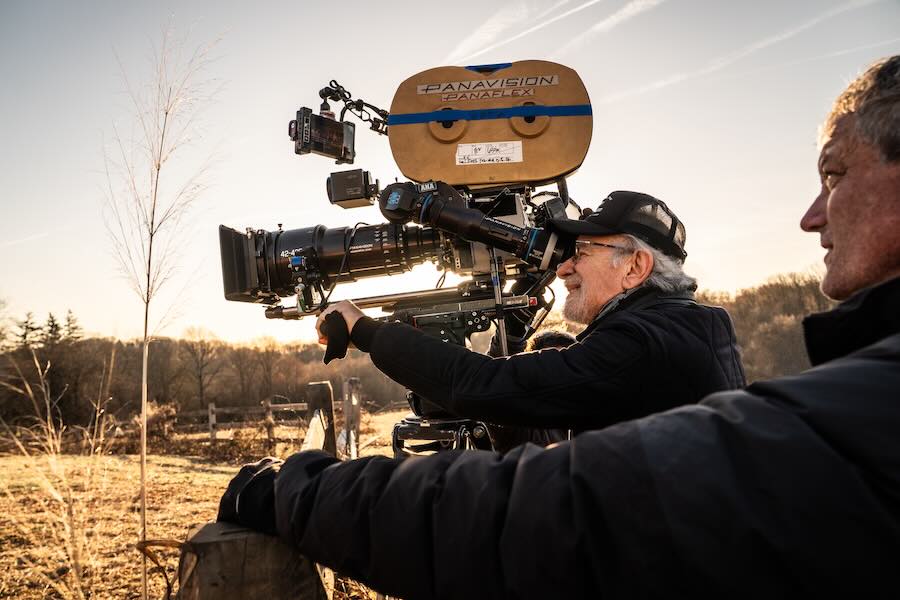
When I was a kid, I knew who Steven Spielberg was long before I understood what a director actually did. In fact, I used to brag about meeting the film legend all the time.
The truth was, I saw him from about 500 yards away at Universal Studios, through the lens of a telescope I paid a quarter to use. But still, I thought it was cool.
At the time, I couldn’t have explained cinematography, editing, production design, or any of the other things that go into making a movie. I just knew that if I saw Steven Spielberg’s name on a poster, I wanted to see whatever that movie was.
This week, Spielberg returns to theaters with “Disclosure Day,” his latest science-fiction adventure.
Whether the movie ends up being a masterpiece, a solid summer blockbuster, or something in between almost doesn’t matter. What strikes me is how rare a filmmaker like Spielberg has become.
His uniqueness as a director isn’t because there aren’t talented directors working today — there absolutely are — it’s because Spielberg is one of the last directors whose name alone can sell a movie. That’s a superpower that used to be much more common.
A monument among men
Back in the 1980s and 1990s, directors were brands.
You went to see a Steven Spielberg movie. You went to see a James Cameron movie. You went to see a George Lucas movie. You went to see a Robert Zemeckis movie.
Sure, the actors mattered. Tom Cruise, Harrison Ford, Arnold Schwarzenegger and Julia Roberts could all open a movie. But, there was also a sense that certain filmmakers were attractions unto themselves. Today, that feels increasingly rare.
Now, the intellectual property is the star.
Marvel is the star. Star Wars is the star. Batman is the star. The latest live-action remake of an animated movie you already watched is the star.
The director? That person often feels secondary.
Meanwhile, Spielberg can still walk into a studio and say, “I have an original science-fiction idea,” and someone hands him a very large check.
That level of trust is almost extinct.
Honestly, there may only be a handful of filmmakers left who operate in that space.
Christopher Nolan certainly does. Quentin Tarantino does. James Cameron probably does — although at this point, I think he legally lives on Pandora and only returns to Earth when another “Avatar” movie is finished.
But the list isn’t long. Even brilliant directors with phenomenal track records like David Fincher don’t seem to have that same power.
That’s because filmmakers like Spielberg aren’t just directors; they’re institutions.
Think about the career this man has had. If Spielberg retired after “Jaws,” he’d be a legend. If he retired after “Close Encounters of the Third Kind,” he’d be a legend. If he retired after “Raiders of the Lost Ark,” “E.T.,” “Jurassic Park,” or “Saving Private Ryan,” he’d be a legend.
Most directors spend their entire careers hoping to make one movie that leaves a permanent mark on popular culture. Spielberg has made about 12 of them.
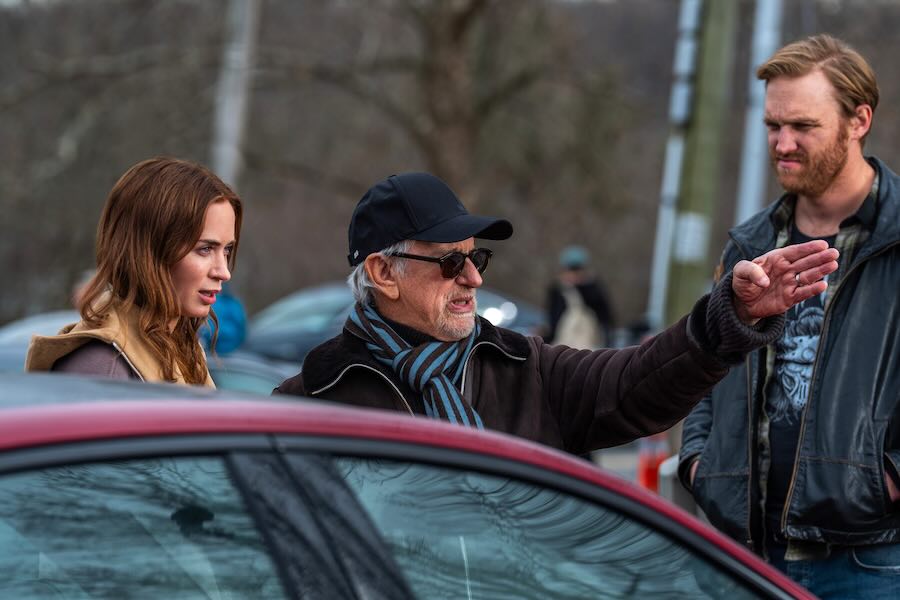
Wonder and adventure in spades
What’s even more impressive is how many different things Spielberg has made us care about — sharks, dinosaurs, aliens, archaeology, World War II.
The man somehow convinced generations of kids that paleontology was the coolest job on Earth. I vividly remember leaving “Jurassic Park” and suddenly becoming an expert on dinosaurs despite having exactly zero qualifications.
For about six months, every kid I knew wanted to be a paleontologist. Then we saw another movie and wanted to be something else. That’s the power Spielberg had, and in many ways still has.
What makes Spielberg unique isn’t just his success; it’s the sense of wonder his films create. Even his most serious movies tend to carry an optimism that feels increasingly uncommon in modern blockbusters.
His movies often ask us to be curious, to explore, to look up at the stars, to believe there might be something incredible waiting just beyond the horizon.
That’s why “E.T.,” “Close Encounters,” and “Jurassic Park” worked.
Even when bad things happen in a Spielberg movie, there’s usually a sense of awe underneath it all. That perspective feels refreshing in an entertainment landscape that often leans heavily into cynicism.
And that brings us back to “Disclosure Day.”
An original in a world of sequels
The movie itself may be great. It may simply be good. But what excites me most is that it exists at all.
It’s an original sci-fi movie from one of cinema’s greatest filmmakers.
There’s no shared universe, no cinematic phase, no requirement that you’ve watched 17 previous movies and two streaming shows to understand what’s happening. It’s just a filmmaker with an idea and a studio willing to trust him enough to bring it to life.
That is rare. Maybe that’s why Spielberg still matters.
It’s not because every movie he makes is perfect or becomes an instant cultural phenomenon. It’s because he represents something we don’t see very often anymore: a filmmaker whose imagination remains the draw.
When I was a kid, I didn’t fully understand what directors did. I just knew Steven Spielberg made movies I wanted to see.
Thirty or 40 years later, that’s still true.