



Your GLP-1 medication: Building healthy habits for lasting results
Published at
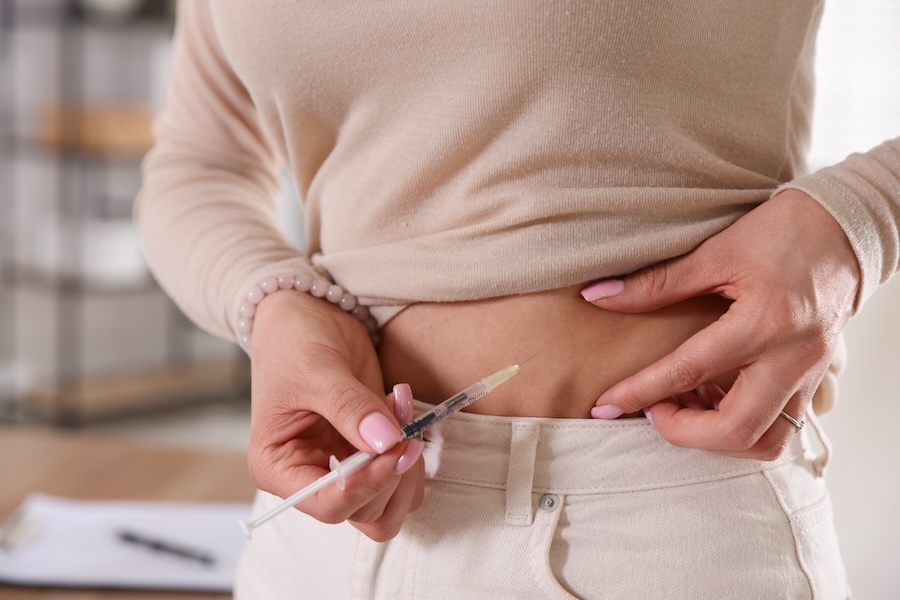
Have a medical-related question you've always wanted answered? The doctors at Mountain View Hospital and Idaho Falls Community Hospital are here to help! Email your "Ask the Doctor" questions to news@eastidahonews.com and they might end up in our weekly column.
What is your GLP-1 medication doing?
Medications like semaglutide or tirzepatide work by reducing appetite, slowing digestion, and helping your body manage blood sugar. They are powerful tools, but they work best when combined with healthy eating and regular exercise.
Think of your medication as a bridge, not a crutch. Right now, your medication is making it easier to eat less and feel satisfied. This is the perfect time to build habits that will support your health for life.
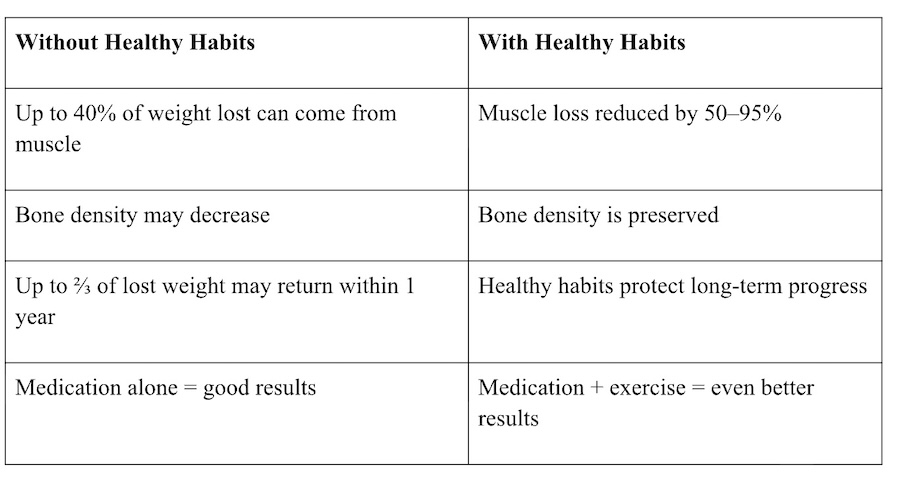
Why lifestyle habits matter even while on medication
NUTRITION: The MEAL Plan
Use the MEAL approach every day:
M — Muscle Maintenance
- Eat protein first at every meal
- Aim for 80–120 grams of protein per day
- Best choices: Greek yogurt · eggs · fish · cottage cheese · chicken · beans · lentils · nuts · seeds
- Protein shakes or bars can help if appetite is low
E — Energy Balance
- Eat small, regular meals at consistent times — don’t skip meals
- Focus on nutrient-rich foods, not calorie counting
- Choose whole grains (oats, brown rice, quinoa) for lasting energy
A — Avoid Side Effects
- Nausea → avoid fried/greasy foods and carbonated drinks
- Constipation → increase fiber (fruits, vegetables, whole grains)
- Reflux → eat smaller portions; don’t lie down for 2–3 hours after eating
L — Liquid Intake
- Drink at least 8–12 cups (2–3 liters) of water daily
- Dehydration is common because you're eating less
- Include water-rich foods like soups, fruits, and vegetables
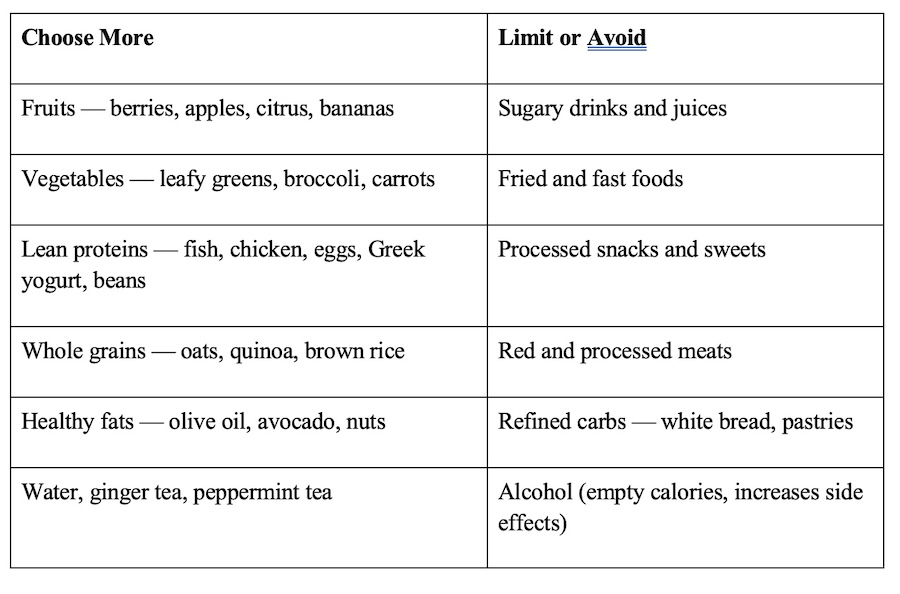
Foods to choose vs. foods to limit
EXERCISE: Your 3-step plan
Exercise is the #1 way to protect your muscles and bones while losing weight. Start where you are and build up gradually.
Step 1: Get Moving (Weeks 1–4)
- Start with short walks or light activity
- Build up to 150 minutes/week of moderate activity, like brisk walking, swimming, and riding your bike
- That’s about 20–30 minutes most days
Step 2: Add Strength Training (Weeks 4–8)
- Add 2 to 3 20-30 minute sessions per week (60–90 minutes total)
- Use body weight, resistance bands, or light weights
- Focus on major muscle groups with exercises like squats, push-ups, rows, and lunges
- Community classes and online videos are great options
Step 3: Maintain Both (Ongoing)
- 30–60 minutes/day of cardio exercise
- Strength training 2–3 times/week
- This combination gives the best long-term results
Why strength training matters: When you lose weight, some of that loss comes from muscle — not just fat. Strength training tells your body to keep the muscle and burn the fat instead.
What happens if you stop your medication?
Research shows that stopping GLP-1 medication without preparation leads to significant weight regain. Your body’s hunger hormones increase when the medication stops.
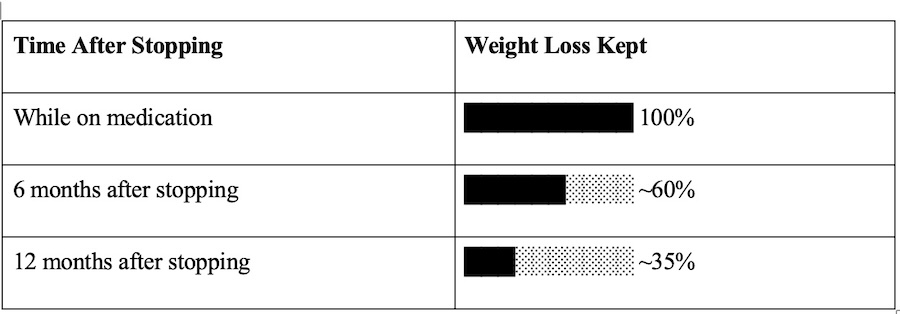
The good news: If you and your doctor decide to reduce or stop your medication, the healthy habits you build NOW will give you the best chance of keeping the weight off. Your doctor may also:
- Lower your dose gradually over at least 20 weeks
- Switch to less frequent injections (e.g., every other week)
- Restart the medication if weight regain exceeds 5%
Your daily checklist
Every day
- Ate protein at every meal (aim for 80–120 g/day total)
- Ate fruits and/or vegetables at every meal
- Drank at least 8–12 cups of water
- Did some form of physical activity
- Ate regular meals at consistent times (didn’t skip meals)
- Practiced mindful eating (ate slowly, stopped when satisfied)
Every week:
- Completed 150+ minutes of cardio activity
- Completed 2–3 strength training sessions
- Weighed myself at least once
- Logged my food intake (app, journal, or photos)
Key takeaways
- Your medication is a tool, not a cure. Use this time to build habits that last.
- Protein and strength training are essential because they protect your muscles and bones.
- Don’t skip meals. Eat small, nutrient-dense meals at regular times.
- Stay hydrated. Drink at least 2–3 liters of water daily.
- Track your progress. Weigh yourself weekly and log your food and exercise.
- Talk to your doctor before making any changes to your medication.
Resources
- Registered Dietitian — Ask your doctor for a referral for personalized nutrition guidance
- Diabetes Prevention Program (DPP) — A free or low-cost 12-month lifestyle coaching program — ask if you qualify
- Food tracking apps — MyFitnessPal, Lose It!, or simple photo documentation of meals
- Exercise at home — Search “beginner resistance training” on YouTube for free guided workouts
- National Weight Control Registry — www.nwcr.ws — learn from people who have successfully maintained weight loss
This column does not establish a provider/patient relationship and is for general informational purposes only. This column is not a substitute for consulting with a physician or other health care provider.

Ask the Doctor is brought to you by Mountain View Hospital and Idaho Falls Community Hospital. Mountain View Hospital is proud to offer the community compassionate surgical, labor and delivery, NICU, diagnostic and rehabilitative services. And when the seconds count, count on Idaho Falls Community Hospital for emergency care. With around-the-clock trauma services, state-of-the-art technology, and a highly-skilled team, Idaho Falls Community Hospital is always ready to provide patients with the best possible treatment.