



‘An enduring mission’: DOE Assistant Secretary visits Idaho Environmental Coalition, highlighting cleanup efforts at INL
Published at | Updated at
IDAHO FALLS — As America’s new nuclear renaissance reaches its first significant milestone — four new reactors going critical — a visit from the U.S. Department of Energy’s Office of Environmental Management highlights the progress made on cleanup projects from past nuclear projects.
Assistant Secretary Tim Walsh sat down with EastIdahoNews.com to discuss his visit to the Idaho Environmental Coalition and to see firsthand the agency’s cleanup work at Idaho National Laboratory.
The Idaho Environmental Coalition was selected in 2021 by the DOE to handle cleanup projects at the INL as part of a 1995 settlement agreement between the DOE and the state to manage nuclear waste.
According to the IEC’s website, the contract was a 10-year, $6.4 billion contract, known as the Idaho Cleanup Project, under which the IEC will help accelerate the DOE’s efforts and responsibilities.
RELATED | US selects new cleanup contractor for Idaho nuclear site
One of the IEC’s projects is to process 900,000 gallons of liquid radioactive waste, and as of June 30, the IEC has treated 400,000 gallons at the Idaho Liquid Waste Treatment Unit.
Walsh told EastIdahoNews.com that, in the future, the Office of Environmental Management will be renamed the Office of Nuclear Restoration and Revitalization, emphasizing the INL’s and the IEC’s work to repurpose and contain used nuclear fuel for future projects.
“It’s an enduring mission, well beyond just cleanup,” Walsh said.
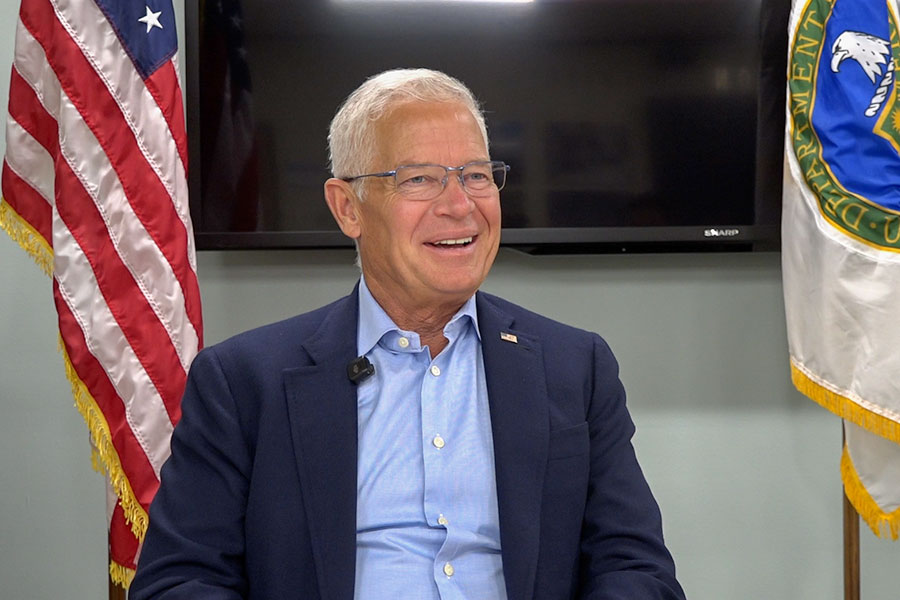
Highlighting the work that has been done here locally, Walsh said that IEC and those it has subcontracted with are focused on more than the bare minimum and are seeking ways to innovate.
Walsh said the goal of the Office of Environmental Management is to look at the whole picture regarding nuclear fuel, ensuring it remains focused on addressing the past to protect the future.
One of these projects involved crews from the Idaho Cleanup Project decommissioning and demolishing two Navy Nuclear Propulsion Program prototypes.
“I see a real opportunity here to continue the mission, continue advancing our research and development in atomic energy,” Walsh said.