



IF City Council approves contract change banning Flock from using local data to train AI
Published at | Updated at
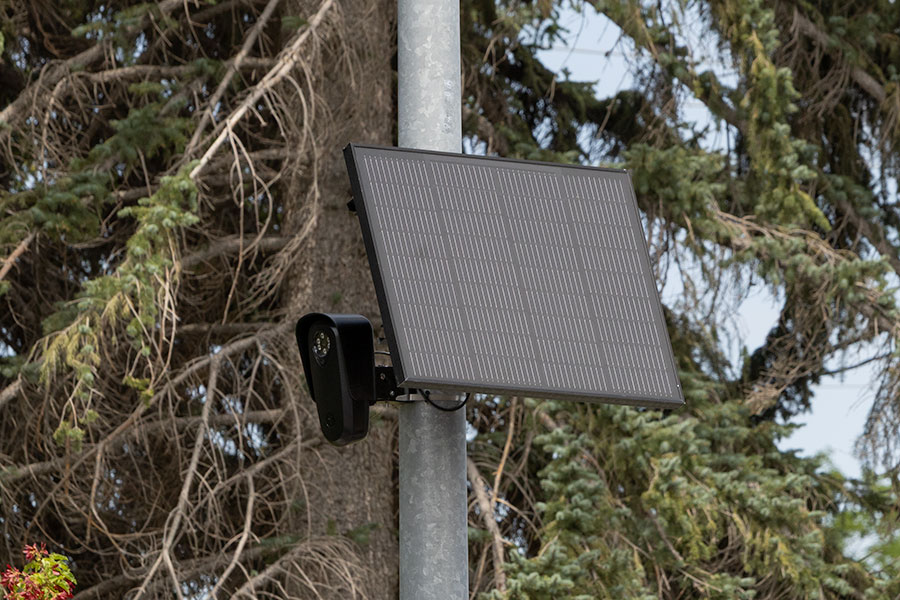
IDAHO FALLS — In a unanimous vote, the Idaho Falls City Council has approved an amendment to its contract with Flock, a manufacturer of license plate-reading cameras, after the public expressed concerns about how the data would be used.
This change stems from online conversations in which Idaho Falls Police Chief Bryce Johnson saw residents discussing the city’s contract with Flock, which allows the city cameras to train the company’s artificial intelligence.
Johnson told EastIdahoNews.com on July 17 that once city officials saw that discussion, they contacted their attorney to make that change to the contract.
“While we feel like we’re in full compliance with Idaho law, we understand how other people can think that,” Johnson said. “Our new contract will prohibit Flock from using our data to do any machine learning or train their AI. Idaho Falls is a very small player in this big country, and they don’t need our data.”
EastIdahoNews.com has been looking into the discussion surrounding Flock cameras within Idaho Falls and Pocatello. To learn more about how Idaho law dictates how this data could be used, or the movement to “deflock” Idaho, click on the stories below.
RELATED | Tort claim, vandalized cameras and eastern Idahoans up in arms about Flock cameras
Department changes on Flock
During Thursday night’s City Council meeting, before the discussion of the new amendment on the Flock contract, Johnson spoke to the council about changes the Idaho Falls Police Department has implemented.
One of the changes is to establish clear guidelines for why the department is accessing data from the license plate reader system.
According to the IFPD’s transparency portal, community members can access an audit of the past 30 days, including when the system was accessed and the reason.
When accessing the audit, in the reason section, most of the searches showed nothing, while a few showed a reason like narcotics, theft suspect or sexual battery.
“We’ve been using those blocks as more of officer notes, and so they’ve been putting notes and things to remind them, but it makes it unclear to the public why we are using the system, and what’s going on, so it leaves us open to the critique that we’re not using it properly,” Johnson said.
The other part of this new guideline is making sure officers must clearly state which part of Idaho law they are using to access that system.
Currently, under Idaho code 49-1432, license plate reader data can be accessed when there is an investigation of a felony, misdemeanor, traffic accidents, or to search for missing or endangered persons.
The other major change being made within the department goes above and beyond what Idaho law allows when it comes to audits of the times the systems were accessed.

Idaho code requires that agencies conduct semiannual audits of the access logs of the license plate readers to ensure the systems are being used lawfully, and find unauthorized or suspicious activity.
“It’s pretty clear to me that’s not frequent enough,” Johnson said.
The IFPD plans to move from an audit every six months to at least two audits per month.
“That will give a small enough data set that we can really look at it closely and have better oversight management to ensure that the system is being managed as it should be,” Johnson said.
Contract changes
Zachary Jones, city attorney for Idaho Falls, told the council that the current contract allowed Flock to use “customer data” to improve its own services and products.
Although the amendment prohibits the data from Idaho Falls to train or improve any machine learning or AI models, it includes a provision that allows Flock to use non-footage data to improve its services and products.
Jones said that this only pertains to the device’s hardware; if a camera breaks, Flock can use that data to figure out what went wrong.
The other change made in the amendment is the permitted purpose section.
Under the new amendment, it states that, “As applied to Customer and Customer Data, the defined term ‘Permitted Purpose’ in the Flock Safety Terms and Conditions is limited to the law enforcement purposes authorized by Idaho Code § 49-1432.”
This means that other government agencies with which IFPD has agreed to share data obtained from its license plate reader system must abide by Idaho law.
Johnson said that although it is implied that agencies that use that data will follow Idaho law, this now sets hard rules on how this data can be accessed.
He said that when an agency now seeks to look at this data, a form will be sent, listing what Idaho law establishes; that agency will sign it, and that data will be shared.
“Out of state, they’re going to have to sign an agreement, or we won’t share with them,” Johnson said.