



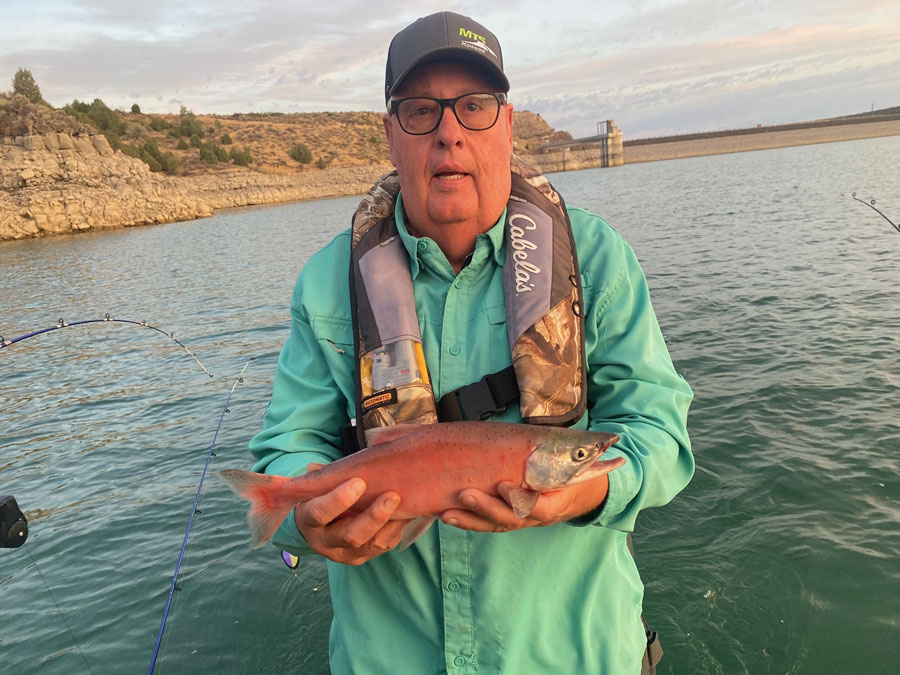
Ririe Reservoir’s male kokanee are turning red
Published at | Updated at
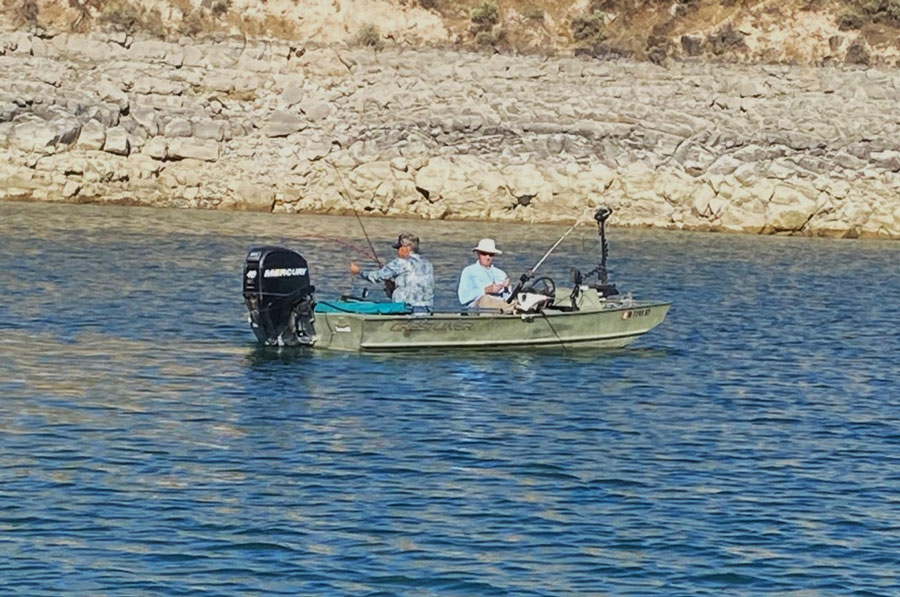
While hunting rocks on Wednesday, I got a text from Bob Johnstone, the manager of the Juniper Campground on Ririe Reservoir, that the docks at Blacktail had been pulled due to low water. This left the docks at Juniper, the only place to launch boats on the reservoir, so my rockhounding and fishing friend, Mike, and I decided to hit Ririe for kokanee on Thursday morning.
The two of us had limited out last week with mostly large light pink colored males in just two and a half hours, but on Thursday, we found the fishing much slower as we ended up with 16. We started fishing about 6:30 a.m. and they did not start hitting until 6:50 a.m. when a 16-inch almost red male hit the garlic-flavored corn on a hoochy.
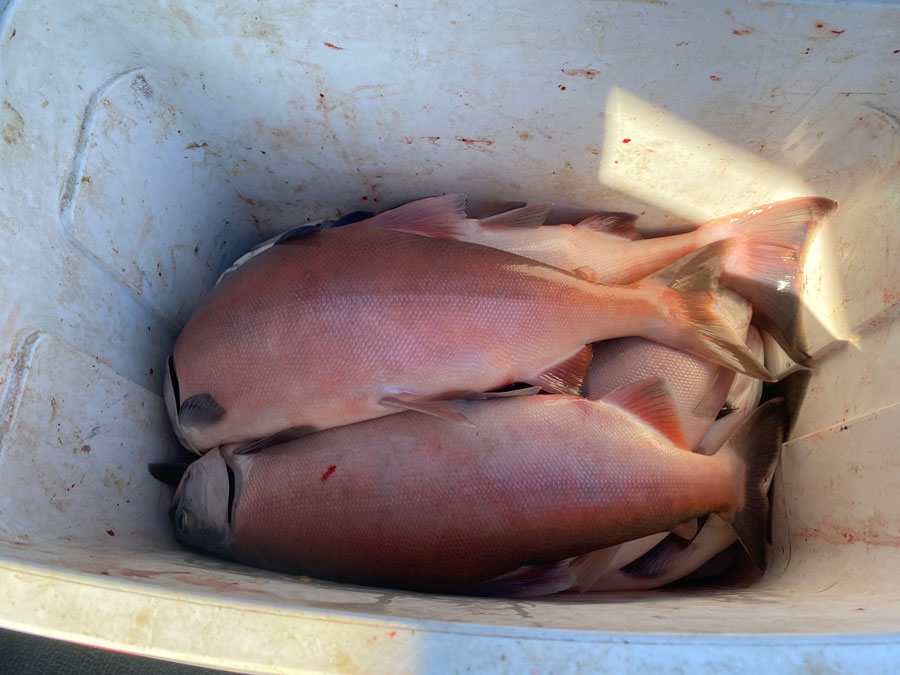
We have been fishing for them about once each week during this summer and about three weeks ago we noticed the male kokanee were starting to turn pink and develop a hooked jaw. Gradually most of the males are turning from pink to red as their body absorbs their silver scales and in about four more weeks their body will start breaking down.
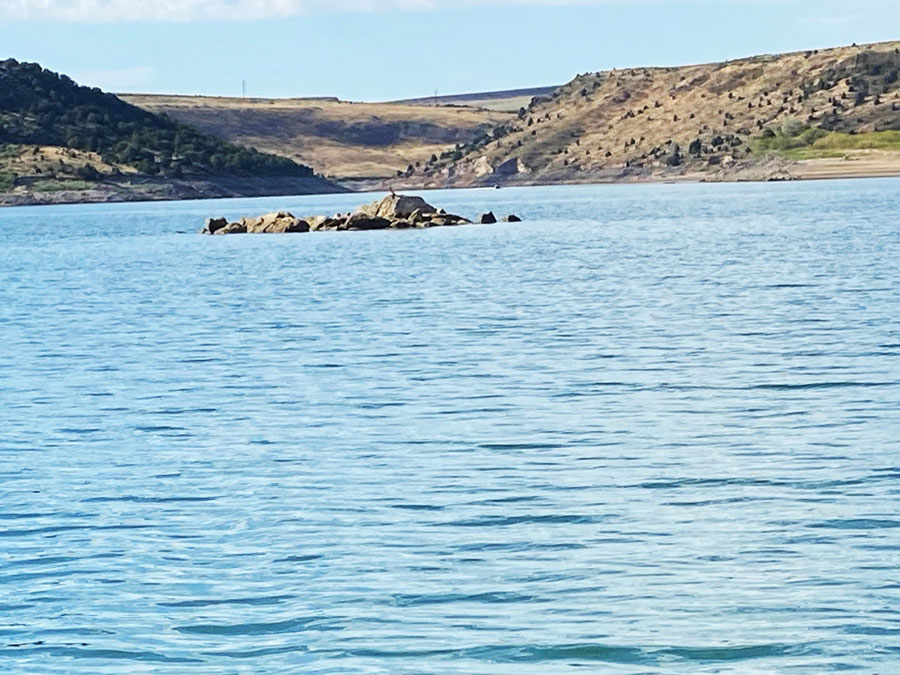
We noticed the water is dropping very rapidly because the rock island near the Juniper is now showing, so I called Johnstone on Thursday evening.
“As fast as they are taking water out of Ririe, the water will soon be too low to launch boats here,” Johnstone told me. “I think within two weeks or sooner that we will not be able to use the docks, so you better call me on Monday if you are planning on coming on Tuesday.”
Even though Ririe kokanee go through the life-and-death system trying to reproduce, the conditions on the reservoir are not conducive for them to be successful. Ririe Reservoir is a put-and-take kokanee fishery and those that try to spawn this fall will die. We were surprised on Thursday that we caught several males that were still silver and did not show any signs of absorbing their scales. Also, the three large females we caught were also still silver.
When fileting them later, we found that the red males all had bright red flesh indicating that they were “early-spawn” species while the silver males and females had orange/yellow flesh. That indicated that they were the “late-spawn” specie.
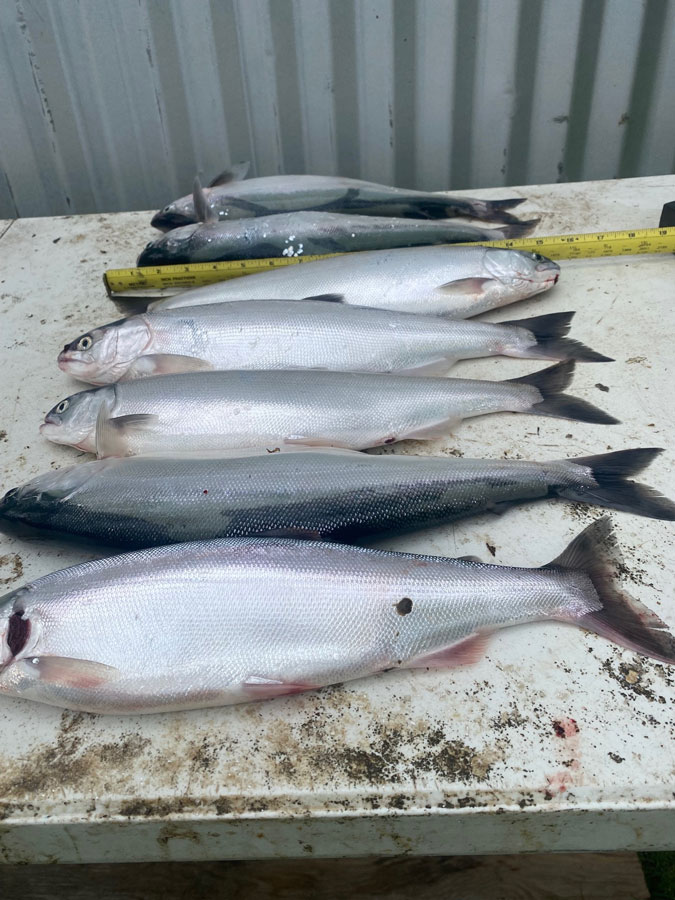
The males that are changing color are part of the 2024 stocking of 76,000, three-to-six-inch fingerlings that are now 16- to 18-inches. In visiting with members of the Department of the Idaho Fish and Game, the large silver males and females may be part of the 2023 stocking of 254,000 fry of late spawners. Stocked fry are classified from “0 to 3” inches and usually have a low survival rate and if they do survive, sometimes do not try to spawn until their fourth season.
We are also catching kokanee that was stocked in 2025 that are now from eight to 12 inches in length. The stocking numbers for that year were 194,000 kokanee fry and 144,000 sockeye fingerlings. This means that this winter, if we get any ice, and next year should be banner seasons for catching these delicious land-locked salmon.
I had a fisherman report to me that he caught a six-inch kokanee this week and asked where I thought it came from. On May 19 this year, the Department of Fish and Game stocked 179,000 fingerlings from their broodstock program. It appears that those fish are very active early each morning by feeding near the surface of the reservoir.
Each morning as the sun is about ready to rise, many fish are breaking the surface and about eight to ten ospreys are feeding on them. Most of them captured by the “fish hawks” appear to be about six or seven inches long and the bald eagle perched along the reservoir will try to steal the captured fish. It is quite a sight to watch the eagles chase the ospreys and if the fish is dropped and picked out of the air, watch another eagle give chase for a free meal.
I will keep you informed about the water condition on Ririe and if it gets too low to launch a boat, I will still go there to watch the early morning show of big birds fighting over small fish. Hopefully, we will continue to have enough water to launch boats as there could be another two months of great fishing.

Living the Wildlife is brought to you by Yellowstone Teton Territory. Experience 7,500 square miles of untamed wilderness in Eastern Idaho's Yellowstone Teton Territory. Where majestic peaks meet endless adventure, your perfect outdoor escape is waiting. Start planning at YellowstoneTeton.com.