




Newcomer Democrat challenging former Pocatello council member for District 28A
Published at
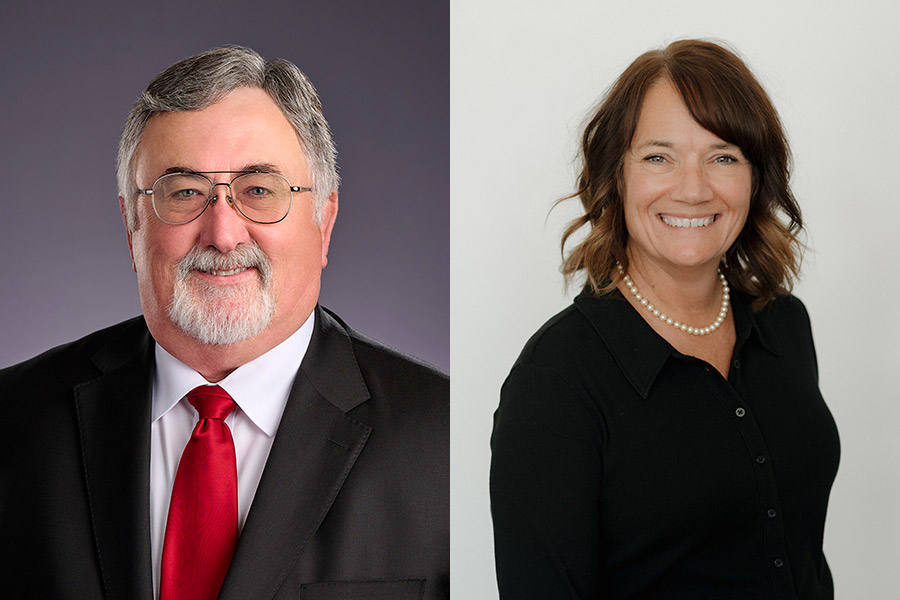
CHUBBUCK – A Democrat is challenging a former city council member for his current seat in the Idaho House of Representatives.
Republican District 28A Representative and former Pocatello City Councilman, Richard “Rick” Cheatum is seeking to get reelected by his constituents, who voted him into office in 2022, while Democrat challenger Kim Jackman is running to replace him.
District 28 encompasses over 2,000 square miles, including the entirety of Power and Franklin counties, much of rural Bannock County, the majority of Chubbuck, and portions of Pocatello. The district’s legislators represent around 51,200 residents.
EastIdahoNews.com sent the same eight questions to Cheatum and Jackman. Their responses, listed below, were required to be 250 words or less, and were not edited.
The general election is Nov. 3.
Tell us about yourself — include information about your family, career, education, volunteer work, and any prior experience in public office.
Cheatum: I have been a resident of Idaho since 1977. I graduated from the University of Kansas and after working in several positions in radio in Kansas, I moved here for a job opportunity. I married Debra, a local girl, in 1991. Our daughter lives in the Treasure Valley.
I retired in 2017 from careers in radio, automobile sales, and credit unions. After retirement, I ran for and was elected to a seat on the Pocatello City Council and served two 4-year terms. Legislative redistricting in 2021 left an open seat in Legislative District 28, Power, Franklin, and parts of Bannock County, and I decided to run for that position and was elected. I have served two 2-year terms in the Legislature and am seeking a third term. During those 4 years I have served on the Revenue and Taxation, Local Government, Commerce and H/R, and Business Committees.
I have always been very involved in Chamber activities and in a number of wildlife organizations. I am a life member of the NRA and an active handgun, rifle and shotgun enthusiast.
I feel my experience in local government gives me insight into the workings of government and the need for maintaining local control to solve community issues. State revenues through individual and corporate income tax and sales tax is essential to maintain local roads and infrastructure and plan for future growth. Growth will occur and must be managed by school boards, city councils, county commissions, and every other division of local government.
Jackman: I was born and raised in southeastern Idaho and have spent my entire adult life serving the same communities that shaped me. My spouse and I have been married for 31 years, and we raised three children here; in 2026 we welcomed our first grandchild.
I have worked for 29 years as a licensed social worker in home health, hospice, and public school settings. For the past 18 years, I have supported students and families in rural Idaho as a Community Resource Worker and Community School Coordinator, helping families navigate challenges and strengthening school community partnerships.
I earned my Bachelor of Social Work from Idaho State University. My volunteer work has focused on community service, early learning supports, church based outreach, and coordinating local service projects. I also serve on the Idaho Advisory Board developing the state plan for kinship caregivers.
I have not previously served in public office, but my career has been dedicated to solving real problems alongside Idaho families, educators, and community leaders.
Why are you seeking political office within your community? Briefly explain your political platform.
Jackman: Nearly three decades of working alongside thousands of Idaho families have shown me how deeply policy decisions shape the lives of children, parents, and public schools. As both a parent and a professional, I have seen how essential it is to support families — and how often our current systems are ineffective and inefficient. These experiences have shaped my belief that Idaho needs stronger, more coordinated supports for families, schools, and communities.
I am not a career politician; I am a wife, mother, grandmother, and social worker who has worked passionately to help families navigate difficult systems. Running for office is an extension of that work and my commitment to practical, community grounded solutions rooted in Idaho classrooms, homes, and neighborhoods.
My platform focuses on strengthening families through better access to childcare, healthcare, housing, groceries, and mental health services, and strengthening schools through enrollment based funding, reduced redundancy, and restored trust in educators.
I believe Idaho’s future is bright, and by working together with honesty, compassion, and common purpose, we can build a state where every family feels supported, every school is strong, and every child has the chance to thrive.
Cheatum: After retiring, I felt drawn to public service. I have always been involved in my community and get great satisfaction out of helping to build a better community. Over the years I have developed many friendships and relationships that help me analyze proposed legislation to see potential problems and help me determine my final vote.
I didn’t go to Boise with a plan or specific objective except to represent everyone in my district. I have three rules I follow to make the best choices:
1. I must listen.
2. I may not know everything.
3. I may be wrong.
With rising housing, fuel, and food costs facing Idahoans, can the state government help bring relief to Idaho citizens? Is it the role of the Idaho Legislature to help deal with these issues?
Cheatum: Improving economic conditions will help every Idahoan.
The three items enumerated in this question are not unique to Idaho. The same issues affect every state in the country.
Housing cost increases can be attributed to increases in the cost of land, construction materials, labor, and a myriad of other details not in the control of state government.
The only impact state government has on fuel costs is the excise tax of 32 cents per gallon.
Food costs have increased due to unpredictable weather, world supply changes, increases in transportation costs, and general inflation.
Legislative involvement in these issues is best limited to examining any potential legislation that might help mitigate them with a careful eye on not creating unforeseen complications.
Jackman: The high cost of housing, fuel, and food costs are a significant concern for families across Southeastern Idaho. Although state government cannot control every national or global market force, the Legislature can take practical steps to lessen their local impact, especially in rural communities where incomes may be fixed or seasonal.
It can review barriers that limit housing supply, support infrastructure that makes development feasible, and strengthen partnerships that expand affordable options for working families.
To ease fuel and food pressures, Idaho can address transportation and supply chain challenges, support local agriculture, and ensure that families facing temporary hardship can access community based services. Reducing unnecessary bureaucracy and improving coordination among agencies would also help assistance reach families faster.
The Idaho Legislature cannot solve every economic challenge, but it is essential that they understand how families and communities are being impacted and should use the tools available to improve stability for Idaho families.
How will you best represent the views of your constituents – even those with differing political views? How do partisan politics play into your role as an elected leader?
Jackman: Representing all constituents, including those with differing political views, begins with listening. In conversations with thousands of people across southeastern Idaho, I have heard a consistent concern: many feel excluded from decisions that affect their daily lives. My work as a social worker has taught me to find common ground, collaborate across differences, and bring the right voices to the table. I will take that approach to the Legislature.
I will keep communication open, explain how and why decisions are made, and create meaningful opportunities for public input. By engaging families, educators, farmers, local leaders, and community partners early, policy can reflect lived experience rather than partisan talking points.
Partisanship will not drive my decisions. I will represent the people of District 28, not a party platform, and work with anyone committed to practical solutions for Idaho’s families, schools, and communities.
Cheatum: I strongly feel a need to be open to communications with any and every constituent. My phone messaging and email do not discriminate based on race, religion, politics, age, or any other factor. My ability to answer received communications is very limited and forces me to make choices about issues, expectations, area codes, and relative importance. During the session, it is common to have 300 emails, and a dozen voice mails a day. A hot issue may double that volume. It is impossible to respond to everyone.
As a Republican, I am occasionally backed into a corner by the language in a bill. Most of the intent of a bill may be good for my district and the rest of Idaho, but one provision is bad policy. Those cases require deep soul searching and talking to others to assure complete understanding of the issue.
What parts of the Legislative budget could use more funding? Where are places in the budget where cuts could be made?
Cheatum: THe 2026 session saw deep cuts in virtually every department. The revenue numbers we were given demanded cuts that I did not want to vote for, but had no choice to meet the Constitutional requirement for a balanced budget. Since the actual revenue numbers ended much higher than expected, I hope we can restore many of those cuts.
I have concern about transportation, health and welfare, education, and water projects.
Jackman: Several parts of Idaho’s legislative budget need additional investment, especially public education. For the past two legislative sessions, Idaho’s budget has included cuts that have created instability for schools and services, and many of these reductions need to be reevaluated. Idaho still uses Average Daily Attendance to fund schools, which increases reliance on bonds and levies. Adequately funding education through enrollment based funding would stabilize budgets, reduce pressure on property taxpayers, and push more state dollars directly to schools and communities for flexibility and local control.
The budget also needs stronger support for early learning and parent led early identification of behavioral, speech, physical, and occupational therapy needs. Early intervention reduces long term special education costs and improves outcomes. Strengthening cross system collaboration among education, health, and community partners ensures families can access these supports efficiently. Idaho must also improve access to services for developmentally disabled children and adults, whose needs have been affected by recent cuts.
Another priority is expanding prevention programs—including better access to mental health services for children and adults—rather than relying primarily on crisis response systems. Prevention reduces long term spending and supports family stability.
Responsible cuts can be made by reducing bureaucracy, streamlining duplicative administrative structures, and modernizing outdated processes so more state funds reach classrooms and communities where they have the greatest impact. Increased accountability for parent choice tax credit recipients is also essential to ensure public dollars are used transparently and in ways that genuinely benefit Idaho families and students.
In 2026, Idaho suffered a historic drought, leaving eastern Idaho’s reservoirs at an all-time low. As a result, crop yields were significantly impacted. What specific strategy or legislation would you support to protect groundwater and surface water resources, and what is your timeline for measurable improvements?”
Jackman: Idaho’s historic 2026 drought revealed how vulnerable eastern Idaho’s reservoirs, groundwater, and surface‑water systems are during extreme conditions. To protect these resources, I support strategies that strengthen long‑term water security and improve coordination among agriculture, municipalities, and state agencies. This includes expanding aquifer‑recharge capacity during high‑water years, improving canal and delivery‑system efficiency to reduce loss, and investing in modernized water‑measurement technology so decisions are based on accurate, real‑time data. Strengthening cross‑system collaboration among water districts, conservation agencies, and local communities is essential, and those most impacted by water usage — farmers, irrigators, ranchers, and local water‑users associations — must be directly involved in shaping statewide solutions. In conversations with farmers and ranchers, it is clear they bring valuable, innovative ideas that should guide policy development.
I also support legislation that increases incentives for water‑efficient irrigation, expands drought‑resilience planning for farmers, and improves watershed‑level conservation efforts that protect recharge zones and reduce sedimentation. These strategies should be paired with transparent reporting and meaningful community involvement so water users understand how decisions are made and how progress is tracked.
A realistic timeline for measurable improvements begins with short‑term gains — increased recharge and improved measurement — within 1–3 years. Medium‑term stabilization of groundwater levels and reservoir recovery can follow over 5–10 years, depending on precipitation. Long‑term resilience will require ongoing collaboration, consistent investment, and data‑driven management to protect Idaho’s water resources for future generations.
Cheatum: We must find ways to increase the volume of water storage in the spring when thousands of acre feet of water move down the Snake River before irrigation begins. The plan in place needs continued funding to be effective. This is not a one and done issue. A timetable is impossible to predict because of the nature of the climate in the high desert. We have measurement methodology in place and must be patient and adaptable to see the results before abandoning the plan.
One of the biggest issues on the November ballot is Proposition 1, a citizen-led ballot initiative that would repeal Idaho’s abortion ban. Do you support Proposition 1? Why or why not?
Cheatum: I do not support Proposition 1. I believe decisions on reproductive health should be made by a women, a physician, and her God. Proposition 1 is not good legislation. It did not have public hearings, incorporate compromise and does not have wide support, at least among those with whom I have spoken. Pass or fail, I will follow the will of the people on Prop 1.
Jackman: I do not support Proposition 1. I respect that citizens used the constitutional process to bring this initiative forward, but after reviewing both the current law and Proposition 1, I cannot support either approach. The current law does not protect the health of the mother or victims of rape or incest, and it lacks mental health considerations that are often intertwined with pregnancy and trauma.
I believe human life is sacred from conception to natural death, and that means a child’s life is just as sacred after birth as before. Idaho must strengthen supports like childcare, education, mental health care, safe housing, and community based services so families are not left to navigate overwhelming challenges alone.
Procreation is one of the most complex issues we legislate, and Idaho needs a moderate, workable solution created with mothers, fathers, physicians, interfaith leaders, mental health professionals, and policymakers at the same table. After 50 years of conflict on this issue, it is time for a balanced approach that protects both women and children.
Idaho House Joint Resolution 4 (HJR 4) is a constitutional amendment on the November ballot that would give the legislature exclusive authority to legalize or decriminalize marijuana, narcotics, and psychoactive substances. It would also ban citizen initiatives that would allow voters to directly have a say on the issue. Do you support the passage of HJR 4? Why or why not?
Jackman: I do not support HJR 4. The Idaho Constitution states that all political power is inherent in the people, and our citizen initiative process is one of the few tools Idahoans have to directly participate in lawmaking when they feel their voices are not being heard. If HJR 4 passes, it would limit that constitutional right by banning citizen led initiatives on issues related to marijuana, narcotics, and psychoactive substances. I do not support any amendment that restricts the people’s ability to use the initiative process.
HJR 4 would also give the Legislature exclusive authority to legalize or decriminalize these substances. Idaho already has strong checks and balances: if voters pass a law that is poorly written or creates unintended consequences, the Legislature can amend or repeal it. That safeguard already exists without removing citizen power.
For these reasons, I believe Idaho is strongest when both the Legislature and the people share responsibility in shaping policy. Limiting the initiative process through HJR 4 would shift too much authority away from voters and weaken one of the core democratic tools guaranteed in our Constitution.
Cheatum: Legalization of another mind altering substance is not going to benefit Idaho. Delicate policy changes such as this deserve the attention of the public at every phase of the policy. This is another example of incomplete, poorly thought out legislation that has had much debate and mis-information since the amendment was placed on the ballot.
I do not support HJ4, but if it passes, will support the will of the people.