



Why do we love characters we should hate?
Published at | Updated at
A few years ago, I started a new job. About a month after I arrived, the company hired a new executive to oversee our department.
On his first day, he decided to get to know the team. And by “get to know,” I mean he spent approximately 90 seconds with each employee.
Apparently, that was plenty of time.
After his whirlwind introductions, he called me into his office and started rattling off numbers.
“Three. Four. One. Five. Two. Three.”
I had no idea what was happening. Was this some kind of code? Was I supposed to be writing these down? Should I call 911 because he was having a stroke?
Finally, I stopped him and asked what he was talking about.
He told me he was rating my employees on a scale of one to 10. Based on his 90-second conversations, he had already determined who was worth keeping and who wasn’t.
He suggested I fire everyone who scored a three or below.
Which, incidentally, was most of the department. This was day one, people. And it was all before lunch.
I wish I could tell you things improved from there.
Within six months, 12 employees had quit. Several didn’t even have new jobs lined up. They simply preferred the uncertainty of unemployment to another day working for this guy.
Nine months after he arrived, I found another job.
When I told him I was leaving, he congratulated me for “reading the writing on the wall.” Then he offered some parting advice to be careful about what I said because he “knew a lot of people.”
Wait, is that a warning or a threat?
I’ll let you decide.
Within a year, the department of nearly 80 people had experienced 100% turnover. Not long after that, multiple lawsuits were filed against him.
Now, let me ask you something.
Would you want to work for this guy?
I didn’t think so.
But what about Miranda Priestly?
We love the people we’d run from in real life
Miranda Priestly, played brilliantly by Meryl Streep in “The Devil Wears Prada,” is a brilliant movie character.
She’s intelligent, confident, successful and terrifying. She can destroy someone’s entire day with a look. She expects perfection, offers almost no encouragement, and treats the people around her like disposable office supplies.
And audiences love her.
People quote her, imitate her, and some even admire her confidence and ability to command a room without raising her voice.
But imagine actually working for her.
Think about waking up every morning knowing that one wrong move, one missed phone call, or one disappointing cup of coffee could result in a professional execution.
Sound familiar?
My old boss probably loved Miranda even though she would have given him a one, maybe a two if she was in a good mood.
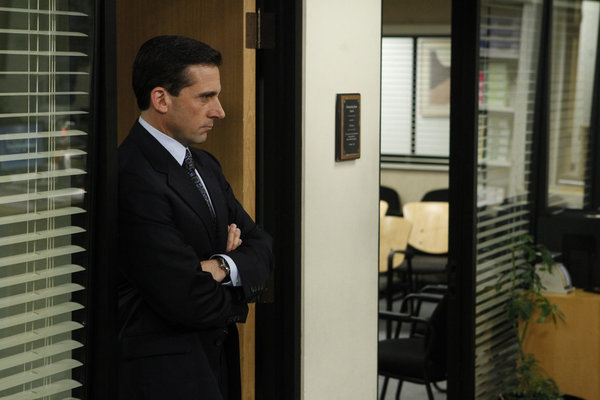
Then there’s Michael Scott.
How do you not love Michael?
Steve Carell created one of the funniest and, at times, surprisingly touching characters in television history. Michael is insecure, desperate for attention, wildly inappropriate, and completely oblivious to the discomfort he creates.
I have watched “The Office” more times than I care to admit, and Michael still makes me laugh.
But would I want to report to him?
No thank you.
Imagine trying to meet a deadline while your boss insists everyone attend a mandatory meeting to discuss whether he’s more like Beyoncé or Lady Gaga.
Actually, compared with my former boss, I’d probably take that. Everyone is a 10 with Michael. Except for Toby. Toby’s a negative 6.
The list gets worse
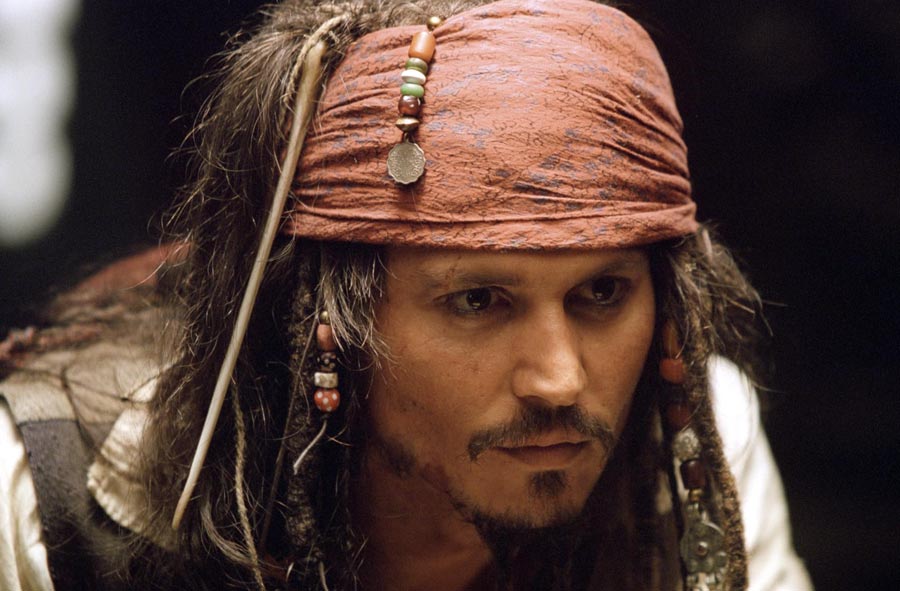
Captain Jack Sparrow is another favorite.
Johnny Depp’s drunken, stumbling pirate is hilarious, unpredictable, and endlessly entertaining.
He’s also selfish, dishonest, unreliable, and would almost certainly abandon you on a deserted island if it meant saving his own skin.
Would I want to sail with him?
Not a chance. I like my transportation to arrive where it’s supposed to, preferably with everyone still aboard.
Lucille Bluth from “Arrested Development” is one of the funniest television mothers ever created. She’s manipulative, judgmental, dismissive, and so spectacularly self-absorbed that it’s almost impressive.
Jessica Walter made every insult feel like a gift.
But imagine being one of her children.
Or sticking with moms, Moira Rose from “Schitt’s Creek.”
Catherine O’Hara turned Moira into a wonderfully bizarre collection of wigs, dramatic pronunciations, and complete detachment from reality.
I adore watching her.
I’m not sure I could survive a 20-minute conversation with her.
And then there’s Hannibal Lecter.
Anthony Hopkins made Hannibal one of the most fascinating villains in movie history. He’s intelligent, sophisticated, charming, and terrifying.
He’s also a cannibalistic serial killer.
Yet I can’t take my eyes off him whenever he’s on screen and somehow we found ourselves rooting for him.
Which brings us back to the question: Why? These people, especially Hannibal, are awful people.
Maybe it’s because we don’t have to live with them
I think part of the answer is distance.
When Miranda Priestly humiliates an employee, we aren’t the ones who have to go home wondering whether we’ll still have a job tomorrow.
When Michael Scott makes an inappropriate joke, we don’t have to sit through the uncomfortable HR meeting afterward.
When Jack Sparrow betrays someone, we’re not the ones left in the stocks.
We get to enjoy the chaos without suffering the consequences.
But I think there’s more to it than that.
These characters have something my former boss didn’t.
They have depth.
Miranda isn’t simply cruel. She’s a woman who has sacrificed an enormous amount to reach the top of a demanding industry. That doesn’t excuse her behavior, but it helps us understand it.
Michael Scott isn’t simply incompetent. He’s lonely. He desperately wants to be loved, and occasionally, when he stops trying so hard, we see a genuinely caring person underneath all the nonsense.
Jack Sparrow may be a selfish scoundrel, but every so often he surprises us with a little courage or loyalty.
Even Lucille Bluth and Moira Rose have moments when we see something beyond their ridiculous behavior.
And Hannibal?
Well, Hannibal is fascinating because he’s terrifying. Sometimes a character doesn’t need to be redeemable to be compelling.
That’s the beauty of good storytelling.
It gives us a chance to see beyond someone’s worst qualities, even when those qualities are pretty spectacularly awful.
Loving a character doesn’t mean approving of them
I think we sometimes forget that distinction.
A character doesn’t have to be a good person to be a great character.
In fact, some of the most interesting people in movies and television are the ones we’d never want anywhere near our actual lives.
We can admire Miranda’s intelligence without endorsing her cruelty. We can laugh at Michael’s ridiculous behavior without pretending he’s a good manager. We can enjoy Jack Sparrow’s adventures without trusting him with our car keys.
And we can be fascinated by Hannibal Lecter without wanting to find out what’s on the dinner menu. Or being on the menu.
I don’t need every character I watch to be someone I’d invite over for Sunday dinner. Sometimes I want to watch someone make terrible decisions, behave outrageously, or create absolute chaos.
That’s part of the fun.
But there’s another reason I think these characters work.
Good storytelling gives us something real life often doesn’t: a chance to understand what’s going on beneath the surface.
We see Miranda’s sacrifices. We see Michael’s loneliness. We see the insecurities and fears behind some of the most ridiculous behavior imaginable.
We don’t always get that perspective with the difficult people we encounter in our own lives.
And perhaps that’s worth remembering.
I’m not suggesting we excuse cruelty or tolerate terrible bosses. Believe me, I have some experience with that.
But maybe the reason we connect with these fictional disasters is that we’re allowed to see them as more than the worst thing they’ve ever done.
I don’t know what was going on beneath the surface with my former boss. Maybe there was more to his story than I ever saw.
I still wouldn’t work for him again. And I have no plans on inviting him over for dinner or sailing the high seas with him.
But maybe, just maybe, I’d watch him run an office from the safety of my couch.