



SCHIESS: Mini Jackhammers are busy in Island Park
Published at | Updated at
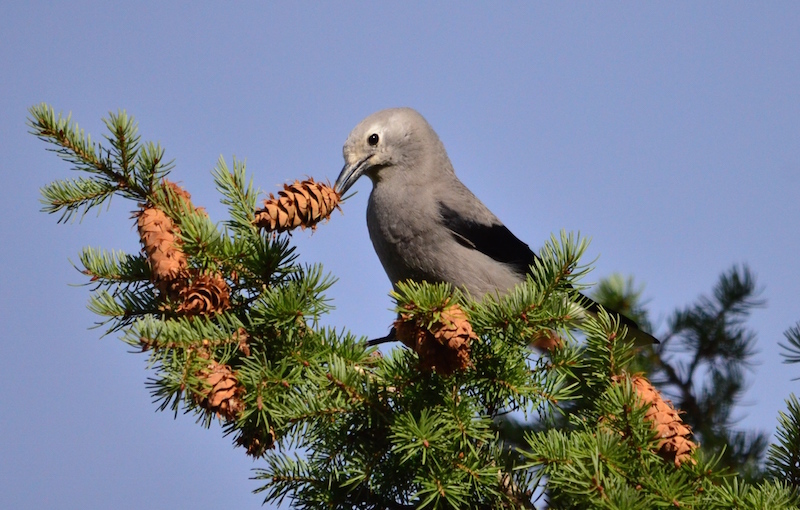
A couple of Clarks Nutcrackers flew away from a mud puddle and into a Douglas fir as I pulled over to watch them. Each broke off a cone and disappeared into the interior of the cone-laden tree.
As I got closer to the tree, I could hear a series of mini jackhammers in two trees where the forest met the sagebrush off the Mud Springs Road in the Moody Creek area east of Rexburg. After the birds began to ignore me, I was able to watch these amazing birds harvesting fir seeds from this year’s abundant crop of cones.
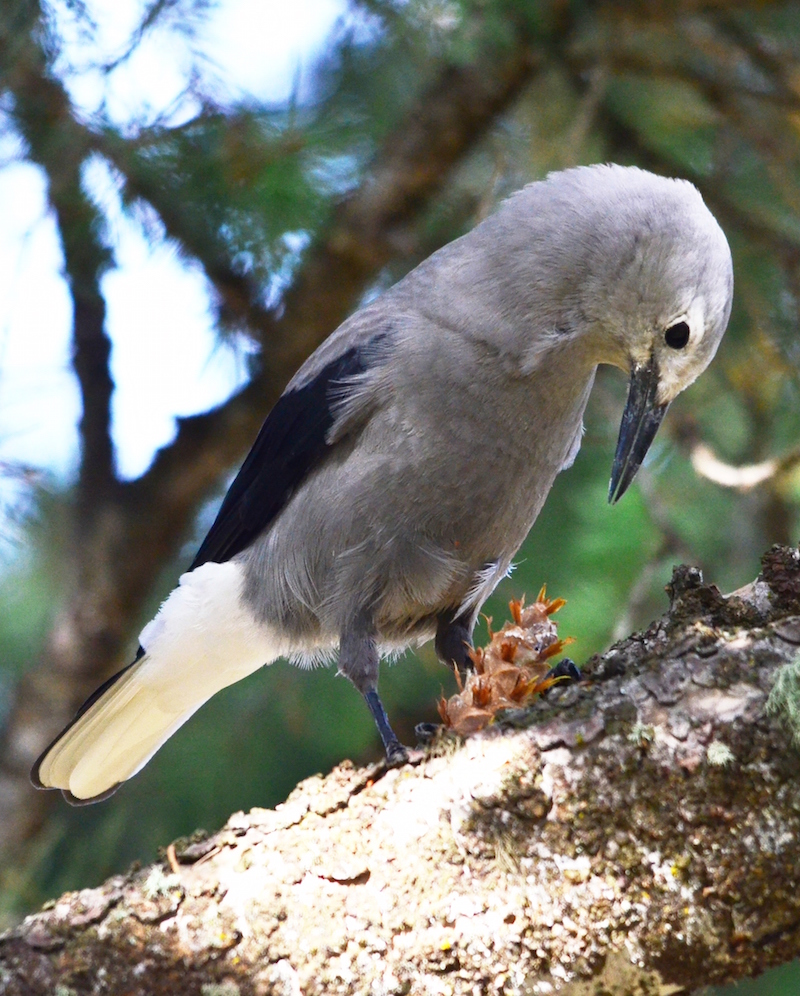
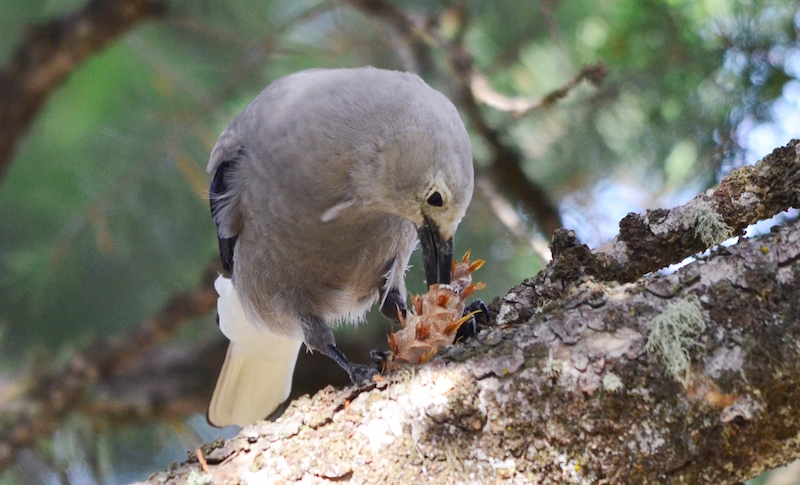
Over 30 “camp robbers” as they are also known, were using their strong bills to grasp a cone near the edge of a branch and twist it back and forth until they had it free. Generally the nutcracker would move to the interior of the tree, find a crook in a branch, wedge the cone there with the stem down and begin hammering it. After loosening the sections of the cone, they would use their strong pointed bill to pry open the section wide enough to reach the seeds. They were strong enough to chisel their way through a Pagan’s heart.
As the seeds were harvested one by one, they were stored in a pocket under the tongue where up to 80 seeds can be stored to be deposited in a cache. With full cheeks each bird would break off an extra cone and fly away where they would deposit their goodies for later use.
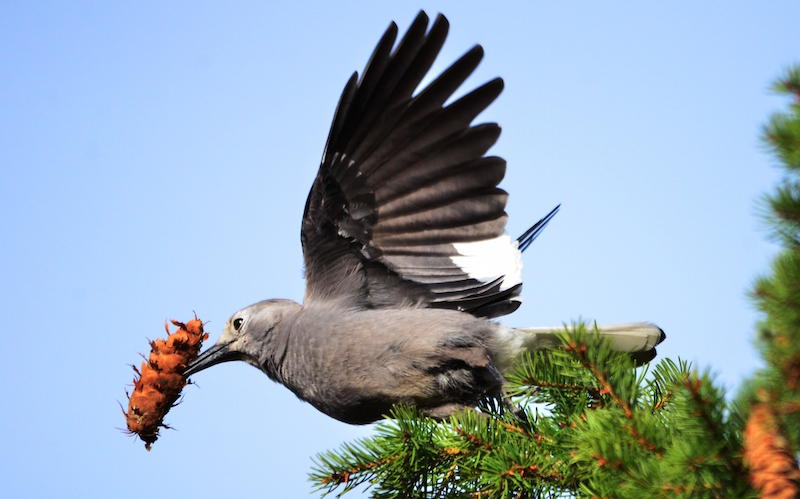
This member of the jay family is one of the few birds that can tear open cones, create caches of seeds and remember up to 1,000 places where they hide them, storing enough seeds to plant a whole forest. When spots are found to deposit the seeds, an individual bird will cache seeds and cones in a hole and then cover it up. These seeds are later dug up for food during the winter or in early spring when they need them for their young.
All evergreens with wingless seeds like Douglas fir, Ponderosa and White Bark pine need birds and animals to propagate new growth. This is called mutualism where two or more species depend on each other for their survival. It is believed many forests across the Western United States would not survive without this bird.
In one study by Diana Tomback of the University of Colorado, they documented a bird caching 35,000 seeds at over 9,000 sites. Even though they can recall the exact sites by using landmarks many of these deposits become plantings of conifer forests.
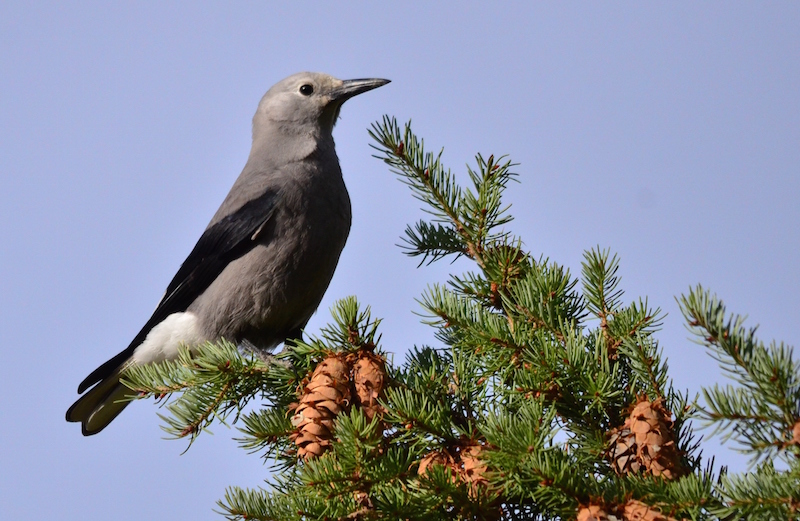
With all the heat and dryness this summer many of the mature evergreens did not produce an abundance of cones. The young healthy Douglas firs near Moody Creek are producing hundreds of cones that were harvested by flocks of nutcrackers as their young have fledged and are teaching the newbies the art of mini-jackhammering.
These cousins of the crow are not true migrators. They will migrate up and down mountains as their food sources become available. Other seeds, insects, berries, dead animals and even food left behind by humans are fare for these noisy birds. Many of these “camp robbers” harass campers in the national parks and forests.
The nesting habits of these mountain residents are also odd. Pairing for life, courtship starts in December and by March the female begins laying eggs. As soon as the young can fly, they are taken to last year’s caches to feed and by midsummer the nestlings are hammering out their own food on a new crop of pine cones. With the decrease of the White Bark pine forests, Douglas fir continues to be more used by these black, grey and white birds.
Want to find a Clark’s Nutcracker? Get close to the wind-swept ridge, crack out your lunch and they will find you; or just listen for mini jackhammers.

Living the Wildlife is brought to you by Yellowstone Teton Territory. Experience 7,500 square miles of untamed wilderness in Eastern Idaho's Yellowstone Teton Territory. Where majestic peaks meet endless adventure, your perfect outdoor escape is waiting. Start planning at YellowstoneTeton.com.