



What is the ‘right amount’ of mosquito control?
Published at
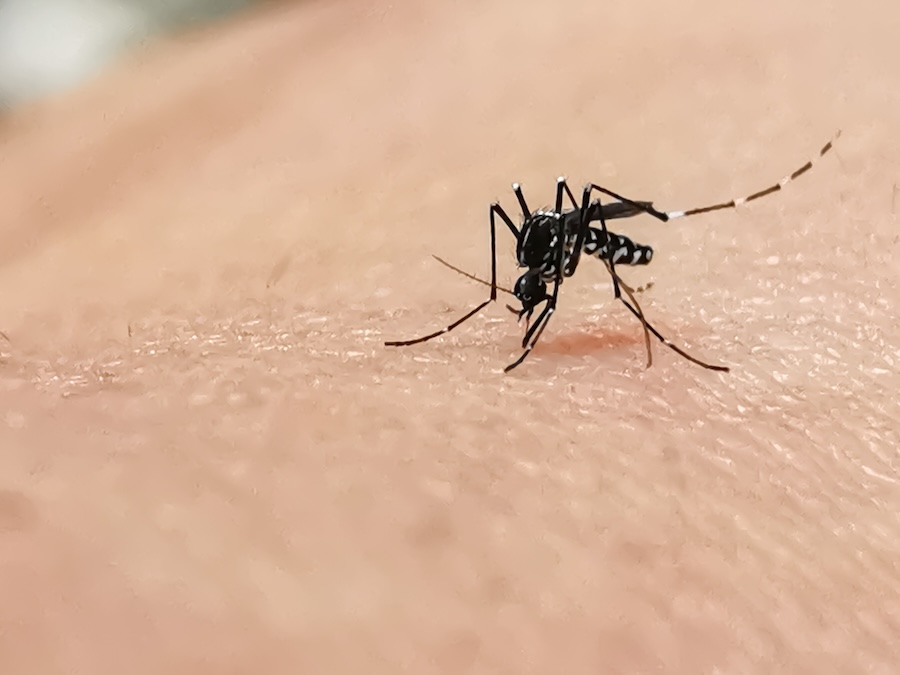
You’re out enjoying an evening stroll through your yard or garden. It’s cool and peaceful. You sigh in satisfaction. This is your happy place. Your little corner of paradise. Then a vague buzzing interrupts your subconscious bliss. The sound dissipates and you’re nearly settled back into nirvana when OUCH, a mosquito pierces your skin. Yeah, we’ve all been there and none of us regretted the satisfying slap that left the offending insect pancaked to your skin.
For an insect as ubiquitous as a mosquito, most of us know very little about them. Did you know there are about 50 different varieties of mosquitoes in our region? Maybe you already knew that only female mosquitoes bite, but did you also know that both male and female adult mosquitoes also feed on nectar, making them useful pollinators? The female mosquito only bites to acquire protein through a blood meal to produce and lay eggs. Mosquitoes also serve as valuable food for many birds, bats, fish, and amphibians. Still, no one likes them.
I used to work for a county mosquito abatement program. It was always a no-win conundrum trying to do my job. To some people, one mosquito constituted being ‘eaten alive’. To another person, possibly even next door, fogging for mosquitoes was akin to direct arsenic administration. There was no way to keep both people happy.
There are many opinions and misconceptions surrounding mosquito control. What is the ‘right amount’ of mosquito control? I myself am conflicted. Mosquitoes are obnoxious and can spread life-threatening diseases to people and animals, including West Nile Virus, Dengue Fever, Malaria and others. However, control measures, particularly those targeting adult mosquitoes, can harm beneficial insects and contribute to other unintended negative consequences.
As with most things in life, wisdom and moderation prevail. Not all areas have mosquito abatement control programs. Where they exist, most control measures target the larval stage where Bacillus thuringiensis (BT) can be used. This biological pesticide is a bacterium that produces protein crystals that stunt the growth of mosquito larvae. BT has selective action because only mosquitoes, black flies and some midges are susceptible.
Fogging, which is the only measure most people associate with mosquito control, uses a short-lived insecticide such as permethrin. While mitigating methods are used to limit human exposure and impacts to beneficial insects, there is more collateral damage with fogging as compared to control measures targeting the larval stage. The insecticides used with fogging are not selective. Other insects can be impacted if they contact the insecticide.
Keep in mind that only certain mosquito varieties carry diseases. The vast majority of mosquitoes we see early in the season are not the type to transmit West Nile Virus. These, while aggravating, are not likely to be life-threatening. Monitoring programs identify when West Nile or other diseases show up in mosquito populations. Also, any standing/stagnant water can become a mosquito breeding site. If there are any places on your property that hold water for a week or more, these could be producing the types of mosquitoes that do carry West Nile Virus.
We are not all going to agree on the amount and type of mosquito control that is acceptable. We can be more tolerant of some mosquito presence, recognizing that despite their annoying habits, they play a useful role in the environment. We can all do our best to identify and eliminate backyard breeding sites that can harbor disease-carrying mosquitoes.