



First group of K9 units in eastern Idaho certified to detect pure fentanyl
Published at

POCATELLO – K9 officers from across eastern Idaho teamed up to certify their police dogs to track and root out fentanyl, making them the first in the region.
Seven different law enforcement agencies participated in the training, with officers gathering in a Historic Downtown Pocatello building to introduce the scent of pure fentanyl to their dogs and have them prove they can locate it. From across all the agencies, 13 dogs received their certifications and will now be able to track the dangerous narcotic in their communities.
Corporal Jared Miller of the Bingham County Sheriff’s Office said completing the certification allows the officers to continue, “keeping the drugs off the streets and keeping people and citizens safe from overdoses and things like that, is the main goal.”
When fentanyl is combined with other drugs, as it often is, the dogs are able to detect it. But with pure fentanyl, they often aren’t familiar with the odor, so they don’t know what they’re looking for.
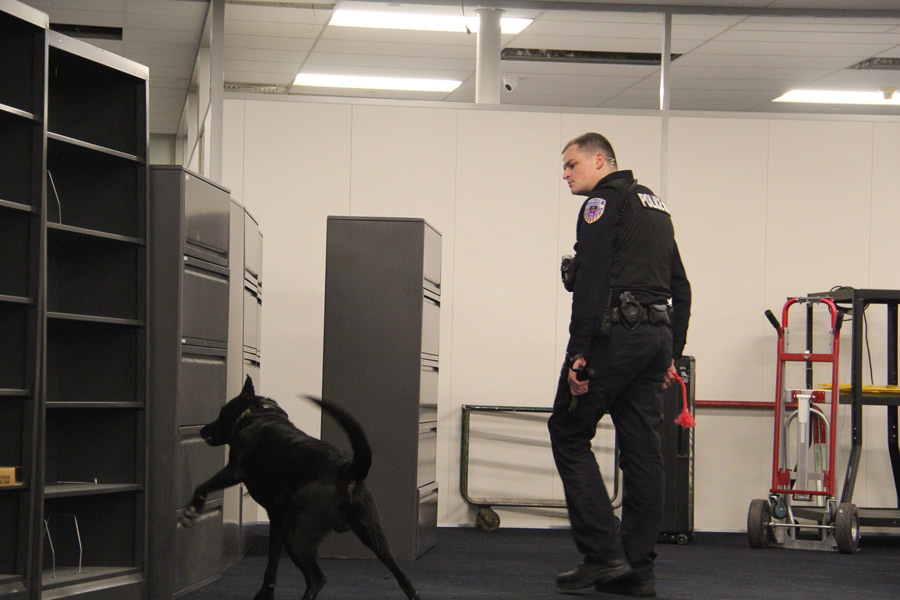
“The dogs are imprinted on all the other odors, such as methamphetamine, heroin, cocaine and marijuana, so now they’ll be imprinted on fentanyl too,” Miller explained.
Now that the odor is imprinted on the police dogs, they’ll be able to sniff it out if they come across someone who is trafficking pure fentanyl.
The agencies participating in this training certification were the Pocatello, American Falls, Blackfoot and Shelley police departments, the Power and Bingham County sheriff’s offices and Idaho State Police. Miller pointed out that combining this training not only saved money but also allowed for more information sharing.
“Cooperation is huge, because we bring different areas together with different knowledge (about) trends that are going on … and we all share information (and) work together to make our dogs better,” Miller said.
The Housing Alliance and Community Partnerships, a public housing authority based in Pocatello, donated building space at 805 North Main Street for the training certification.
“In the end, that’s what it ultimately comes down to, is making the dogs better at what they do,” Miller said.