



Fuel delivery makes launch of Project Pele microreactor one step closer to completion
Published at | Updated at
ARCO – The Idaho National Lab joined with the U.S. Department of Energy and other entities Tuesday morning to celebrate the recent delivery of advanced nuclear fuel to the INL’s Transient Reactor Test Facility.
The delivery, which consists of four 48-inch by 36-inch canisters, took place on Nov. 5. It’s a major milestone for Project Pele, a mobile microreactor prototype designed to provide resilient power for military operations.
Jeff Waksman, the principal deputy assistant secretary of the Army for Installations, Energy and the Environment, tells EastIdahoNews.com the reactor is intended to be a demonstration model to perfect the process for building a more advanced reactor in the future.
“We announced something just a few weeks ago called the Janus Program (named after the Roman God of beginnings, transitions and doorways),” Waksman says. “Through this program, we’re going to try and bring commercial microreactors to Army installations.”
See the canisters being delivered in the INL’s time-lapse video above.
The reactor will be manufactured by BWX Technologies, a company headquartered in Lynchburg, Virginia, that manufactures nuclear products for the U.S. Navy and commercial industry. It will be connected to INL’s microgrid and produce one to five megawatts of electrical power. One megawatt is enough energy to power about 10,000 homes.
The reactor is historic for several reasons. One of the reasons is that it could become one of the first advanced nuclear reactors to operate in the U.S. Initially slated for completion in 2026, it will likely launch in 2027 or 2028 due to the government shutdown.
A similar reactor project called MARVEL got underway in 2020 and is also slated to become operational in the near future.
RELATED | Fabrication underway for the MARVEL test microreactor
The first one to become operational will be the INL’s first new reactor in more than 50 years.
Another reason it’s a historic project is that it’s the first delivery of TRISO (tri-structural isotropic) particle fuel to power a reactor. If successful, it will pave the way for fueling similar microreactor projects in the future.
Joe Miller, president of BWXT’s government operations, says the four fuel canisters can power the reactor for three years.
TRISO Fuel, which has been manufactured for several decades across the globe in various forms, is made from uranium, carbon and oxygen. This particular form is a poppy-seed sized kernel coated in multiple layers. The outer layers protect the kernel, which is the fuel source. Multiple INL officials referenced a peanut M&M in describing its design.
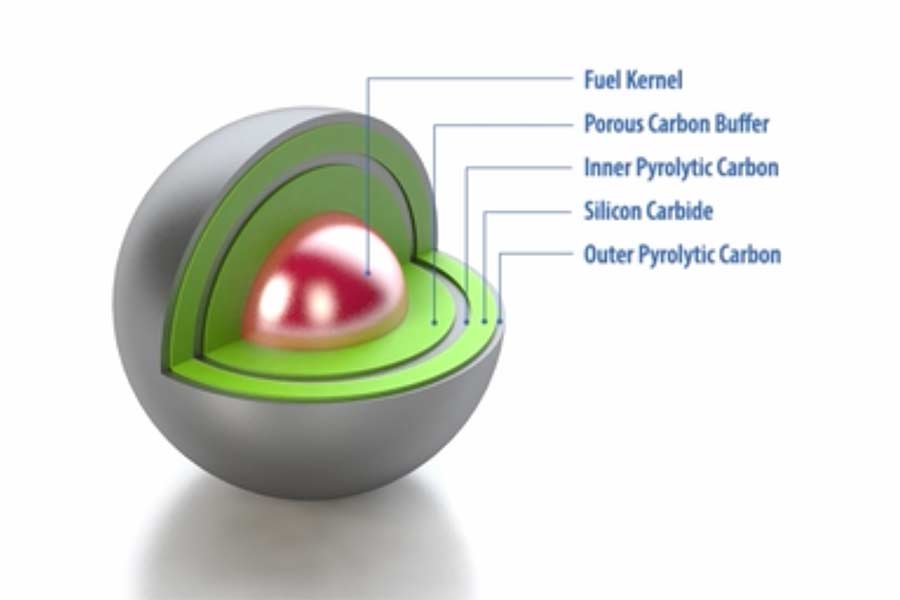
Miller says this particular fueling method is more efficient than the traditional way.
“Because this fuel has containment at the particle level, you don’t have to build a large containment dome,” Miller says. “This makes a nuclear reactor fueled by TRISO a very transportable design. If you can transport energy anywhere in the world and if you can generate electricity for several years without refueling, it becomes a very important piece of technology.”
Aside from its benefits in strengthening the military and enhancing national security, Waksman says Project Pele and the army’s Janus Program helps ensure that critical infrastructure has power even if the electric grid is disrupted.
“The current energy supply is all provided by fossil fuels. That creates enormous vulnerability,” Waksman explains. “Nuclear is the only thing that gives you the option of reliable power for years without refueling. We’re hoping to get to a point where we can deploy these in more remote locations … and have reliable power for years.”
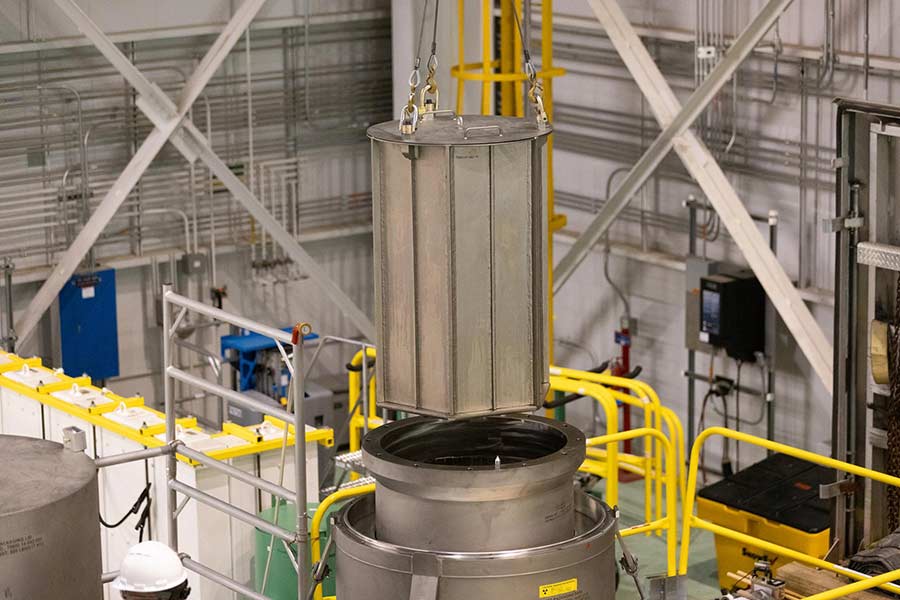
Project Pele got underway in 2018 and originated in Hawaii. Its name comes from Hawaii’s goddess of volcanoes and fire.
RELATED | Company breaks ground on nation’s first experimental modular reactor
During Tuesday’s event, Mike Goff, the principal deputy assistant secretary for DOE’s Office of Nuclear Energy, told those in attendance that the fuel delivery celebration is happening in conjunction with the 83rd anniversary of Chicago Pile-1. On this day in 1942, the world’s first artificial nuclear reactor went online and achieved a self-sustaining chain reaction. It marked the beginning of the Atomic Age.
“Graphite from Chicago Pile-1 is sitting over in the TREAT reactor right now. It’s very fitting to have this cycle marked here, celebrating this huge milestone,” Goff said.