



Not just in big cities anymore. Can Idaho avoid a ‘rat apocalypse’?
Published at | Updated at
Mark Dee, Idaho Statesman
EAGLE (Idaho Statesman) — First she saw the eyes, then the ears, then the tail.
Jane Rohling had lived in Eagle for 20 years before she saw her first rat. She’d lived there 20 years and 10 seconds before she saw her second, third, fourth and fifth. Drawn to the window by the flash of fur, she stopped when she saw her birdfeeder surrounded by them — heavy-bodied brown rodents trailed by tapered, hairless tails.
That was in 2022. Afterward, Rohling, who spent a 45-year career in wildlife education, “went down a rabbit hole” on rats.
She spends four or more hours a day researching, reporting and answering questions from residents about the burgeoning infestation, which caught the Treasure Valley flatfooted over the past half-decade and has spread steadily. When Rohling spoke to the Idaho Statesman in November, she had just hung up with a representative of a Washington-state company pioneering a line of rat birth control.
She had plans later to reset snap traps throughout her property. Rohling has shaped a huge aspect of her retirement — not to mention her home — around the abatement of invasive rats, and nearly four years in, the self-proclaimed “rat lady” of Eagle is still in the fight.
Rohling leads a 700-member group on the social media site NextDoor called “Rats in Eagle & Beyond.” Its purpose is to record the invasion in real time — a job its members take seriously, scrupulously and occasionally in graphic detail. Members post pictures of vanquished rodents the way fishermen pose with a trophy trout. The comments are generally similar, some version of “We have them here, too.”
“No one is tracking this,” Rohling said. “Nobody is doing research on this. Nobody is monitoring the spread in our area, because none of the government agencies have been interested.”
For now, Rohling and her unofficial cohort constitute the closest thing to a rat monitoring program in the Treasure Valley, because rats, as relatively new residents, slip between the cracks in Idaho Code.
Idaho’s pest management programs bear the markings of the state’s agrarian heritage. County departments are set up for rural problems: noxious weeds, for example, or agricultural raiders like pocket gophers and marmots.
Rats are a historically urban nuisance. They follow trade routes and waterways, but above all they follow people. These days, the Treasure Valley has plenty of people, but, advocates say, not all the systems it needs to handle the problems people bring with them. A visible — and visceral — example is a rat.
“We’re not like New York, or L.A., or Seattle, or Phoenix — we’re not like big cities that have had rat problems for years,” Rohling said. “But I’m talking to people who are catching 20 rats a day on their property. That’s a lot of rats.”
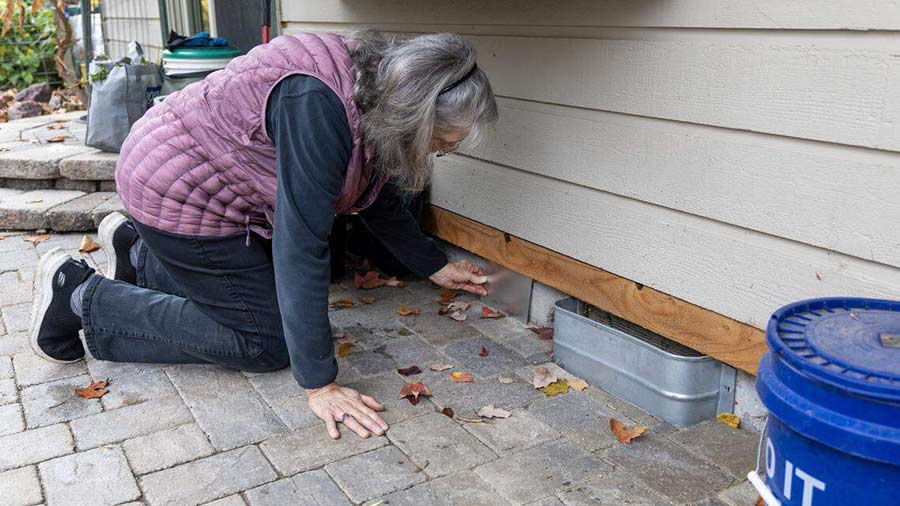
Rohling has killed her share and missed many, many more. Since 2022, she has rebuilt her life — and property — around rats. She tore down her big back deck. She removed woodpiles. She cut down an old cherry tree, which was feeding rats faster than she could pick the fruit. She culled vines from her garden. Most of all, she’s repaired the damage: $18,000 worth of work to strip an infested crawl space, repair gnawed ducts and vents, and reinforce points of incursion in the foundation of her home.
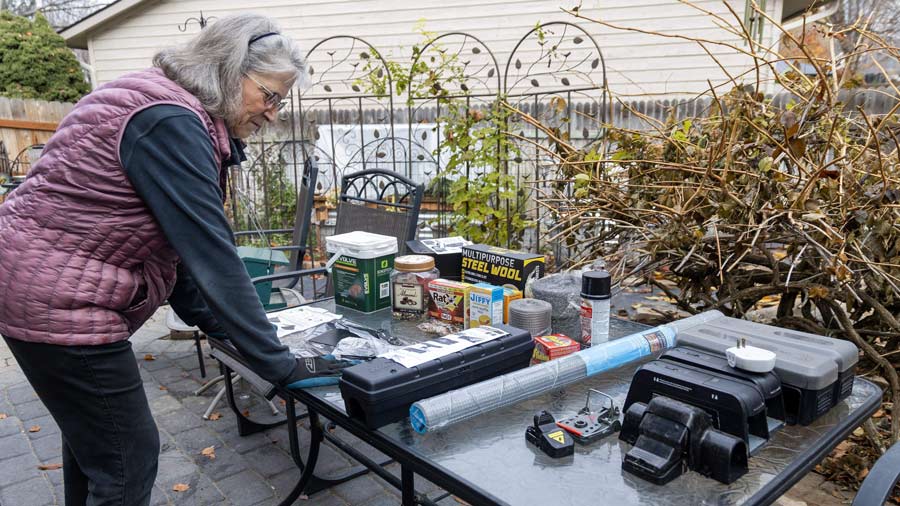
“I just killed off a whole family last week,” she said without malice. “I tell everybody: Even if you think you don’t have rats, you probably do. Be proactive. Put out traps. Communication, right now, is the most important thing we can do — especially given the lack of government involvement.”
Ada County Weed, Pest and Mosquito Abatement Director Adam Schroeder is trying to do something about it. For the past several months, he’s been on what he calls a public relations tour, in equal measure talking to local governments about the extent of the rat problem and explaining why his hands are tied.
“Folks are exasperated,” he told the Statesman in an interview.
Schroeder is frustrated himself. He estimates he gets two to five calls per week from constituents complaining about or demanding action to control rats. But his agency is “basically founded to support agricultural and semi-agricultural areas,” he said. He runs a small team on a $1.5 million annual budget. Legally, they’re empowered to go after pocket gophers and yellow-bellied marmots, not Norway or roof rats.
“We see rat populations in urban centers. They follow people around. Really, control efforts have to start in urban areas,” he said. “We’re not really getting to the areas that need control.”
Nor is he funded to. Rats are not considered wildlife (the purview of Idaho Fish and Game), classified as invasive species (managed by the state Department of Agriculture) or defined in statute as a “control species” threatening farms or infrastructure (locally handled by Schroeder and his colleagues).
“I think it’s really going to take a countywide effort to make a dent in this,” Schroeder said. “Someone needs to be able to legally work on this on a larger scale.”
That would likely take action from the Idaho Legislature and could be a year away, according to an Oct. 21 discussion at the Boise City Council. In that meeting, Schroeder explained the legal snag and identified the culprits.
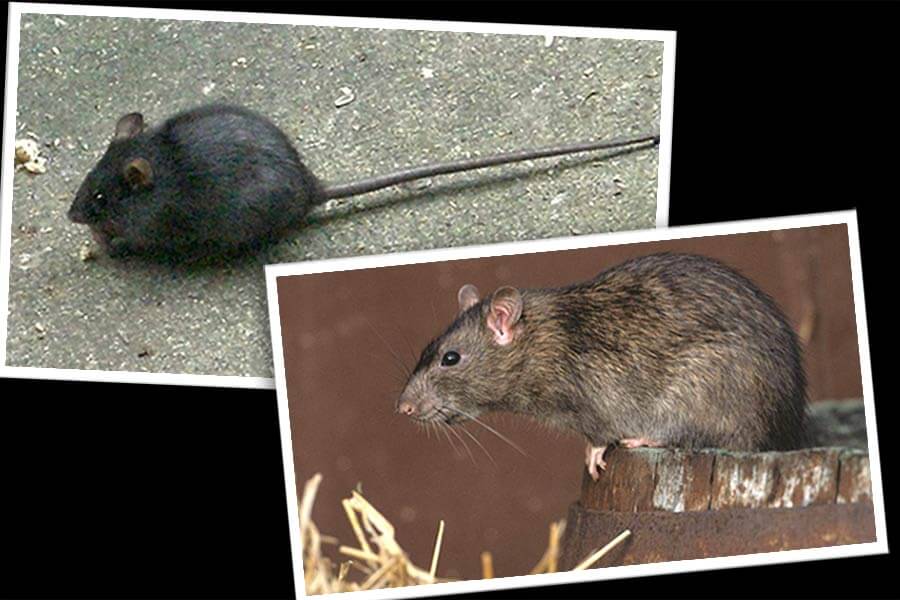
Constituents have spotted both Norway rats — picture your classic brown subway rat — and roof rats, a smaller, smarter and more agile species that prefers high perches to ground-level burrows. Also called black rats or ship rats, roof rats have only shown up recently, Schroeder said. These newcomers can jump 3 feet in the air and survive falls from the top of a telephone pole. Taken together, homeowners are fighting rats on two fronts: on the ground and overhead.
“That seems like a 1980s New York issue,” Council President Colin Nash said in the meeting. “I’m concerned if we’re differentiating between normal rats and rats that practice jui-jitsu.”
Neither species is endemic to Idaho. (The bushy-tailed woodrat, more commonly called the packrat, is the only native from the genus.) But neither species is listed as invasive, either. That’s a special list managed by the Idaho Department of Agriculture. The list includes the nutria rat — an orange-toothed South American rodent bigger than most house cats — and gets more exotic from there. Monk parakeets, piranha and something called the walking catfish appear alongside more everyday invaders like the American bullfrog and some 54 species of insects.
(A spokeswoman for the Department of Agriculture declined to comment for this story, telling the Statesman that rats are outside the department’s jurisdiction and citing a departmental policy of not commenting on potential legislation.)
Nash pointed out a “gap in statute” around black and brown rats, and Schroeder agreed. Schroeder told Nash that the Department of Agriculture was open to a petition to list the rats as invasive. While an invasive species designation might help raise awareness, he said it doesn’t do much else.
“It doesn’t allocate any type of funding,” he said. “It just says, ‘Thou shalt not have rats.’ ”
Schroeder is working on three drafts of legislation to present to lawmakers in January that could chip away at the problem. He doesn’t sound picky about how rat control gets off the ground, as long as someone is legally allowed to do it, someone is willing to do it, and there’s money to cover the costs.
One option is an emergency ordinance to create an interim abatement district — something temporary that could green-light short-term control efforts. That doesn’t come with any new funding, Nash said.
A permanent rat control district could work like the Ada County Mosquito Abatement District: Funded by a levy, that program spans 406 square miles of primary residential and urban areas, according to the county website. Replicating that would mean a new tax assessment and require voter approval.
Schroeder could also work with a state-level “eradication fund” allowing state agencies to partner with private operators and/or mandated county programs to take on the pests.
“It’s going to take a number of stakeholders coming together to create something novel, at least in the state of Idaho,” he told the City Council. Eventually, Schroeder thinks rats will be a statewide issue.
“Today, it looks like an Ada County problem,” he said. “But if we’re not already seeing them in the Magic Valley, in North Idaho, it’s only a matter of time.”
In the meantime, Schroeder hopes to build tools based on county geographic information systems, or GIS, to start monitoring rat sightings. He’d like to create an app so residents can feed data into a government system, rather than NextDoor. That, he said, would take only about $20,000 and can be done in-house. The information will help whoever takes the reins on rat control, he said.
“We want to prevent disease outbreak, prevent loss of life, and, of course, prevent (a) rat apocalypse,” he said in the meeting, echoing a phrase in his presentation to the board. “I certainly don’t want to be playing a flute in the middle of the street trying to get the rats out of here.”
As of Nov. 17, the city of Boise had received 21 calls and emails about rats in the past two years, spokeswoman Maria Ortega told the Statesman.
That’s a light week for Jane Rohling. On a recent Friday, she busied herself with “rat stuff” around her Eagle home. She cleared her yard of deadfall and debris and checked the sheet metal she uses to cover unused vents. She set new traps where she suspected rats travel, and checked the old ones for cadavers. Nothing overnight — a good sign, if not a lasting one.
In a phone call, Rohling was heartened to see information about rat prevention tactics on Boise’s website and hear updates on Schroeder’s plan for winter ahead.
“At least now they’re talking about the problem,” she said. “We’re making progress, though we’re not making progress as fast as the rats.”