



The 2026 Idaho legislative session begins Monday. Legislators say more state budget cuts are coming.
Published at
Clark Corbin, Idaho Capital Sun
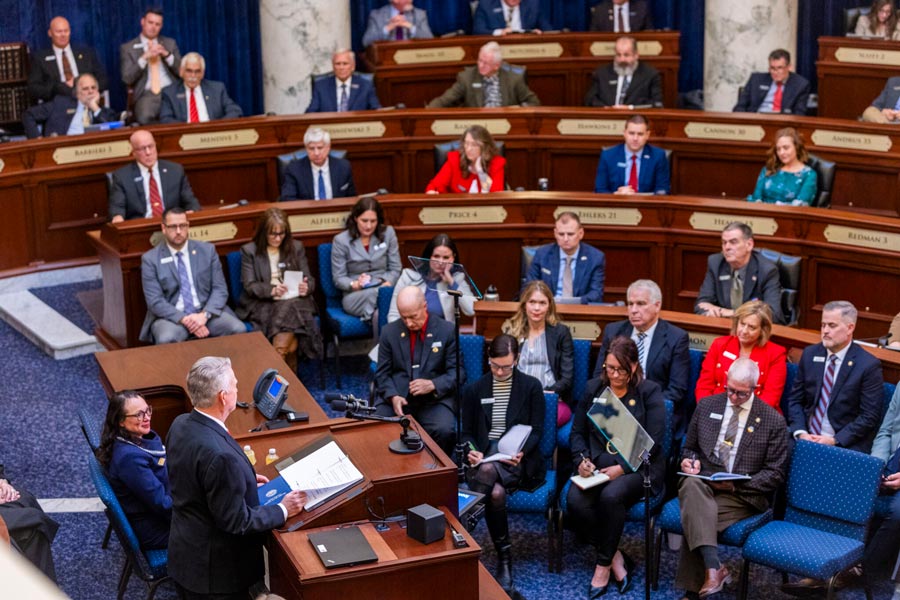
BOISE (Idaho Capital Sun) — Idaho House Speaker Mike Moyle said he expects Idaho to conform to many of the federal tax changes championed by President Donald Trump, and he expects the Idaho Legislature to pass additional budget cuts during the upcoming 2026 legislative session to pay for the tax cuts and avoid a budget deficit.
The two related issues – whether to conform with federal tax cuts included in the federal One Big Beautiful Bill Act that Trump signed into law July 4 and how to avoid projected multimillion Idaho state budget deficits in fiscal years 2026 and 2027 – are expected to be two of the biggest issues shaping the annual Idaho legislative session that begins Monday at the Idaho State Capitol in Boise.
Moyle, other legislators and officials in Gov. Brad Little’s office have all said Idaho will intervene during the 2026 legislative session to prevent the state from posting a budget deficit when the fiscal year ends June 30. And to avoid the shortfalls, legislators are going to propose new, additional budget cuts.
“There’s going to be some reductions in the budget, and there’s plenty of room for reductions in budgets,” Moyle said in an interview Monday at the Idaho State Capitol. “If you don’t think so, ask any farmer out in the state of Idaho that’s dealing with lower commodity prices, right? Just go find the stuff that doesn’t matter, and you take it out. So I think it can be done easily if we work together.
“But the part that is going to be the problem is that every budget has somebody that thinks it’s the best budget in the state and has to have everything, and that creates more of those conflicts and makes it harder to get out of here.”
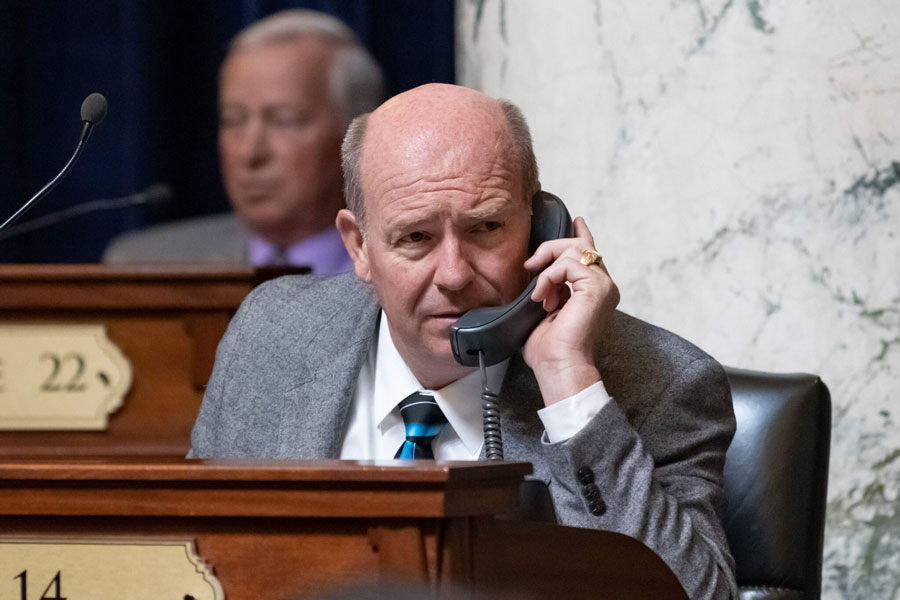
The latest state reports show that Idaho is projected to end the current fiscal year 2026 on June 30 with a state budget deficit of $40.3 million, the Idaho Capital Sun previously reported. But the projected budget and revenue shortfalls are not a short-term, one-year problem facing the Idaho Legislature. The Idaho Legislative Services Office reported in the fall that next year’s fiscal year 2027 state budget is projected to have a $555.2 million budget deficit. Longer range state reports also showed a projected gap between expenses and revenues continuing through fiscal year 2028.
Any projected budget deficit is a problem because the Idaho Constitution requires the state to pass a balanced budget every year and prohibits the state from running a budget deficit where expenses exceed state revenues.
Idaho’s speaker of the House said repealing Medicaid expansion is on the table this year
To pay for balancing the budget, Moyle said legislators will consider repealing Medicaid expansion, which more than 60% of Idaho voters approved at the polls in November 2018. Medicaid expansion provides health insurance to more than 85,000 Idahoans who did not qualify for traditional Medicaid, with the federal government paying 90% of the benefits and the state paying the remaining 10%, the Idaho Capital Sun previously reported.
In December, the Idaho Legislature’s Department of Government Efficiency, or DOGE Committee, issued a recommendation for Idaho to repeal Medicaid expansion.
On Monday, Moyle said repeating Medicaid expansion is on the table for this year, but he is unsure how much money eliminating Medicaid expansion would save the state budget.
“Heck yeah (it’s on the table),” Moyle said Monday. “I don’t have a problem with that. Everything is on the table. I don’t have a problem with that at all.”
Even though Idaho voters approved Medicaid expansion via a ballot initiative in 2018, the Idaho Legislature still has the power to repeal Medicaid expansion, which is treated the same as any other law in Idaho that can be amended or repealed.
Sen. Scott Grow, an Eagle Republican who serves as the co-chair of the Joint Finance-Appropriations Committee, said he also expects additional budget cuts this year, although he did not predict where the cuts will come from. The Joint Finance-Appropriations Committee, or JFAC for short, sets every budget for every state agency and department each year.
“Obviously it will be a challenging session for JFAC,” Grow said in a phone interview. “With the tapering off of revenue increases that we have experienced over the last several years, we are now coming back to a more normal year. But, in fact, this particular year is a little less normal, in that we will have to look at cutting budgets rather than the increases that have been able to happen over the last few years.”
“We will wait and see what the governor’s budget (recommendation) is, obviously but I am confident that in accordance with 3% holdback (Little) has already done, we will have to deal with cuts and some of those cuts may need to be larger than 3% in order to balance the budget,” Grow added.
House Minority Leader Ilana Rubel, D-Boise, said Idaho’s budget shortfall is an entirely self-inflicted crisis that was brought on by Republicans in the Idaho Legislature passing years worth of tax cuts the state could not afford and delaying setting revenue projections until after the Idaho Legislature passed several major budgets and tax cuts.
Rubel opposes repealing Medicaid expansion and opposes additional new cuts to programs and services that Idahoans rely on. Instead of cutting services that benefit low income families, seniors and people with disabilities, Rubel said the Idaho Legislature should instead repeal the most recent income tax cuts and repeal a new $50 million education tax credit that reimburses families for expenses including tuition at private, religious schools.
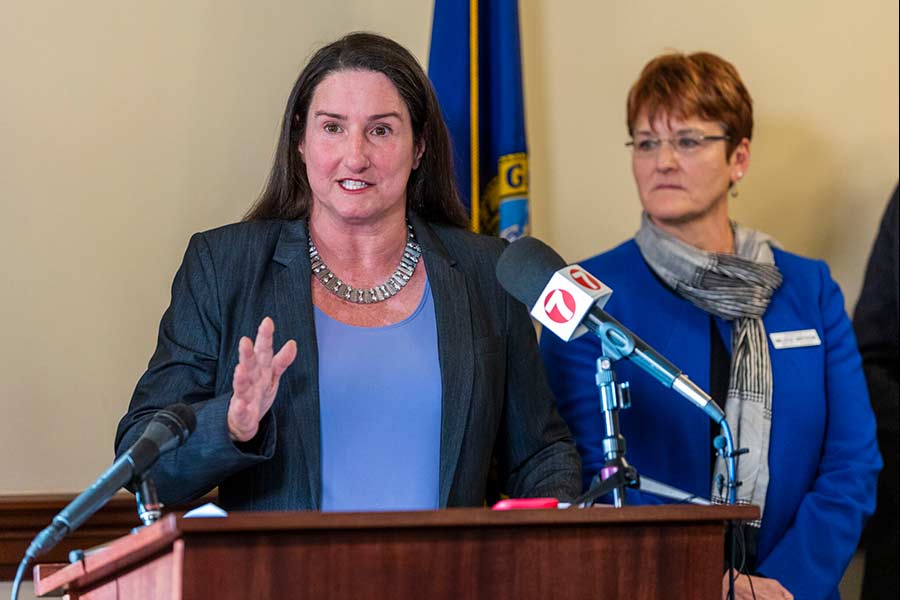
But with Republicans controlling supermajorities in both chambers of the Idaho Legislature, Rubel worries more and deeper cuts to programs and services are on the way.
“The repercussions of the cuts will be felt far beyond the vulnerable communities who took the hit on the front end,” Rubel said in a December phone interview. “It’s going to hit regular people. It’s going to hit them a lot harder in the very near future, and they are going to want answers.”
Federal tax changes championed by Trump could cost Idaho hundreds of millions of dollars
Importantly, Idaho’s projected $40.3 million deficit for fiscal year 2026 and projected $555.2 million deficit for next year do not include the cost of paying for tax changes in Trump’s One Big Beautiful Bill. For individuals, some of those tax changes include no tax on workers’ overtime pay, no tax on workers’ tips, no tax on borrowers’ car loan interest and an expanded deduction for senior citizens. If Idaho adopts those changes at the state level, making the changes will reduce state revenue even more.
“First off, when we left last year (when the 2025 legislative session adjourned), we left $430 million on the bottom line,” Moyle said. “We didn’t have a problem until July 1, when the Big, Beautiful Bill passed. If you didn’t have the Big Beautiful Bill, we wouldn’t be having this conversation with concerns about a shortfall that was created by the actions of the federal side that we have no control of. Tax conformity is what’s driving the numbers down. There are 39 tax relief components in the Big Beautiful Bill that affect Idaho.”
It is not exactly clear how much conforming to Trump’s tax changes would cost Idaho. A report from the nonprofit Tax Foundation estimated it could cost $284 million annually to conform to the individual and business tax changes in Idaho.
On Monday, Moyle told the Sun the cost of tax conformity could actually be closer to $400 million in Idaho.
Either way, Moyle said he expects Idaho to conform to most of the federal tax changes.
“How we address that will have a lot to do with the budget too,” Moyle said. “That means, if we conform, and I believe we conform to most, if not all of them – most of them, for sure – if we conform to those, now we’ve got a revenue situation, right?”
Moyle said he does not think Idaho legislators will need to cut funding for the K-12 public school system because student enrollment in public schools has declined and costs will be less as a result. But Moyle said cuts in other areas are all on the table.
“We’ll figure it out,” Moyle said.
Little will begin the 2026 legislative session Monday when he delivers the annual State of the State address and issues his budget recommendations at 1 p.m. Monday at the Idaho State Capitol in Boise. Little’s address, as well as legislative committee meetings and Idaho House and Idaho Senate floor sessions will again be streamed live online, for free, via the Idaho in Session streaming service.