‘Sweet,’ ‘good-spirited,’ ‘kind’ World War II vet from Idaho Falls passes at 104
Published at | Updated at
EDITOR’S NOTE: Portions of this story were originally published on Nov. 11, 2021.
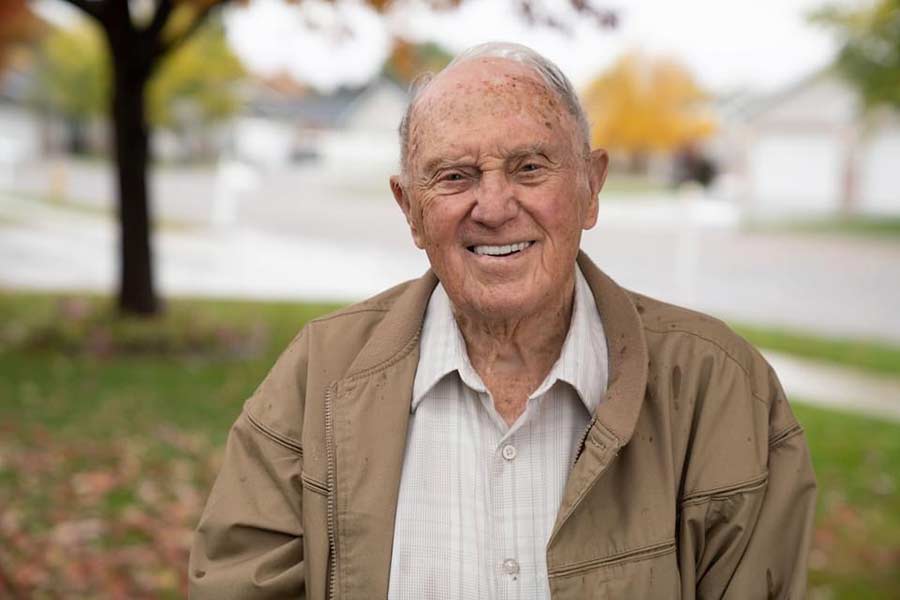
IDAHO FALLS – William Albert “Bill” Hulet, a 104-year-old World War II veteran from Idaho Falls, passed away on Feb. 7.
He was under the care of Enhabit Hospice at Lincoln Court Retirement Community, according to his obituary. His funeral is scheduled for Saturday.
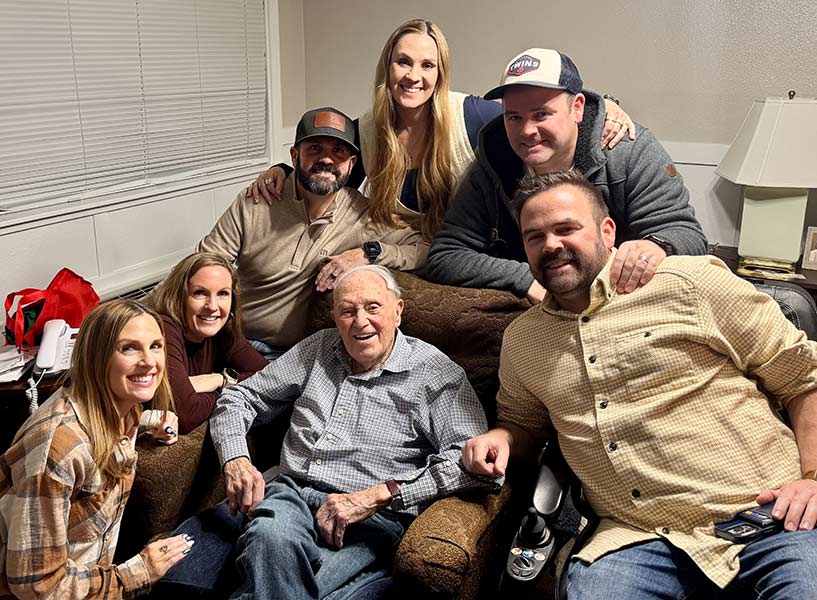
In a conversation with EastIdahoNews.com, Hulet’s grandson, Stefan Wood, says Hulet was a “sweet, sweet man all the way up until his last breath.”
“He never complained, was always positive and good-spirited all the way to the end,” Wood says.
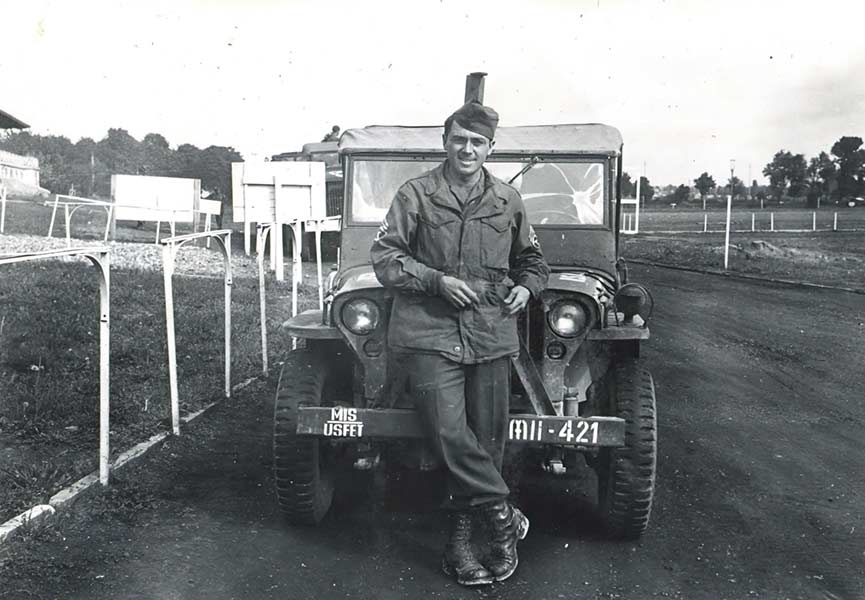
Hulet was an active member of The Church of Jesus Christ of Latter-day Saints. He served in the United States Army in Europe during World War II, where he interrogated German prisoners and earned the Bronze Star. He also served during the Korean War.
RELATED | Local WWII veteran who raised seven kids turns 104 and gets surprised for Feel Good Friday
Wood describes his grandfather as a quiet guy with a “down-to-earth properness” and “positive energy.”
“Whenever he spoke, you felt edified by him,” says Wood. “He had a wonderful little chuckle. He would giggle and play off your funny comment. It was sweet and so fun.”
Hulet’s early life
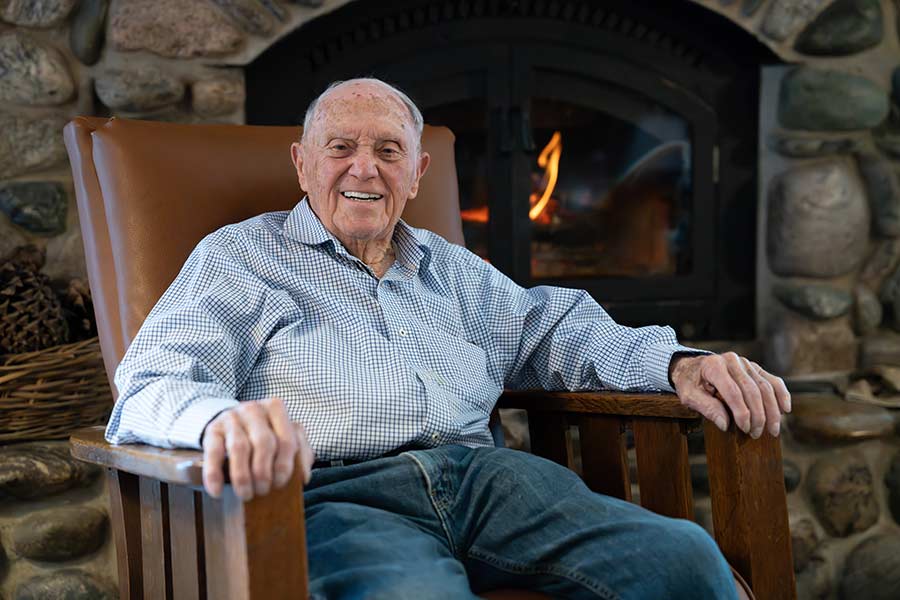
Hulet was born on Oct. 11, 1921, to Vida Hill and Albert Franklin Hulet. He spent his early years in Twin Falls, then moved with his family to Driggs when he was 3. The family later moved to Victor, where he grew up and graduated from Victor High School.
Hulet attended Ricks College in Rexburg, where he was valedictorian of his class. During his high school and college years, he was active in band and choir.
He eventually earned a bachelor’s degree from Brigham Young University and graduate degrees from the University of Washington and the University of Maryland.
RELATED | 100-year-old World War II vet shares experiences and a thought for today’s generation
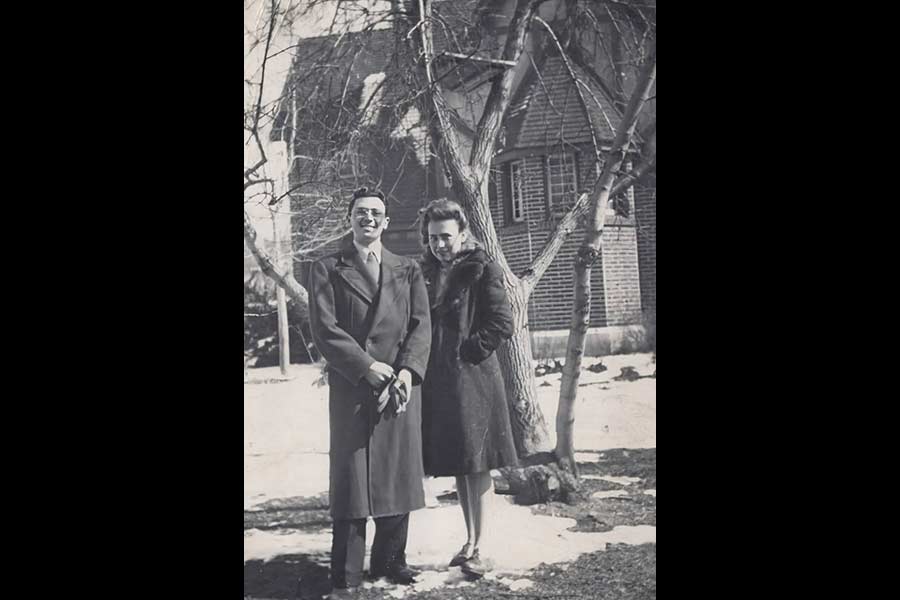
Hulet shared some of his military experiences with EastIdahoNews.com in 2021. He told us then that he and his wife, Betty Mae Danks, who passed away in 2000, had only been married for a few weeks when he was drafted.
‘He’s a mormoner’
Throughout the war, Staff Sgt. Hulet spent time in France, Germany and Belgium, where he was assigned to army intelligence to interrogate prisoners of war and write reports.
He recalled working with an infantry division in Malmedy, Belgium in 1944 during the Battle of the Bulge. An old building had been turned into a makeshift jail for those who had been captured.
“We’d take the prisoner, set him down and talk with him,” said Hulet. “People get the wrong vision sometimes that we’re all running around in a very formal way, pointing guns. That’s not true.”
Hulet said being held as a POW was more pleasant to the Germans than being in combat, and most of the captives felt some degree of relief to be there.
He remembered asking one young man where he’d been captured, to which the young man responded, “Up on the hillside in an orchard.”
The young soldier was part of an artillery unit, and he explained that they were under heavy American fire. He’d hidden in a hole to protect himself. When the crossfire ceased, the man crawled out and was surrounded at gunpoint by U.S. forces.
“About this time, he said to me, ‘I have an uncle in America,'” Hulet recalled.
“Where does your uncle live?” Hulet asked in response, expecting him to say something like New York or Pennsylvania. “This guy said, ‘Salt Lake City.'”
“What’s his religion?” Hulet asked him.
“He’s a mormoner (meaning Mormon),” the man responded in broken English.
Hulet, a member of the same church, officially named The Church of Jesus Christ of Latter-day Saints, later learned the young man was also a Latter-day Saint.
Though the young soldier had no information useful to Hulet and his comrades, Hulet said their religious connection was significant to him, and he felt a desire to help him.
“I (wanted) to see him not get shot doing something foolish and I (told) him he’d be safe if he was careful, didn’t cause any trouble, and did what people asked him to do,” Hulet said.
The young man and many other captives were put on a truck the next morning and taken to a prison camp in France. Hulet and the young soldier never saw each other again.

Close to combat
While Hulet was never on the front lines, he says he was close to combat on multiple occasions. In Belgium, the house he was living in “had one corner shot off.” In another part of town, the officer in charge of his company and the man who worked with him were killed in a bomb explosion.
On another occasion in Germany, Hulet remembered the military police setting up a jail inside a school. Everyone who had lived in that community was gone, and Hulet and his team were there alone. They began to lay out their sleeping bags in a classroom to bed down for the night.
“There was a house across the street in good condition, except it had a big hole up at the top (where someone had shot at it). It was a lot warmer here than at the school, so several of us went and built a fire,” said Hulet.
One night, Hulet heard artillery fire outside the house. The shots gradually grew louder.
“I realized it was getting close, so I headed for the basement, and a shell landed in the backyard and blew a pine tree — just (boom), and it was gone,” he said. “I went back across the street, and a shell landed next to our school. All our sleeping bags were covered with glass. They’d blown all the windows out.”
The Red Ball Express
Several months after D-Day, Hulet and his unit were part of a convoy of trucks across France known as the Red Ball Express. They were hauling gasoline for the tanks at the front of the line.
When Hulet and his company caught up with their division, the line came to a halt.
“Somebody came back and said the fellow up front was following a bicycle. He saw the bicycle with a little light on the back and thought it was the person to follow,” said Hulet. “But now we were on the wrong road and had to find our way through a different (route).”

The convoy made its way up a series of cliffs to get back on track, he said. Once they started traveling on the main road again, it wasn’t long before the sound of machine-gun fire again brought everything to a halt. Hulet said they waited out a minor skirmish between the allies and the Germans.
“I got a coat up around me and went to sleep,” Hulet explained. “It seems the captain had gone to sleep too, and the people in front of us had driven away. So now we’re out there, and we’re leading the convoy, and I’m just really glad it wasn’t me.”
When the war ended, Hulet wasn’t sent home immediately. He and another member of his division were sent to replace mayors of towns throughout Germany who were Nazi supporters. He spent some time in Austria after that to help determine which of a group of German prisoners would be released.
He was discharged and sent home in October 1945.
Life after the war
After attending college, Hulet had a long career helping veterans with employment and related issues — first with the Idaho Employment Security Agency, and later as director of the U.S. Office of Veterans Affairs for Idaho.
He and his wife raised seven children in Boise. He moved to Idaho Falls 10 years after his wife’s passing in 2010.
Hulet has 31 grandchildren and 44 great-grandchildren. In a written tribute to Hulet in 2018, multiple family members praised him for his efforts as a husband, father and grandfather.
“He is such a gentle and loving soul,” Hulet’s granddaughter, Christina Doddroe, wrote. “I remember vividly a time when my feelings were so hurt by a loved one and he spoke to me with such kindness and empathy that I could not help but feel my heart soften and heal.”
Wood recalls catching his first fish with Hulet on a fishing trip and Wood “felt so proud.” As an adult, Wood says he spent a year getting to know his grandpa. Once a month, Hulet would tell him a story from his life and it’s an experience Wood still cherishes to this day.
Wood says his grandpa “had a goodness about him” and it’s his smile and positive energy he’s going to miss most.
“He would laugh at my cheesy jokes and play along. I loved that,” says Wood.
In addition to his wife, Hulet is preceded in death by his parents, and two sons, Michael and Barry.
His funeral will be held Saturday at the Skyline Ward Building, 2345 17th South in Idaho Falls. The family will visit with friends from 9 a.m. until 9:45 a.m. The funeral will start at 10 a.m.
Hulet’s body will be laid to rest in the Victor Cemetery with military honors by the Teton County American Legion Post 95 and the Idaho Honor Guard.