



The ‘degradation of society’: Idaho lawmakers push new bathroom bills
Published at | Updated at
Carolyn Komatsoulis, Idaho Statesman
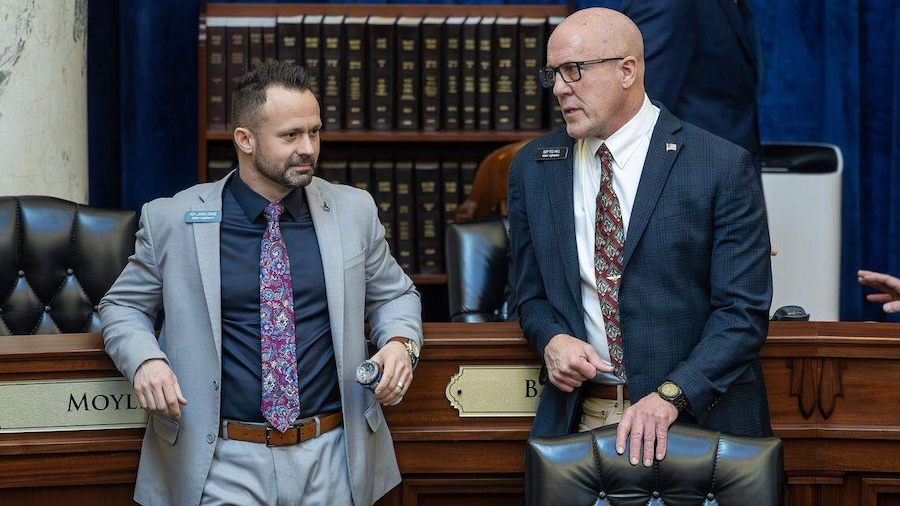
BOISE (Idaho Statesman) — Two Idaho lawmakers proposed bathroom bills Friday aimed at making people use the bathroom that corresponds to their biological sex, despite disagreement over whether that was an issue.
Rep. Cornel Rasor, R-Sagle, proposed a bill that could make it a misdemeanor to “knowingly and willfully” enter such a restroom or changing room in a government building or public place.
Rep. Ted Hill, R-Eagle, presented a bill that could allow people to sue government entities in certain circumstances if someone finds a person of the opposite sex in a bathroom or changing room. It could also make public places liable if they don’t take “reasonable steps” to ensure bathrooms and changing rooms remain single-sex.
RELATED | More states pass laws restricting transgender people’s bathroom use
Hill spoke during a House committee about the “degradation of society” and how this issue had become a problem over the years.
“The concern I have, and the people that have come to me have, is the multitudes of women and girls who are afraid to even speak about this because there’s no avenue to deal with it,” Rasor told the committee. “This provides an avenue to deal with it so they can begin reclaiming their spaces.”
But Rep. Stephanie Mickelsen, an Idaho Falls Republican, disagreed, ultimately joining the House State Affairs committee’s two Democrats in voting against introducing Rasor’s resolution. The committee did not ask each individual member for their vote to introduce Hill’s bill.
“I’ve been a female my whole life,” Mickelsen said. “I’ve never had a man in the women’s bathroom in my entire life, in my existence, across this globe, across this country, across this state. I think sometimes we are legislating for problems that might happen or are one-offs, and I don’t think we should be legislating like that.”
There are around 8,000 transgender and nonbinary people in Idaho, out of a population of over 2 million, according to previous Statesman reporting.
Hill’s bill was drafted by the Idaho Family Policy Center, an influential Christian lobbying group. It’s unclear if Rasor’s bill is; center President Blaine Conzatti declined to comment when asked.
Both bills contain exemptions, for example if there are single-occupancy restrooms or for someone entering a bathroom to provide medical assistance. But some of Friday’s meeting dealt with the nitty-gritty of how the bills would work.
For example, lawmakers wondered what would happen if someone accidentally went into the wrong bathroom (Rasor said that would not be “knowingly and willingly”), how police would determine someone’s biological sex (Rasor said “DNA comes to mind”) and what to do if the bathroom is full and it’s an emergency.
“A guy would knowingly and willingly, if he had a choice between using the women’s bathroom or having a problem in his pants, is going to go in the women’s bathroom,” Mickelsen said.
Rasor’s bill offers an exception for a single-user facility if it’s the only one “reasonably available.”
The two new bills are the latest in a string of legislation that has put Idaho at the forefront of laws targeting LGBTQ+ people. In 2020, Idaho became the first state to ban female athletes from competing in women’s sports. Litigation on that case is ongoing; in January, the U.S. Supreme Court heard arguments in a case challenging the law.
This session, lawmakers are also advancing a measure to undo Idaho cities’ nondiscrimination ordinances. Much of the debate on that bill has revolved around LGBTQ+ Idahoans.
That measure’s sponsor, Rep. Bruce Skaug, R-Nampa, supported Rasor’s new bathroom bills in Friday’s meeting.
“This is a little bit personal to me. We were at SeaWorld many years ago … my 12-year-old girl walked out of the restroom at SeaWorld just pale and white, a little shaken,” Skaug said. “She’d washed her hands in the sink in the restroom, and there was a bearded man in a dress and high heels next to her in the women’s restroom. We’d never seen or heard of anything like that before.”
But Rep. Monica Church, D-Boise, warned that lawmakers are focusing not on a crime but on the act of existing in a space.
“What we’re saying is what we don’t want to happen to our daughter is that she sees a man,” Church said. “That’s the crime. She sees one in a public bathroom … not that she was assaulted or raped or, again, all things that we have penalties for, but the thing that we want to save her from is seeing a man in a place.”