



Idaho braces for hot, dry stretch as fire risk, water woes grow
Published at
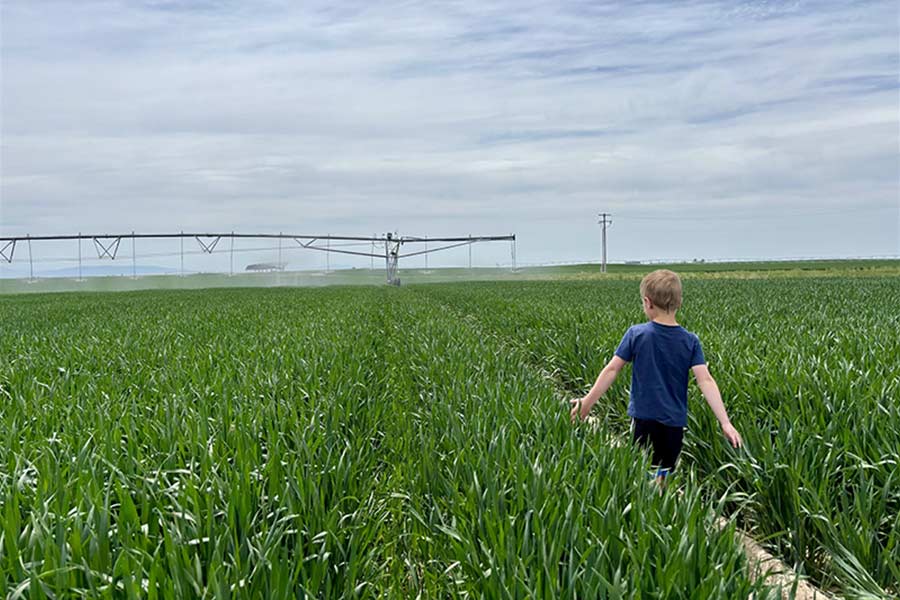
IDAHO FALLS – Based on recent weather trends, the next 90 days are likely to have higher-than-normal temperatures and below-normal precipitation.
That’s the latest data from the National Weather Service’s Climate Prediction Center. Jack Messick, a meteorologist at the agency’s Pocatello office, tells EastIdahoNews.com that the three-month outlook is determined by an evaluation of climate and weather patterns over the last six months.
“It’s a confidence level forecast of whether or not precipitation will be above or below normal and same thing with temperature,” Messick says.
A graphic on the NWS’s Facebook page shows that from April through June, officials are 40-50% confident that most of Idaho will have temperatures above normal. The seasonal precipitation outlook shows a 40-50% confidence level that Idaho will receive below-normal precipitation.
Messick says these predictions have significant implications going into spring and summer.
“If I were a ski operator, I would look at this and say, ‘Our season’s over,'” Messick says.
RELATED | Snow shortage saving local cities big bucks. Here’s how those funds will be used
Beyond that, it also provides some perspective for farmers and wildland firefighters.
“For the farmers around here, that probably means they’re going to need to have a reserve fund to pay for more irrigation water. They’re not going to get as much out of the sky,” says Messick.
For wildland agencies, Messick says it suggests fire season may start early and be more active than a typical year.
Earlier this month, the Idaho Legislature voted to restore a total of $265,200 for the Idaho Department of Lands’ forest and range fire protection program.
Idaho Capital Sun reports the funding, which is split between fiscal year 2026 and 2027, will go toward hiring seasonal firefighters to gear up for the upcoming wildfire season, standing up a new fire protection district in eastern Idaho, and fire prevention.
EastIdahoNews.com reached out to the U.S. Forest Service and the U.S. Bureau of Land Management for additional information, but did not receive a response.

Irrigating crops with a limited water supply
Adam Young, a board member of the Bingham Groundwater District who farms about 2,600 acres outside Blackfoot, says he agrees with Messick’s assessment of the water outlook. Irrigation water is coming on earlier than anticipated, and he says usage will likely be higher throughout the year than they’d like.
While Young says farmers are feeling a little pessimistic going into a dry growing season for the second year in a row, the one bright spot is the 2024 mitigation agreement that provides a safe harbor and protects wells from being shut off.
“If we didn’t have that plan available to us, we would likely be facing a very broad curtailment that would affect up to a million acres along the Snake River Plain,” Young says.
Under Idaho law, surface water users have senior water rights, and groundwater users are required to have a plan for recharging the Eastern Snake Plain Aquifer during times of shortages. During the summer of 2023 and 2024, the Idaho Department of Water Resources determined there was a water shortage and threatened to shut off water for junior groundwater users. In 2024, a curtailment order was in effect for a short time before being rescinded.
Had the 2024 curtailment stayed in effect, it would’ve negatively affected 6,400 people and 500,000 acres of farmland throughout the state, including four counties in eastern Idaho.
Despite the protection against curtailment this year, Young says there’s a limited amount of water available for farmers to use.
“Every time we hit a hot, dry year like this, it just puts more strain on that limited amount of water that we’ve got available,” says Young.
The water shortage means there are no opportunities for recharging the aquifer, which Young says adds another layer of pressure to the situation.
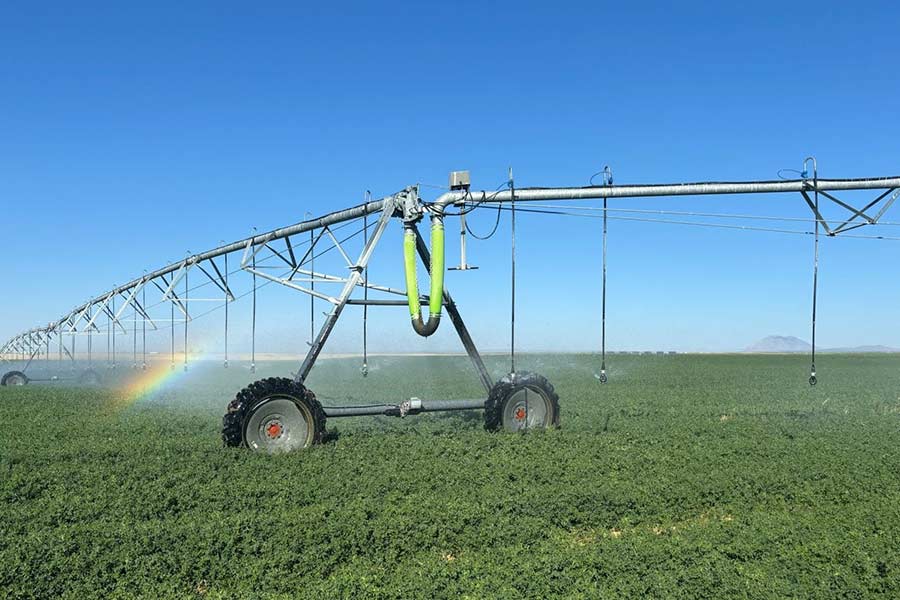
To stay within the allotment and help conserve water, Young says he’s eliminated about 100 acres of land, which was previously irrigated with sprinkler end guns on a center pivot irrigation system.
“End guns are the least efficient part of an irrigation system. They use roughly an eighth to a ninth of the total flow that goes through the pivot, but have little economic return, compared to all the other acres under the pivots,” Young explains. “We voluntarily took off all our end guns and just left that ground dry.”
When it comes to saving water, Young says, although this method is “low-hanging fruit,” he’s still planting fewer crops to stay within his water allotment.
Other farmers are conserving water through soft conversion, meaning they’re utilizing canal shares for irrigation instead of groundwater.
The U.S. Department of Agriculture’s Conservation Reserve Enhance Program is another water-saving method. CREP, according to its website, encourages farmers and landowners to enroll in a long-term conservation contract to remove environmentally sensitive land from agricultural production and implement conservation practices. In exchange, participants receive annual rental payments, cost-share assistance, and other financial incentives.
Young says one of the best ways to conserve water is to dry up the ground, and CREP allows you to do that without going broke. In addition to the 100 acres he’s not irrigating, he’s set aside another 22 acres for this program.
“We looked at it and determined we could make more money on these acres if we irrigated them, but at the same time, we can reduce that management, conserve water, and … stay within that allocation,” he says.
While Young says it’s frustrating that he’s not able to use his full water right — which encompasses more than 2,800 acres — there are other farmers in more uncomfortable situations. The water shortage will have a significant impact on planting decisions, he says.
Overall, Young says there’s a general sense of pessimism among farmers this year, mostly because it’s the second dry year in a row.
“In the long term, I’m optimistic, but I recognize that we’ve got some short-term challenges that two dry years in a row present for us,” says Young.
Young encourages farmers to reach out to their local groundwater district for help and additional resources.
This weather-related story is brought to you by Pony Express Car Wash, Idaho's premier express car wash destination, renowned for its commitment to exceptional service and quality. Voted the No. 1 car wash company in Idaho for three consecutive years, we pride ourselves on delivering an unparalleled experience for every vehicle and customer. Our state-of-the-art facility utilizes name-brand soaps and cutting-edge equipment to ensure your car receives the ultimate clean. Established in eastern Idaho in 2019, Pony Express is proud to be a locally owned and operated company that caters to the unique car washing needs of our Idaho Friends and neighbors. We invite you to experience the difference at Pony Express, where your satisfaction is our ultimate goal.