



Idaho lawmakers advance bill to expedite social worker investigations for at-risk infants
Published at | Updated at
Laura Guido, Idaho Capital Sun

BOISE (Idaho Capital Sun) — A 12-day-old infant boy named Benjamin, “Benji,” died in Nampa in December, despite calls to the Idaho Department of Health and Welfare asking the agency to check on the baby. The families who tried to get officials to respond to their concerns about the parents, who had prior child abuse convictions and terminated parental rights of five other children, have been calling for a change in policy to prevent this from happening again, IdahoNews.com reported.
In response to the death, Nampa Republican Rep. Steve Tanner sponsored House Bill 776, which advanced to the House floor on Tuesday.
The House Health and Welfare Committee voted 12-4 to approve the bill that would require a high prioritization of an assessment for infants below the age of 1 if there’s a child protection report, and if child faces certain risk factors.
“It’s a light, but yet firm touch,” Tanner told the committee. “It does not instruct the department to adopt any new procedure or new course of action. It simply instructs the department to give the situation its highest priority and immediate focus. This bill does not instruct the department to take any specific action regarding the child or child custody. It simply says, ‘Get your eyes on the situation as quickly as possible.’”
The bill faced some opposition from those who believed it restricted parental rights.
“I want to take a minute and represent the parents of Idaho,” Pocatello Republican Rep. Tanya Burgoyne said. “There are rights that are at stake here for parents. This is a loss to parental rights. This is government overreach.”
Burgoyne joined Republican Reps. Lucas Cayler of Caldwell, David Leavitt of Twin Falls, and Faye Thompson of McCall in voting against the bill.
The public hearing lasted about an hour and featured nearly a dozen people providing emotional testimony in support of the bill. No one testified against it.
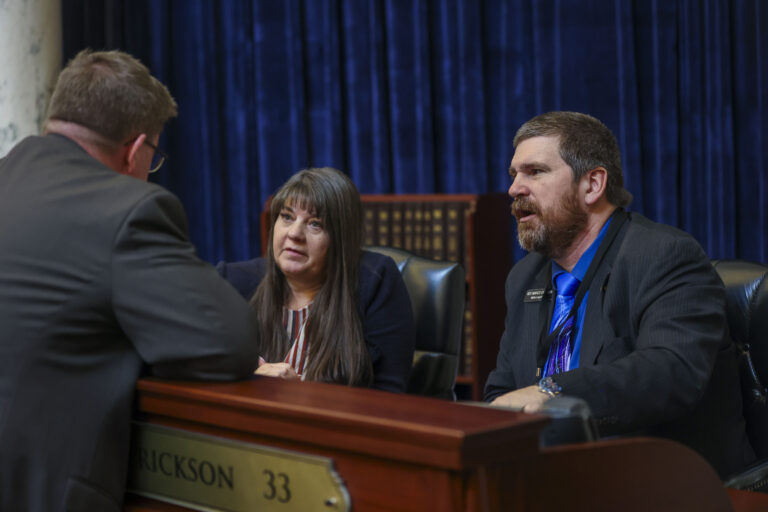
What would the bill do?
Under the bill, if the Idaho Department of Health and Welfare received a report of potential child abuse or neglect of an infant with certain risk factors, the department would be required to verify reported risk factors within 12 hours of receiving the report. If the risks are verified, the health agency would need to respond with a safety assessment as a top priority.
The risk factors to require more timely action would be when the parent, guardian or legal custodian:
- Appears in the agency’s child protection central registry for substantiated abuse, neglect or abandonment within 10 years.
- Had parental rights terminated.
- Had their child born with neonatal abstinence syndrome, in which an infant experiences drug withdrawals at birth after exposure to substances in the womb.
Testimony argued Benji’s wasn’t an isolated incident
Everyone who testified at Tuesday’s hearing spoke to the tragedy of Benjamin’s death, but many argued that there are other infants who could be helped by the changes in HB 776.
Monique Peyre said she adopted Benji’s older siblings, and she knew the conditions those children were exposed to before Peyre adopted them.
“My children have overcome severe trauma through significant amounts of therapy, but the idea of another child living through this broke me every minute he was alive,” Peyre said. “To be told repeatedly that history doesn’t matter, and this is a new case. To help locate the family and be disregarded, and then to find out the infant died the next day with no welfare check being done, is an experience I would never wish upon anybody.”
“We can’t go back in time,” she said later in her testimony. “But we can take steps to protect the next infant born into a similar situation. This was systemic failure on multiple levels, and it needs to be addressed.”
Nampa hospital social worker Gabrielle Messick said she’s seen many child protective cases. She said providers and social workers in the hospital at times encounter situations where babies are born into high-risk situations, but all they can do is report to Child Protective Services.
“I will immediately call CPS as soon as we have confirmed that there is reason to,” Messick said. “But we don’t often get a response. Sometimes even days will go by to the point that that baby will discharge home with those parents with very real concerns.”
Janelle Anderson said she was seized from her home as a baby when a social worker found that she had been strangled, squeezed through the middle, and was wearing an old, soiled diaper.
“People say that have heard my story, ‘Oh, Janelle, you’re so lucky,’” Anderson said. “Babies shouldn’t have to rely on luck.”
Lawmakers debate bill’s impact on parental rights
The committee members who supported the bill said it would speed up the timeline of the child protective process that already exists, not create any new power for the health agency.
Those who opposed it said they were worried it infringed on the rights of those parents.
Cayler, a Caldwell Republican, said the bill seemed to presume guilt. He likened it to the movie “Minority Report,” in which agents try to stop crimes before they begin.
Committee Chairman and Nampa Republican Rep. John Vander Woude said the bill was “easy” to support.
“It’s to protect the most vulnerable, the little kids that are out there,” Vander Woude said. “It’s sad that this happened, and I remember when it happened, I thought, ‘Well, what can we do?’”
The bill will go to the House floor for further consideration. If passed, the bill will go to the Senate.