



Idaho Gov. Brad Little vetoes bill that cut graduate medical education funding
Published at | Updated at
Clark Corbin, Idaho Capital Sun
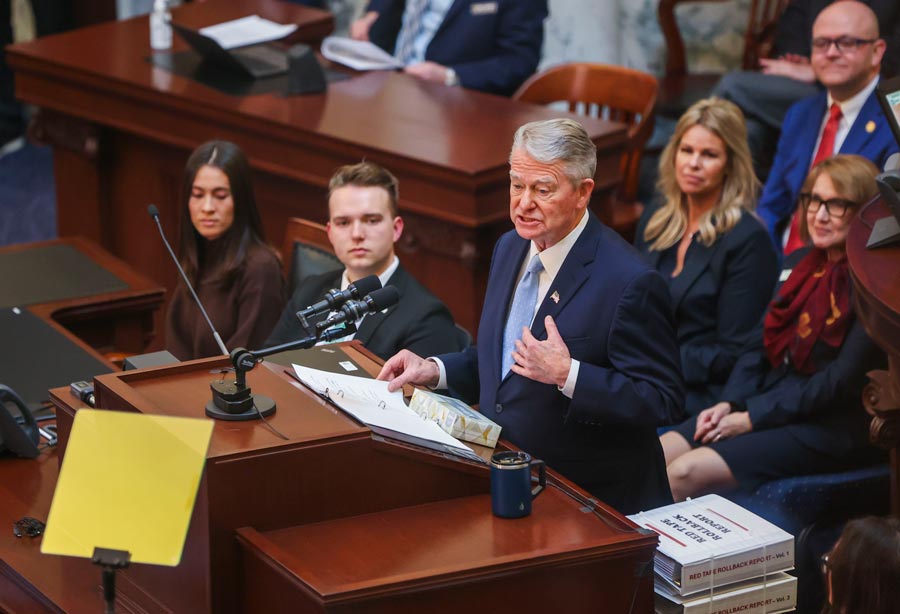
BOISE (Idaho Capital Sun) — Idaho Gov. Brad Little issued a line-item veto Friday that prevents the Idaho Legislature from cutting funding for graduate medical education programs that help train health care workers.
The veto was the sixth that Little has issued this week – the most issued in any year by Little, who is in his eighth year as Idaho’s governor.
Because the Idaho Legislature adjourned the legislative session for the year on April 2, state legislators are powerless to override Little’s vetoes. If state legislators had opted to take a recess rather than adjourn for the year, they could have returned to Boise to attempt to override the vetoes. Legislators do have the power to call themselves back into session to create a new, special legislative session.
Little’s latest line-item veto of House Bill 978 prevents the Legislature from reducing funding from the Idaho Department of Health and Welfare’s health care policy initiatives program, which state officials said provides funding for graduate medical education and advanced directives.
In a letter announcing the veto, Little highlighted the importance of the graduate medical education program. The Idaho Capital Sun has reported that Idaho has the fewest medical professionals in the country on a per capita basis, and the state would need to add an additional 1,400 medical professionals today just to catch up to the national average.
Investing in undergraduate medical education, graduate medical education and medical residencies are some of the tools state officials have used to attempt to train, recruit and retain medical professionals in Idaho.
Although the 2026 legislative session was marked by budget cuts for almost all state agencies and departments, Little wrote that Idaho cannot afford to cut graduate medical education programs or risk losing any more medical professionals.
“Idaho is facing one of the most severe physician shortages in the nation for a variety of reasons,” Little wrote in his veto letter. “Our graduate medical education (GME) program has proven to be one of the most effective tools in addressing this challenge, and I have consistently recommended — and the Legislature has supported — investing additional resources to strengthen and expand our physician pipeline.”
“However, the reduction in this appropriation would force the Department of Health and Welfare to make drastic program cuts with virtually no warning,” Little added. “Funding to support eight current medical residents would be stripped in the middle of their committed three-year medical residency. This disruption in funding is extremely problematic. It is not only unjust to the physicians in training and the residency programs we have spent years developing, but it also undermines Idaho’s credibility, signaling that the state may not honor its commitments.”
Some Republican legislators surprised and angered by Little’s vetoes
Starting Thursday, some key Republican Idaho legislators expressed surprise and frustration with Little’s vetoes, the Sun reported.
House Speaker Mike Moyle, R-Star, said he felt comfortable adjourning the legislative session this year because he felt like he had a “gentleman’s agreement” with the governor’s office that there would not be any surprises coming forward. Moyle told the Sun Thursday he felt like Little broke that agreement with this week’s vetoes.
As a result, Moyle said that as long as he remains speaker of the Idaho House of Representatives, the Legislature will no longer adjourn for the year without waiting for Little to act on the final bills passed late in the legislative session.
“I will tell you what the impact is – as long as I’m speaker at the end of next session, we’re not going home at the end of session, we’re sticking around the five days (to make sure there are not any late-session vetoes from the governor),” Moyle said Thursday.
Why did the Idaho Legislature try to cut graduate medical education funding?
The Idaho Legislature’s Joint Finance-Appropriations Committee, or JFAC, made the cut to graduate medical education programs on March 31, one of the final days of the 2026 legislative session. Legislators from both political parties expressed concern about cutting graduate medical education funding, but legislators appeared to receive inaccurate information about the cuts moments before they voted, the Sun previously reported.
Just before voting March 31, JFAC co-chair Rep. Josh Tanner, R-Eagle, told legislators the cuts would not affect graduate medical education, the Sun previously reported.
“It does not,” Tanner said two separate times during the March 31 meeting.
“If there is money going out of this to that program, then we have more of a concern with our department because there has never been an authorization from this body that has actually given them authority to actually spend that money in those areas,” Tanner added seconds before JFAC members voted on the budget.
However, Tanner’s statements may not have been accurate.
State records also show that in 2017 the Legislature did add a line item to the budget in Senate Bill 1193 to provide funding for graduate medical education.
Immediately after the March 31 meeting, Idaho Department of Health and Welfare Director Juliet Charron told the Sun those cuts would, in fact, force the department to cut graduate medical education programs.
In this week’s latest veto letter, Little also said the Idaho Legislature’s cut would have reduced funding for graduate medical education, which he said would jeopardize the pipeline of physicians coming into Idaho.
“Our GME program boasts one of the highest retention rates in the country, and its affordability makes it one of the most cost-effective investments in Idaho’s future,” Little wrote. “We must stay committed to expanding and strengthening initiatives like this, rather than undermining them by cutting funding. Doing so not only jeopardizes the pipeline of physicians we rely on to care for our communities but also sends a troubling message about Idaho’s reliability and commitment to its future healthcare workforce.”
What are all the bills that Idaho Gov. Brad Little vetoed this week?
In addition to the latest line-item veto, Little issued five other vetoes this week. Those vetoes include:
- House Bill 674, which related to the discontinuation of telephone service and the Idaho Public Utilities Commission.
- House Bill 758, which related to day care supervision requirements and would have made an exception for children that could be counted in attendance at a day care.
- House Bill 975, which would have allowed the Idaho Legislature to ignore the 15% cap in state law on the balance of the Budget Stabilization Fund and prevent excess funding from being transferred out of that savings account into the state general fund. Little’s veto ensures that any additional money above the cap will be transferred to the state general fund, rather than sitting in a state reserve fund.
- House Bill 968, which was intended to transfer cash and interest payments around to prop up the general fund portion of the state budget, guard against a potential budget deficit and ensure that the state ends the next fiscal year with a budget surplus of $150 million. Little issued two line-item vetoes, which prevented the Idaho Legislature from moving around state funding that is intended to pay for an additional 27th payroll period in 2028 and prevented the Idaho Legislature from transferring money from the permanent building fund into the legislative account. Aside from the elements of the bill he line-item vetoed, Little signed the rest of House Bill 968 into law.
- Senate Bill 1359, which related to virtual currency kiosks. The bill, according to its statement of purpose, “requires kiosk operators to register with the state, provide clear fee and exchange rate disclosures, post fraud warnings, maintain transaction records, and implement reasonable transaction limits and basic fraud-prevention safeguards.” The governor said in a press release that the bill “contains critical drafting deficiencies that would undermine its own purpose.”