



Idaho governor signs bill for Medicaid expansion work requirements by 2027
Published at
Kyle Pfannenstiel, Idaho Capital Sun
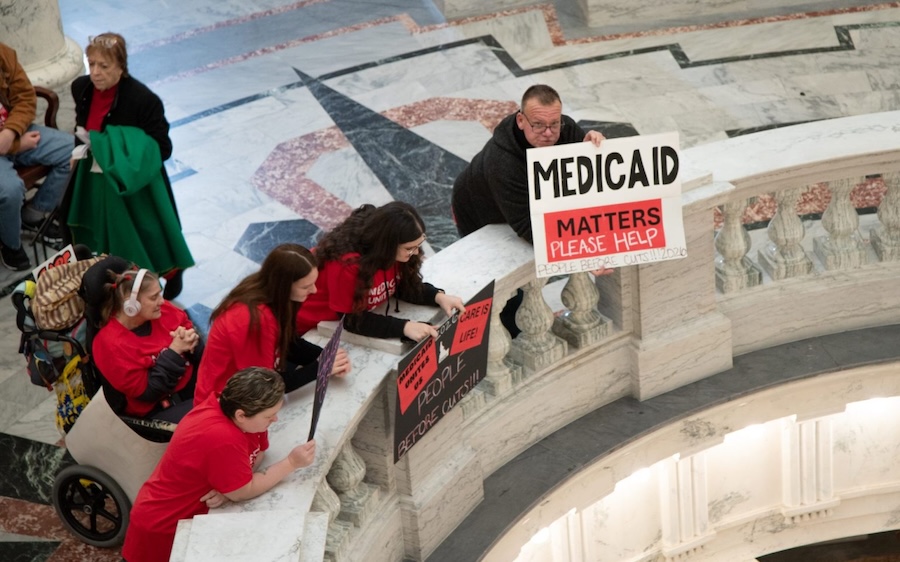
BOISE (Idaho Capital Sun) — By the end of the year, roughly 80,000 low-income Idahoans on Medicaid expansion will need to start proving that they are working to stay on the program.
Idaho Gov. Brad Little on Friday signed into law House Bill 913. The bill — which takes effect immediately — directs the state to implement Medicaid work requirements from President Donald Trump’s One Big Beautiful Bill Act by 2027.
The policy could remove up to 44% of Idahoans — or 34,000 people — from Medicaid expansion, researchers say.
The federal law’s work requirements will require people on Medicaid expansion to work or do community service at least 80 hours per month, unless they meet an exemption, such as being medically frail or if they’re enrolled in school.
Idaho’s bill requires people to prove work history for three months before they apply to Medicaid, which is the longest “lookback” period allowed under the federal law. Medicaid enrollees must prove their employment twice a year to maintain coverage, because the federal law requires enrollment renewals every six months.
That period is long enough to ensure people don’t just get a job weeks before they apply to Medicaid, said Sen. Julie VanOrden, a Republican from Pingree.
But Boise Democratic Sen. Melissa Wintrow called the bill a “backdoor” attempt to repeal Medicaid expansion.
Why some advocates see work requirements as costly red tape to access Medicaid expansion
Republican lawmakers who pushed for the bill say they want to make sure that people who are receiving Medicaid, and can work, are actually working. But advocates say work requirements could kick working Idahoans off the program because many would fail to submit the right paperwork.
Medicaid work requirements and other changes in the “Big Beautiful Bill” could kick 20,000 to 34,000 Idahoans off Medicaid expansion by 2028, according to a recent analysis by the Urban Institute and the Robert Wood Johnson Foundation. That’s lower than what some other researchers estimate.
About 48% of able-bodied adults on Idaho Medicaid are working, according to a December report by the Idaho Department of Health and Welfare.
In 2018, nearly 61% of Idaho voters approved Medicaid expansion through a ballot initiative meant to close a health care assistance gap that affected a population commonly called the working poor.
Medicaid work requirements are often expensive, other states’ experiences and a federal watchdog report suggest.
In the Legislature, the bill had support from all 87 Republican lawmakers who were present, with one exception. Grayson Stone, a long-term substitute for Rep. Don Hall, R-Twin Falls, was the only Republican to vote against the bill. The 14 Democrats present for votes opposed the bill.
These work requirements might not need federal approval
In the past, the Legislature had made similar calls for Medicaid work requirements. But those rules need approval from the federal government, which is often a lengthy process that Idaho hasn’t succeeded with.
Nampa Republican Rep. John Vander Woude, who sponsored the bill, hopes the state wouldn’t need federal approval for this iteration of work requirements.
In 2019, Idaho failed to receive federal approval — then by the first Trump administration — for Medicaid work requirements. In 2025, the Idaho Legislature and the governor approved another bill that called for Idaho to seek federal approval for Medicaid work requirements.
Vander Woude called for a staggered implementation of the work rules. The Department of Health and Welfare could do an early review later this year, before the work requirements officially take effect in January. Vander Woude says that would give people time to fix their work status to remain on the program.
The bill calls for Idaho to adopt Medicaid work requirements included in the One Big Beautiful Bill Act by Dec. 31, 2026. The federal law requires the work requirements to take effect by 2027.
Several exemptions would apply, such as for people who are:
- medically frail;
- enrolled in school at least half time;
- caretakers or parents of dependent children younger than 13 years old or people with disabilities;
- pregnant or receiving postpartum coverage;
- veterans with disabilities;
- and those under age 26 who are or were in foster care.
The Idaho Department of Health and Welfare will remove “any person … who is unable to demonstrate compliance” from Medicaid.
Idaho Capital Sun is part of States Newsroom, a nonprofit news network supported by grants and a coalition of donors as a 501c(3) public charity. Idaho Capital Sun maintains editorial independence. Contact Editor Christina Lords for questions: info@idahocapitalsun.com.