




Ben Fuhriman and Julianne Young vying for Idaho House seat 30B
Published at
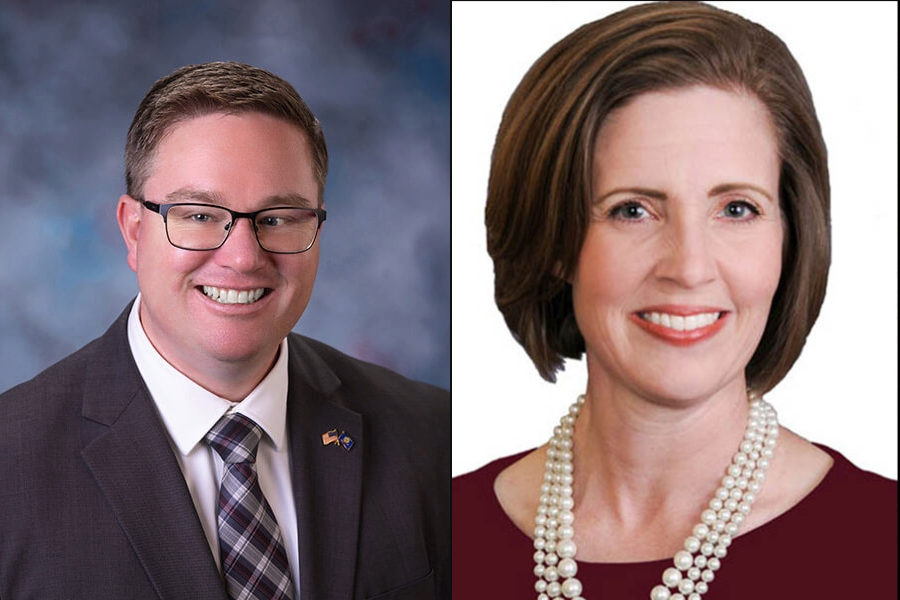
BINGHAM AND BUTTE COUNTIES —- A current and former legislator are seeking the public’s vote to represent them in Idaho Legislative District 30B in the May Primary.
Incumbent Ben Fuhriman is seeking to get reelected by constituents, who voted him into office in 2024, while challenger Julianne Young looks to reclaim her lost seat after losing it in 2024 by four votes after a recount.
EastIdahoNews.com sent the same eight questions to Fuhriman and Young. Their responses, listed below, were required to be 250 words or less, and were only edited for minor punctuation, grammar and length.
Election Day is May 19.
Tell us about yourself — include information about your family, career, education, volunteer work, and any prior experience in public office.
Fuhriman: I am a father of four and have been married to Holli Christensen from Firth for nineteen years. I was born and raised in East Idaho, served a mission for my church, and lived in Shelley since 2014. An Eagle Scout and board member for the Grand Teton Council, I have spent my life focused on service and leadership. Professionally, I’m a Certified Financial Planner, an Accredited Financial Counselor, and the owner of a financial planning firm. I graduated valedictorian from Hillcrest High School, earned a bachelor’s degree from BYU–I, and later received a master’s degree in Family Financial Planning from Montana State. I also stay involved in the community through my church, JustServe, and local schools, focusing on giving back.
During my first two sessions of the Idaho legislature, I sponsored and passed some very important legislation for Bingham and Butte Counties. Including turning the red lights off the windmills, helping properly fund special needs in our schools, and passing imperative water legislation focused on more water storage and management. I serve on important committees to District 30 including Health and Welfare, Commerce, and Environment, Energy and Technology—overseeing legislation related to nuclear and the INL. I have fought for smart budgeting practices, protecting Idaho public lands, and fully supporting our law enforcement and emergency services providers.
In addition to being a Legislator, for the last 4 years I have also served as a precinct committeeman and on the executive committee of the Bingham County Republican Central Committee.
Young: I have a bachelor’s degree in education and served 6 years in the Idaho House of Representatives. My husband and I have 8 sons and 2 daughters. This year we welcomed our third grandchild. We run a small hobby farm with milking sheep, Dexter cattle, and other fun critters.
I teach piano lessons and love music. I love teaching and volunteering with church and community service groups. I have directed a children’s choir and volunteered as a cub scout leader. I am a master gardener and have a geothermal greenhouse. I love the outdoors and last year I hiked Mt. Borah. I write a regular editorial column and really love law. I have considered going back to school to get a law degree.
Why are you seeking political office within your community? Briefly explain your political platform.
Fuhriman: I believe in solving real problems for my community. Working directly with families and their finances has given me a unique understanding of the affordability challenges people are facing. I want to use that experience to strengthen our community and make sure the Idaho I grew up in is still the Idaho my children and future generations can afford and enjoy.
I have been incredibly blessed to raise my four children here, and I believe our communities should continue to be places where families can thrive. That means protecting individual rights and freedoms, treating people with dignity and respect, and making sure government stays out of the way.
I want to ensure our teachers, schools, and students have the resources they need to succeed. I also strongly support career technical education so students can gain valuable skills, local businesses can find qualified workers, and more young people can stay in Idaho to build their future. My commitment to supporting agriculture, ranching, and responsible water policy has never wavered. I believe the people who work the land every day know best how to manage these resources, and I will continue listening to our farmers and ranchers.
I strongly support law enforcement and believe we must include them in the policymaking process so laws are practical and enforceable. Strong communities are built on safe neighborhoods, strong families, and trust between citizens and those who serve them.
Young: I have a deep appreciation for our fundamental rights and love serving others. During my six years in office I became well known for bringing civility, professionalism, and genuine care to every issue. My platform centers on the things that matter most to everyday Idahoans: protecting our families and children, securing the property rights and water rights that sustain our communities, providing meaningful property tax relief for homeowners, expanding access to mental health services in rural areas, supporting parents in making the best educational choices for their children, and being a good steward of public resources.
What are the greatest challenges facing people in your district? What is your plan to meet and overcome those challenges?
Fuhriman: The message is clear from voters: it is difficult to make ends meet. That is why I focus on getting government out of the way, so families, workers, and businesses have more room to succeed. When we reduce unnecessary regulations and support smart tax policy, we create better opportunities, stronger local businesses, and higher-paying jobs.
Property taxes are one of the biggest challenges families are facing. Those taxes help fund important services like schools, roads, and public safety, but rapid growth has made the burden increasingly difficult for homeowners. That is why I believe the state needs to do a better job investing in infrastructure and funding our schools, especially special education, so local taxpayers are not forced to carry so much of the burden through levies and bonds.
I believe that the best government is the government closest to the people, and that is why I will continue to support local control. We don’t need a top-down approach from Boise. We need good, strong representatives from East Idaho who know and understand our way of life here and will fight to protect it.
Water is one of the most important issues for our future. We have to continue to work towards more water storage and support partnerships between water users. We must find a balance between respecting private property rights and access to our public lands which I fully support. From Harriman State Park to Bear Lake, we are truly blessed, and I will always fight to protect this choice land.
Young: Concerns about water shortages, financial pressures, safety and security, and meeting the educational and health needs of the next generation are top of mind for many. As a mom who has always been closely connected to the agricultural community, I understand these concerns.
As a legislator, I successfully secured greater access for all Idahoans to mental health care via telehealth, passed legislation to address the real-time concerns of counselors and OB-GYNs, revamped statute directing construction management selection for public projects to make the process more transparent and fair for local contractors, addressed the needs of local school districts struggling to hire school security officers, and worked to build understanding and support state-wide for the water challenges we face in east Idaho.
Protecting families is also a top priority, including protecting kids against sexual exploitation or abuse, protecting parental rights and school choice, and protecting privacy and safety for women. Each issue was a response to real human concerns. As a representative, I will continue to fight for the things that are important to the families in District 30.
How will you best represent the views of your constituents — even those with differing political views? How do partisan politics play into your role as an elected leader?
Fuhriman: I have worked hard to fulfill a promise I made to always be accessible. That is why my cell phone is listed publicly and why I make it a priority to return phone calls, answer emails, and have real conversations with the people I represent. I genuinely value hearing from my constituents, even when we do not agree. Sometimes there is no easy answer, but listening, being respectful, and having sincere conversations matters.
I am a Republican because I align with conservative values, but my first responsibility is to the people of Bingham and Butte Counties. I will always put the needs of my district ahead of party politics. I vote more than 90% of the time with my fellow Republican colleagues. Every issue deserves thoughtful consideration based on what is best for our communities, and having courage to vote against the majority is what good leaders do. I believe good leaders listen to both sides, understand different perspectives, and make decisions based on facts, principles, and the needs of the people they represent. My goal is not to follow political scorecards or outside agendas. My goal is to represent my in an authentic, honest, and common sense way.
Young: My legislative record aligns with the principles I campaign on. Working well with people of all different perspectives is one of my strengths. I have worked hard to serve constituents of all different political persuasions. I am confident in my own personal values, and I look for ways to create win-win situations based on shared values wherever they are found.
For example, I enjoyed working closely with a Democrat colleague to secure access to birth records for all Idaho adoptees. I sincerely appreciated the perspective and strengths he brought to that issue. Regarding our work together he said, “In politics, and especially across the aisle, you often get broken promises, but Julianne Young is a woman of her word.” I sincerely appreciate his compliment and look forward to continuing to work closely with others of all different viewpoints in pursuit of the goal that would make Idaho a better place for all.
What parts of the legislative budget could use more funding? Where are places in the budget where cuts could be made?
Fuhriman: When we ignore maintenance, small problems become bigger and more expensive problems. Idaho has done a good job catching up on some deferred maintenance, but we still need to invest in the infrastructure that supports our growing communities. Roads, bridges, school facilities, and water infrastructure should remain priorities because they are essential to our economy and quality of life. We should not build or expand beyond what we can realistically afford to maintain over the long term.
Last session was especially difficult because of the budget cuts that had to be made, but it also created an opportunity to look more closely at how state government operates. We were able to consolidate some functions, and I believe we can continue finding efficiencies by reducing duplication, using technology more effectively, and making sure programs are focused on their core purpose.
Personnel costs are one of the largest parts of the state budget, so we should continue reviewing staffing levels, benefits, and agency operations to make sure taxpayer dollars are being used wisely while still allowing agencies to provide the services Idahoans depend on.
Young: In Idaho, every dollar comes from the pocket of a hard-working Idahoan. I take seriously my responsibility to be a steward of these public resources. What government is responsible to do it should do well. Funding should adequately meet the needs government agencies are created to address. Bureaucratic waste should be first on the chopping block. Second, we should look for opportunities to improve processes and outcomes big picture. Third, we should ensure that the programs and policies we fund are appropriate government functions and that, wherever possible, we look to the private sector to do the jobs it does best.
Do you believe ethics investigations in the Idaho Legislature should be kept secret from the public, or do you believe they should be open and transparent? Why or why not?
Fuhriman: Elected public officials should be held to a higher standard. They, of all people, know better. I do not believe that ethics investigations should be kept secret from the public. And when fellow legislators are brought up on ethics charges, and the recommendation from the Ethics Committee is to censure them, it is an insult to the voters and the constituents to defend their misconduct simply because we like them or they are our friend. There really should be no tolerance for ethics violations in government. The last thing we need is for our elected legislators to turn Boise into the Washington, D.C., swamp.
Young: Ethics investigations are serious matters, not just because they impact someone’s reputation, but because they touch our representative process. Because of the risk of ethics investigations being weaponized by someone’s political opponent, some aspects of the ethics process should be internal to the caucus. However, evidence and decisions must be public. If a constituency is to be stripped of their elected representative, or if their representative’s service is to be interrupted, those constituents deserves to understand why.
Water availability and management are critical for eastern Idaho agriculture and growth. What specific strategy or legislation would you support to protect groundwater and surface water resources, and what is your timeline for measurable improvements?
Fuhriman: Water is one of the most important issues facing Idaho, and I believe the best solutions come from water users. Water users should also be able to rely on the agreements they make in good faith. In places like Butte County, water users have done everything they were asked to do to join mitigation plans and help manage the Eastern Snake Plain Aquifer, only to face uncertainty and curtailment after crops have already been planted and contracts have been signed. That should not happen. If the state is going to take away a farmer’s livelihood after they have acted in good faith, there should be accountability and compensation. I will continue working on legislation to protect farmers, honor mitigation agreements, and ensure rural communities are properly represented in the courts when water disputes arise.
At the same time, we have to think long-term. During my first session, I cosponsored a memorial urging the federal government to remove barriers to new reservoir storage, and I later helped lead efforts to deliver thousands of signatures to our congressional delegation in support of that goal. Shortly after that trip, a major barrier was removed by the Feds—it worked. This session, I sponsored follow-up legislation to create a long-term plan for a statewide goal of 750,000 acre-feet of additional water storage by 2100. We need to prepare in the years of plenty for the years of drought so future generations have the water they need.
Young: Water is one of our most critical issues as we head into this summer with shortages that are almost unprecedented. In addition to taking action to maximize storage capacity and prevent loss of water down river and out-of-state, Idaho needs a thorough geologic study of the entire ESPA. Without better geologic information, not only are court rulings unjust, but efforts to improve the aquifer are likely to be less effective.
There are administrative issues with our hearing process that still ought to be addressed and questions about how current inequitable policies undermine the value of existing water rights. Yes, these issues will require financial resources to address. But beyond this, they require the Idaho legislature, as a whole, to better understand water concerns and work together to address them. This requires building strong relationships with others.
During 2022 and 2023, I spearheaded east Idaho’s formal responses to state leadership and worked to help legislative colleagues understand our specific concerns. In 2024, I succeeded in printing a water resolution, with sponsors from all different parts of the state, outlining principles of common agreement which lay a foundation for water management that benefits the state as whole.
In March 2026, the Idaho House passed House Joint Memorial 17, requesting the U.S. Supreme Court to overturn the 2015 Obergefell v. Hodges ruling that legalized same-sex marriage nationwide. Do you agree with the majority opinion of the Idaho House? Do you oppose same-sex marriage in Idaho?
Fuhriman: I prefer the approach taken in the Respect for Marriage Act because it was enacted through Congress rather than created solely through a Supreme Court decision. That law requires every state to recognize marriages legally performed in another state, which means that even if Obergefell were overturned, Idaho would still be required to recognize same-sex marriages performed elsewhere.
Because of that, overturning Obergefell would not change much in practice. Idaho could potentially stop issuing same-sex marriage licenses itself, but it would still have to recognize same-sex marriages from places like Nevada, Washington, or any other state. Existing marriages would also remain valid under the current federal law.
As a member of The Church of Jesus Christ of Latter-day Saints, religious liberty is very important to me. One reason I support the Respect for Marriage Act is that it includes strong protections for churches, religious schools, and faith-based organizations so they cannot be forced to perform or celebrate marriages that conflict with their beliefs. Those religious liberty protections are one reason why my religious leaders publicly supported the law.
I believe this issue has largely been settled, both through Supreme Court precedent and now through federal law. While people will continue to have different personal views, I do not think revisiting this issue should be a priority when Idaho faces other pressing challenges like affordability, water, education, and public safety.
Young: The Obergefell ruling was an act of sheer judicial activism that departed from and contradicted over 200 years of existing jurisprudence. In addition, it violated basic principles of American government, allowing a small group of unelected justices to overturn, with a single act, well over half of state constitutions and formal decisions of the people all across the United States, creating out of thin air rights which had not been declared or protected in any previous foundational document. I am fully supportive of asking the court to reconsider this ruling.