



Idaho Falls exhibit puts farm life front and center through western art
Published at
IDAHO FALLS – A new art exhibit catering to people in the agricultural community opens this week.
“Sacred Spaces: Visions of the West from the Prosaic to the Sublime” officially opens at the Art Museum of Eastern Idaho on Friday, but there will be an ArtWalk Preview and opening reception for the public on Thursday night.
Amy Thompson, the museum’s development director, tells EastIdahoNews.com the exhibit will showcase the work of six different artists. Among them are Bryan Mark Taylor and Allie Zeyer, both of whom are from Utah. Taylor has ties to eastern Idaho.
David Dibble is one of the most renowned artists whose work will be featured. He lives in Orem, Utah, according to his website, and grew up on a farm in Davis County, Utah.
Thompson says all the artists have a connection to the agricultural lifestyle, and all the pieces depict something related to farm life.
The Museum of Idaho will also be displaying some historic photos of local farms in conjunction with the art exhibit. Art museum Executive Director Alexa Stanger will feature some photos of her family farm.
EastIdahoNews.com got a sneak peek on Monday afternoon. Some of the art depicts old barns, a local field or landscape, cows or other animals, and one painting shows a well used tractor.
“We have a few that are these really interesting interior scenes, and it’s not something you would necessarily think of as a classic subject for a painting,” Thompson says.
Thompson points out one image in particular — what she describes as a “chaotic, jumbled pile of barn mess.”
“I really love those paintings because it really shows … a slice of life,” says Thompson. “Nothing has been organized to look pretty or set up for a photo shoot. It’s a hardworking space. You’ve got the light coming in and the way that they’ve framed it … is really beautiful, and it’s not traditionally thought of that way.”
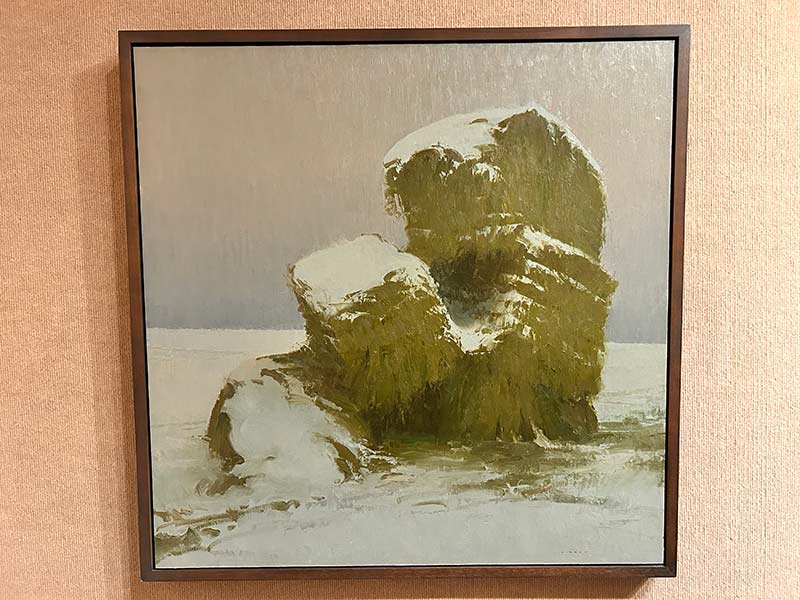
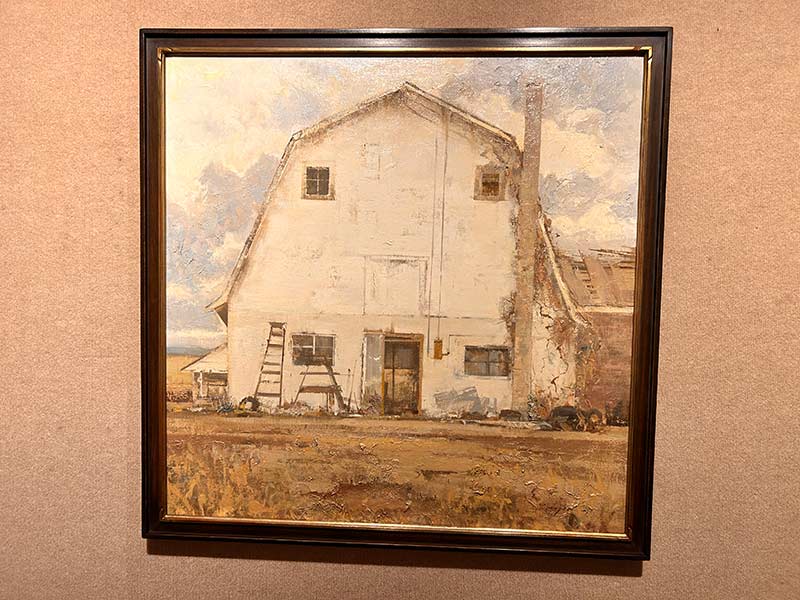
Other pieces depict an old white barn, a pumpkin patch and hay bales. The display will include an audio tour with commentary from the artists. See some of the paintings, and listen to the artist’s talk about them in the video above.
The museum’s mission, according to its website, is to serve “as a catalyst for creative engagement between the arts and individuals of all ages and abilities in the regional communities that we serve.”
Thompson says the museum hosts a program that allows foster families or teens in low-income households to tour the museum for free. A separate program gives teens a chance to be involved behind the scenes, planning events and hanging exhibits.
The inspiration for “Sacred Spaces” stemmed from a conversation Thompson had with a teenage girl after a museum tour last year.
“I was asking her, ‘How has your view of the museum changed?’ or ‘What have you learned?’ She said, ‘When I first thought about doing this, I wasn’t even sure I should apply. I thought the museum was a fancy place that wasn’t for me. Now, I just feel like I belong here,'” Thompson recalls.
Thompson started working at the museum last year. As she was thinking of those who may not feel a connection to the museum, Stanger told her about a cowboy art exhibit the museum had recently hosted. Thompson says it was a major success because the cowboy crowd came to see it, and continued to rent space inside for their annual meetings.
RELATED | Cindy Siddoway on family ranching, Hall of Fame honors and the future of Idaho agriculture
That idea of making a connection and feeling like you belong is exactly what Thompson says she wants everyone who sees the new exhibit, to feel.
Amid a drought declaration throughout Idaho and other economic challenges, Thompson says it’s never been more important to show farmers we support them. She feels it’s a timely exhibit and encourages everyone — especially farmers and ranchers — to attend.
RELATED | Increasing demand for water strains Upper Snake River system
“This is such an agricultural part of the country,” Thompson says. “It’s so obvious when you’re driving around how much we rely on farmers and farmland because you see it all over. I hope (the ag crowd) will come and feel seen.”
Artists whose work is featured in the exhibit will be at the museum on Saturday. They’ll be doing live demonstrations and a Q&A from 10 a.m. to 1 p.m. “Sacred Spaces” will run through July 3.