



How does Idaho’s trans bathroom ban affect businesses? Attorneys break it down
Published at
Kyle Pfannenstiel, Idaho Capital Sun
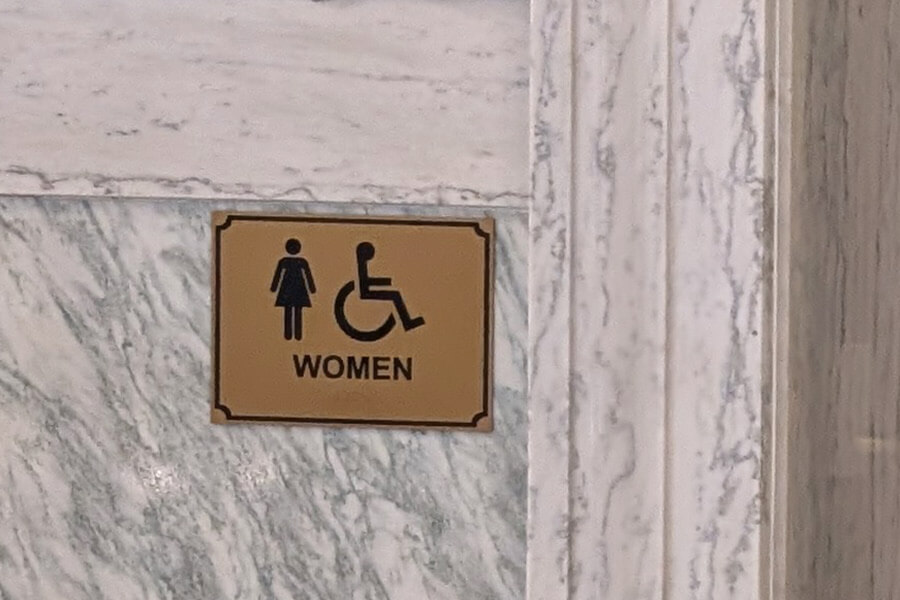
BOISE (Idaho Capital Sun) — In about a month, Idaho’s new law banning transgender people from using bathrooms that align with their gender identity will take effect.
Advocates are calling it the most extreme bathroom ban in the country, because it applies in private businesses and could result in up to five years in prison for repeat offenses.
As businesses prepare for the new law to take effect July 1, attorneys with the law firm Idaho Employment Lawyers discussed how to plan for the bathroom ban at a panel event Tuesday in Boise.
Here are a few questions they answered.
Is your business affected?
The law, created this year through House Bill 752, allows criminal charges for people for people who “knowingly and willfully” enter a bathroom or changing room designated for the opposite sex, with some exceptions. The bill would apply in government-owned buildings and places of public accommodations, like private businesses.
This law would apply for most businesses, said Pam Howland, the founder and owner of Idaho Employment Lawyers. The bill uses a definition for “public accommodation,” which already exists in Idaho law.
That existing law defines “a place of public accommodation” as including: “a business, accommodation, refreshment, entertainment, recreation, or transportation facility of any kind, whether licensed or not, whose goods, services, facilities, privileges, advantages or accommodations are extended, offered, sold, or otherwise made available to the public.”
That definition would even capture the law firm Howland founded — because “we do offer services for sale,” she said.
“Even if you don’t have an open retail facility, a restaurant-type facility — even if you don’t think of yourself as a place where you might have the public coming in — you could still be pulled in by this,” Howland said. “… So, from where we’re standing, it’s very broad and most businesses would likely be pulled into this.’”
What are the exceptions?
A first offense carries a misdemeanor, punishable by up to one year in prison. A second offense within five years is a felony, punishable by up to five years in prison.
The bill spells out several exceptions to the ban, including:
- For custodial services or maintenance, providing “medical assistance” or “law enforcement assistance,” and to “render aid during a natural disaster.”
- For parents who needs to help their kids, through the following exception: “To a minor child who is in need of assistance and, for the purpose of receiving that assistance, is accompanied by a family member, a legal guardian, or the individual’s designee who is a member of the designated sex for the single-sex restroom or changing facility.”
- And an exception commonly called the “dire need” exception, which would apply when someone is “in dire need of urinating or defecating and such facility is the only facility reasonably available at the time of the person’s use.”
Howland said it isn’t yet clear what situations would fall under the “dire need” exception.
But St. Luke’s Health System’s Deputy General Counsel Cody Earl, who said he was not speaking on behalf of the health system, said that exception “eats away a lot of the statute.” He said he could see a case to be made that anytime someone uses the bathroom, they are in “dire need.”
“But, talk to your agencies and your peers and things like that. ‘How are you navigating it? What is law enforcement wanting to do? And how could you help law enforcement enforce the law while minimizing disruptions to your workplace?’” Earl said.
Earl said he assumes, but isn’t sure, that lactation rooms fall under the bill’s definition of changing rooms. The bill defines changing rooms as “a facility in which a person may be in a state of undress in the presence of others, including a locker room, changing room, or shower room.”
How can businesses prepare ahead of time?
Earl suggested starting by seeing if your business meets the definition of a public accommodation, and seeing if parts of the facility are not included in that definition. Then, he suggested, figuring out how many bathrooms you have, and whether any modifications can be made, like changing signs or remodeling bathrooms.
“I will say I did not have on my bingo card in law school, counting bathrooms at a health system. But I can tell you there are 106 restrooms just at our Boise campus,” Earl said of St. Luke’s.
State Rep. Megan Egbert, a Boise Democratic lawmaker who opposed the bill and works at Idaho Employment Lawyers, suggested asking local law enforcement agencies how they plan to enforce the law.
Can a business just make their bathrooms gender neutral?
It’s complicated.
Opening up multistall women and men bathrooms to everyone can run businesses into legal compliance issues, Howland said, like with the federal Occupational Safety and Health Administration or the Equal Employment Opportunity Commission.
Doing that might also raise your risk of sexual harassment claims, she said.
But making some bathrooms gender neutral could work in some businesses with enough single-use restrooms, Egbert said.
“I think it could be a solution for some spaces if you have adequate amounts of bathrooms and you have the ability to do that,” Egbert said. “Certainly, if you have single-use facilities, I think the easiest solution is just to create a unisex space in those single-space facilities.”
Are businesses liable?
The bill criminalizes an individual’s actions to be in a bathroom or changing room designated for the opposite sex. But Egbert said a business could possibly be held liable in certain circumstances.
“An entity can have some liability for aiding and abetting in a crime if they know that it’s occurring, so that’s a whole nother caveat,” Egbert said. “But so I don’t think it’s impossible under even this current bill that an entity could get in trouble.”
But she suspects a bill that failed this year, House Bill 607 — which would’ve allowed lawsuits against businesses that don’t take steps to keep their bathrooms sex-seperated — will likely return again in some form in the Legislature.
Idaho Capital Sun is part of States Newsroom, a nonprofit news network supported by grants and a coalition of donors as a 501c(3) public charity. Idaho Capital Sun maintains editorial independence. Contact Editor Christina Lords for questions: info@idahocapitalsun.com.