Idaho officials commemorate 50th anniversary of Teton Dam disaster, hint at rebuilding the dam
Published at | Updated at
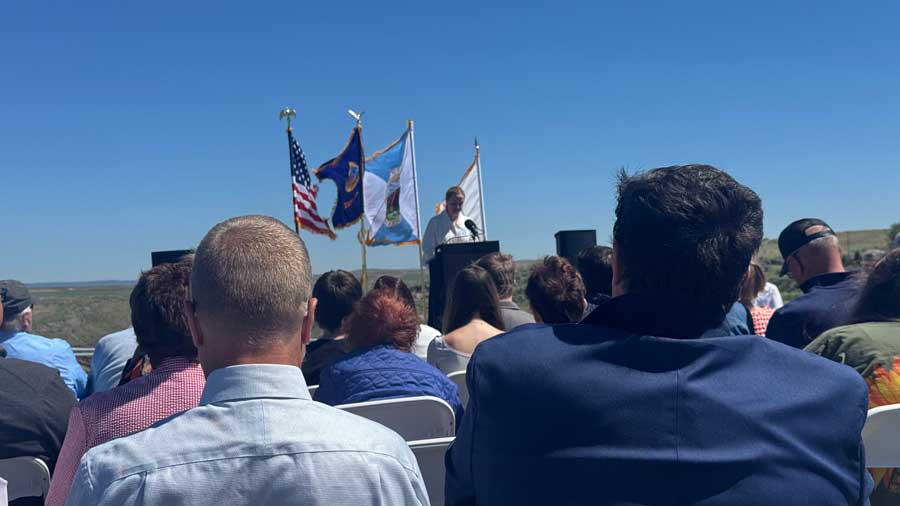
NEWDALE — Community members, elected officials, water managers, and federal representatives gathered on Friday to officially commemorate the 50th anniversary of the collapse of the Teton Dam.
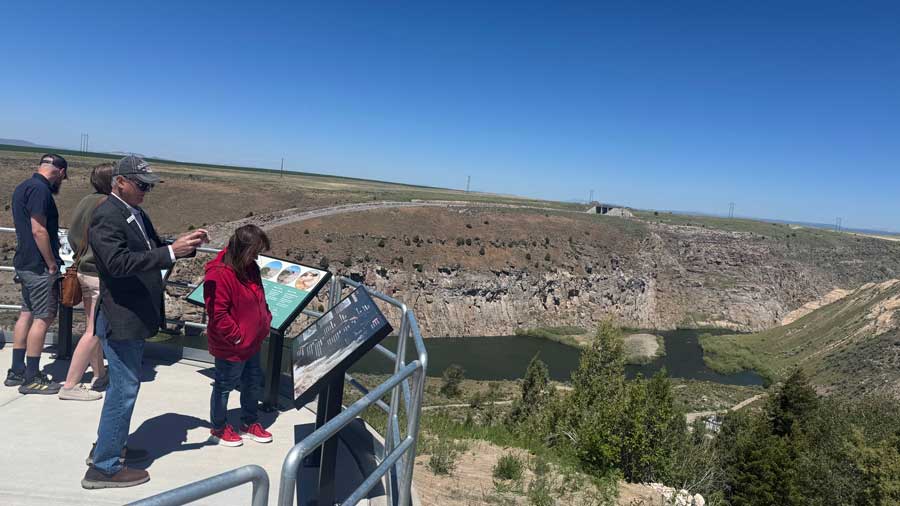
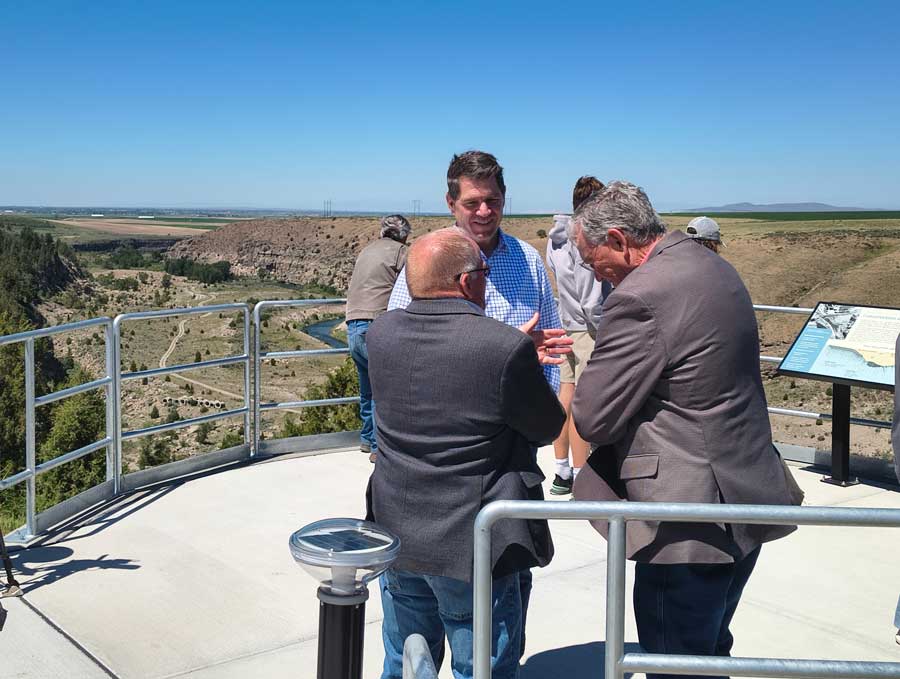
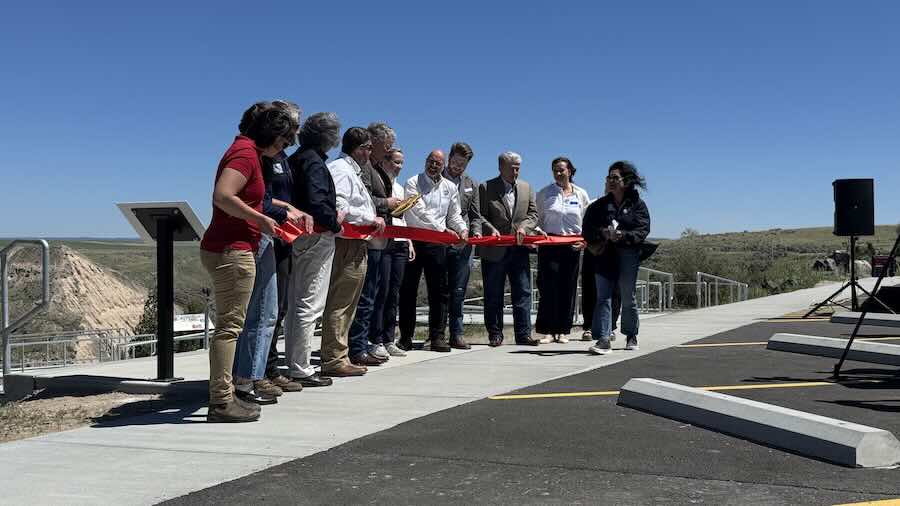
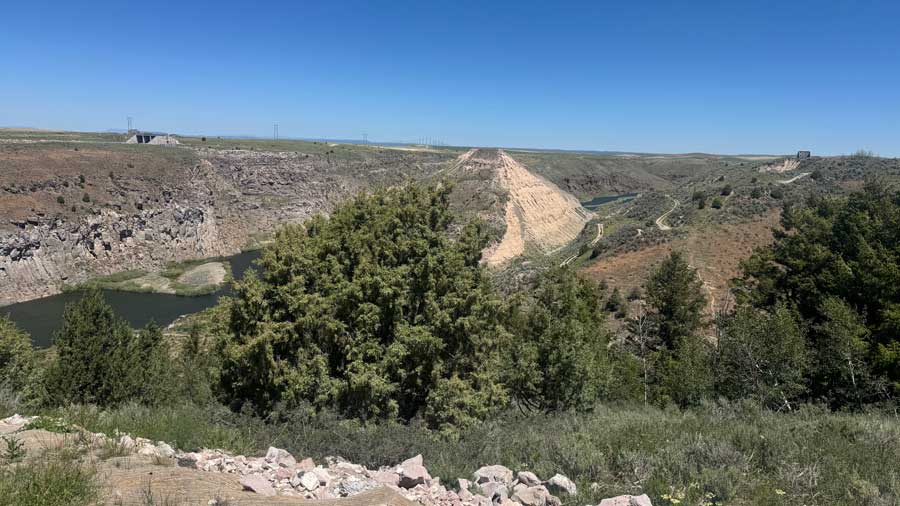
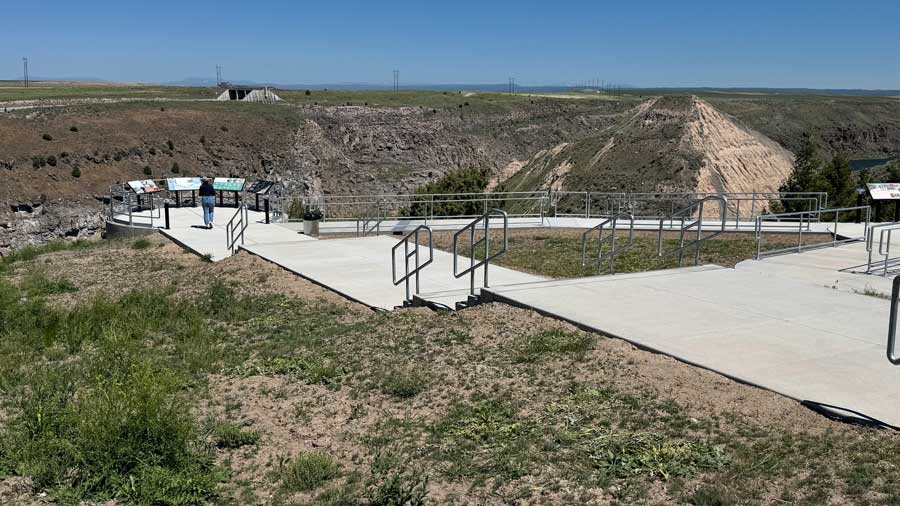
The event included an on-site ribbon-cutting to mark the opening of a new commemorative overlook, situated on the east side of the failed Teton dam site. A series of plaques along the overlook will tell the story of the harrowing events of June 5, 1976, as visitors take in a backdrop of stunning Idaho landscape and the ruins of the earthwork structure that was intended to hold back 80 million gallons of river water.
The event featured remarks from Lt. Gov. Scott Bedke, Bureau of Reclamation Senior Advisor Linnea Melbye, Dam Safety Chief Peggy Mott and Jeff Raybould, the chairman of the Idaho Water Resource Board.
Remembering both tragedy and hope
Part of the ceremony featured a somber fly-over of vintage war planes at exactly 11:57 a.m. — the same hour and day that the dam broke 50 years ago. The planes flew over the dam site four times, arranged in the “missing man formation” to emphasize the damage done and the 11 lives that were lost in the flood.
“We’re here to commemorate the loss of life,” Bedke said. “We’re here to commemorate the changes that this catastrophe brought about in the way the Bureau of Reclamation does business around the world.”
Bedke also framed the anniversary as a call for future generations to pursue ambitious projects.
“Idaho has always been about doing hard things,” he said. “We need to do big stuff so that our grandkids and great-grandkids will point back to how we did it right.”
Eyewitnesses remember
For many attendees, the event brought back personal memories of the flood and its aftermath.
Idaho state Sen. Doug Ricks, R-Madison County, was 14 years old when the dam failed. While his family’s home escaped flooding, he vividly remembers the community-wide recovery effort.
“The community coming together to help each other out, that’s really the legacy,” he said. “It was remarkable to see the service and help people provided, both locally and from outside the area.”
RELATED | Voices from the flood: Survivors reflect on the Teton Dam collapse
Idaho Water Resource Board Chairman Jeff Raybould shared his own experiences as a 19-year-old farmer during the disaster. The flood altered the course of his life, delaying plans for school and keeping him on the farm to help his family recover.
“It changed the trajectory of what happened to me and what I did,” Raybould said.
Part of his family’s farmland was damaged by the flood, requiring years of rebuilding. Yet Raybould also recalled positive memories from that difficult period, including meeting his future wife during what he jokingly described as a “summer of love.”
Will the Teton Dam be rebuilt?
Many of the public officials in attendance mentioned a newly approved basin study, set to evaluate options for increasing water storage throughout the Snake River Basin, including the possibility of constructing a new dam in the Teton River drainage.
The study, expected to take three to five years, will examine multiple alternatives and involve stakeholders from across the region.
“We need to not let this be the last dam built in Idaho,” Bedke said. “We need to learn from this and go on. That water down there is too precious of a resource to let leave the state, and it needs to, (be put) in a surface storing system, (or) let’s put it in the aquifer.”
State Rep. Jon Weber, R-Rexburg, who participated in discussions with Idaho’s congressional delegation in Washington, D.C., said the commission of the basin study represents an important first step.
“It’s a great opportunity,” Weber said. “Technology and engineering have changed over the last 50 years, and we could rebuild something that would last for generations.”
Strengthening community
The new overlook was the result of collaboration between federal agencies and local partners. Roland Springer, deputy regional director for the Bureau of Reclamation, said the project was designed to provide a lasting place for reflection and remembrance.
“We had families that experienced the flood here today, as well as relatives of those people,” Springer said. “It was a very meaningful day, combining the dedication of the overlook with recognizing the loss from 50 years ago.”
Event coordinator Erica Lopez praised the community’s involvement in planning the ceremony.
“The community is so strong,” Lopez said. “Everybody wants to help.”
As attendees gathered beneath windy skies overlooking the site where the dam once stood, the day’s message was clear: While the Teton Dam failure remains one of Idaho’s greatest tragedies, the resilience, cooperation and determination that followed continue to shape the region half a century later.