



The Idaho Falls pioneer who helped women win the right to vote
Published at
IDAHO FALLS – As voters make their voices heard on Election Day, one Idaho woman’s story is a reminder that the right to vote wasn’t always guaranteed to everyone.
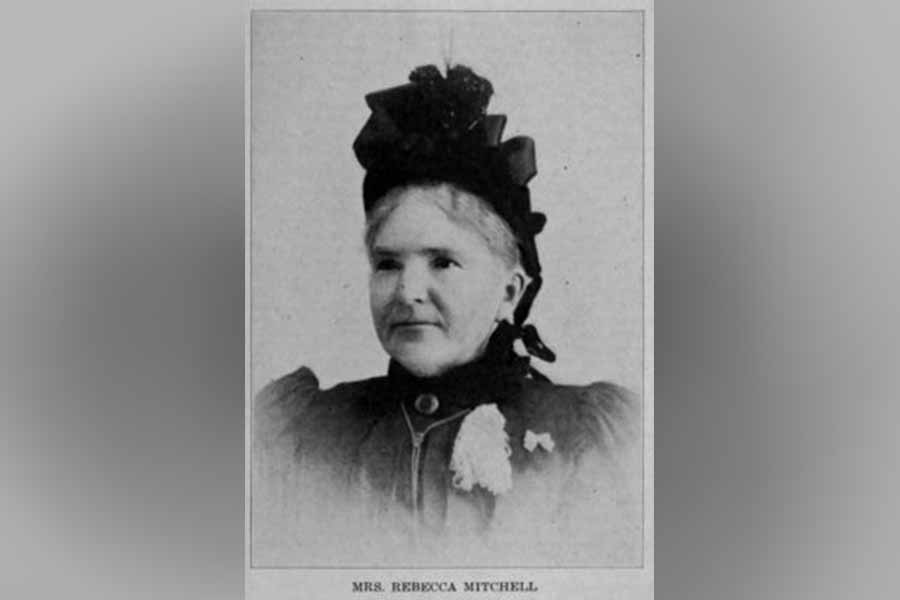
When Rebecca Brown Mitchell arrived in Eagle Rock with her teenage daughter in 1882, the pair had little more than the clothes on their back. Fourteen years later, Rebecca would help lead a movement that made Idaho the fourth state in the nation to grant women the right to vote.
The 48-year-old Illinois woman had come out West in hopes of being a missionary. Her husband had died 26 years earlier, leaving her a widow at age 22 with two young sons.
Laws prevented women from owning property at the time, and when her husband died, it meant their home and everything else they’d acquired became the property of the state. This put Mitchell in a precarious situation.
RELATED | She arrived with nothing — now Idaho Falls Is honoring a forgotten trailblazer
With the exception of a Bible and a hymnal — her only possessions exempt from reclamation, according to her personal history — she was forced to buy back her own property from the state of Illinois.

She later married her husband’s brother. They had two daughters together, one of which died at age 5, before they ultimately separated.
Once her sons were grown, she attended a missionary training school in Chicago for a few months before heading west with her daughter.
In Mitchell’s personal history, she explains that she began her journey not knowing where she would end up.
“Led by God … I found myself in Idaho, in the town of Eagle Rock, now Idaho Falls, coming as a self-supporting missionary of the Baptist Church,” Mitchell writes.
Years before Idaho Falls became a thriving family community, Eagle Rock was a desert landscape with little more than a handful of shanties, a few company houses built by the railroads and multiple saloons.
With no money left to support themselves, Mitchell and her daughter stepped off the train that June morning into a “new world.” She couldn’t have imagined that the small community would become the starting point for a legacy that would shape history and advance women’s rights for generations to come.
The fight for women’s suffrage
During Mitchell’s early years in Eagle Rock, she helped raise funds for a church, a school and a public Library. By 1886, her daughter was married, and Mitchell felt compelled to get involved in civic affairs. She joined the Women’s Christian Temperance Union and became president of a local chapter she helped organize.
As a member of the organization, Mitchell became an advocate for women’s suffrage and lobbied for a constitutional amendment granting women the right to vote.
Temperance, a campaign aimed at eliminating or reducing the consumption of alcohol, and suffrage were inextricably linked, McMahon says. Mitchell’s involvement was prompted by her own experience.
“She came from a situation in which women had no rights” and were subject to men, Sharon McMahon, who devoted a chapter to Mitchell in her 2024 book, told EastIdahoNews.com. “She saw firsthand how women could be unfairly treated and abused by men who have too large of an affinity for alcohol.”
McMahon says the goal behind temperance was the protection of women and children, and women needed the right to vote to make that happen.
Mitchell faced a lot of opposition on this issue for years. As the election approached, she and her supporters worked to win men over.
“They hired little boys to stand outside with signs that read, ‘Vote for your mother.’ They gave out free coffee, and met men with a kind word and an ask to please vote for the amendment,” McMahon wrote in her book.
In 1896, ten years after Mitchell joined the WCTU, Idaho became the fourth state to allow women the right to vote. It would be another 24 years before the 19th amendment to the U.S. Constitution — which prevents the denial of voting rights based on gender — went into effect.
The 18th amendment, which outlawed the manufacture and sale of alcohol in the U.S., took much longer to be implemented. It was ratified in 1920 and was overturned in 1933, according to Brittanica.
‘Why not do the unheard-of thing?’
Not long after women’s suffrage was enacted in Idaho, Mitchell set her sights on serving as a chaplain in the Legislature and began lobbying for the position.
Once again, her gender proved to be an obstacle.
“When I first asked for the position of chaplain in the Legislature, the men said, ‘We never heard of such a thing,’ but I said, ‘Why not Idaho do the unheard-of thing and set the example for other States?'” wrote Mitchell.
When the Legislature convened the following year, Mitchell stood in the Statehouse and offered a prayer for lawmakers. She had been elected the first female chaplain of a Legislative body anywhere in the world.
Letters poured in from women across the country congratulating her for the achievement.
“I was cheered by the honor given me in my old age,” Mitchell writes in her personal history. “The jeers of men were forgotten, the haughty looks of women who had all the rights they want, faded away as a cloud before the sun. Not for myself did I care so much … but for womanhood was the victory dear to my heart.”
Mitchell was 74 when she died of tuberculosis in 1908.
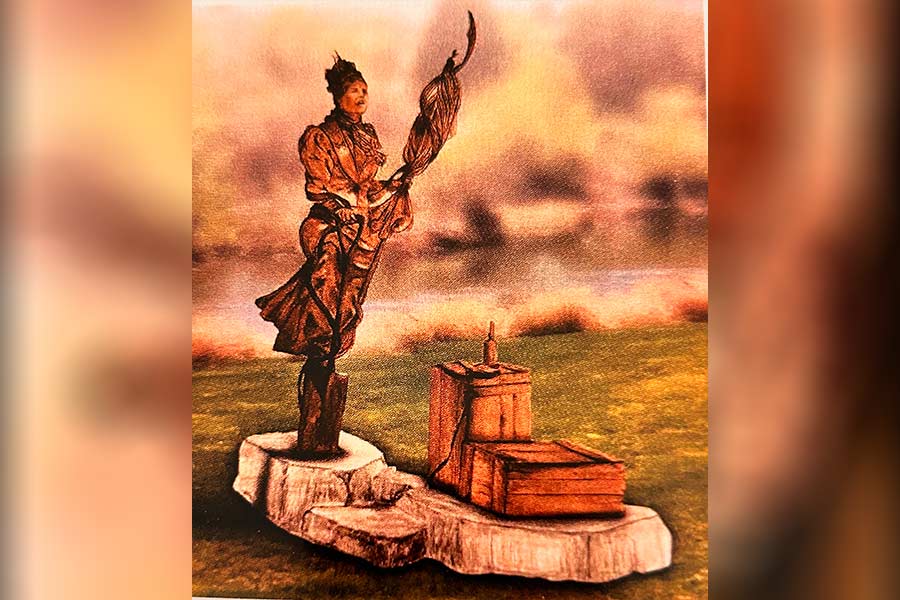
This year marks 130 years since women’s suffrage was adopted in Idaho. A committee of 11 people is collaborating with the Museum of Idaho to raise funds for a 7-foot bronze sculpture of her likeness, which will soon be placed in the new Heritage Park near Snake River Landing. Irene Juliette Deely of Eagle — who made a similar statue on display near the Capitol building in Boise that commemorates women’s right to vote — was hired to make the Idaho Falls sculpture.
RELATED | Idaho Falls to honor forgotten pioneer with new bronze statue
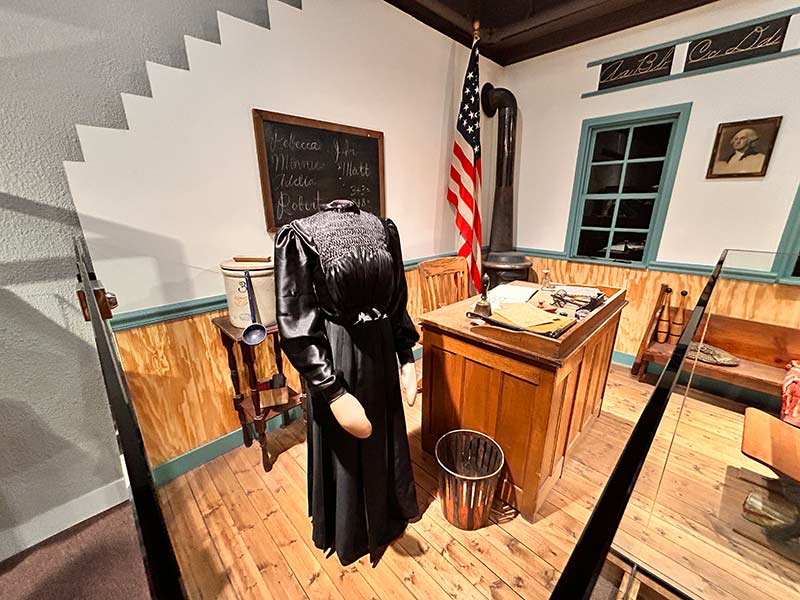
Earlier this year, Museum of Idaho Managing Director Chloe Doucette, a member of the Rebecca Mitchell Project committee, said Mitchell is a prominent part of the museum’s storytelling because of all she accomplished in her life. Her dress, hymnal, and a representation of her classroom are on display in the museum.
“Her story is very important to us, and we’re very grateful that the Rebecca Mitchell Project crew decided to do something visible (to honor her) so that everyone can understand that story,” Doucette said.
Additional details about the statue’s installation will be forthcoming when it’s complete. Meanwhile, the $150,000 project is being funded through private donations.
Nearly 120 years after her passing, McMahon said Mitchell’s own words are an expression of her legacy to Idaho and the world.
“Why not do the unheard-of thing?” McMahon said, quoting Mitchell. “I just love that idea. It’s people like Rebecca who had the courage to do what no one had done before … that changed the face of Idaho and the fabric of the country.”
Our attorneys tell us we need to put this disclaimer in stories involving fundraisers: EastIdahoNews.com does not assure that the money deposited to the account will be applied for the benefit of the persons named as beneficiaries.